



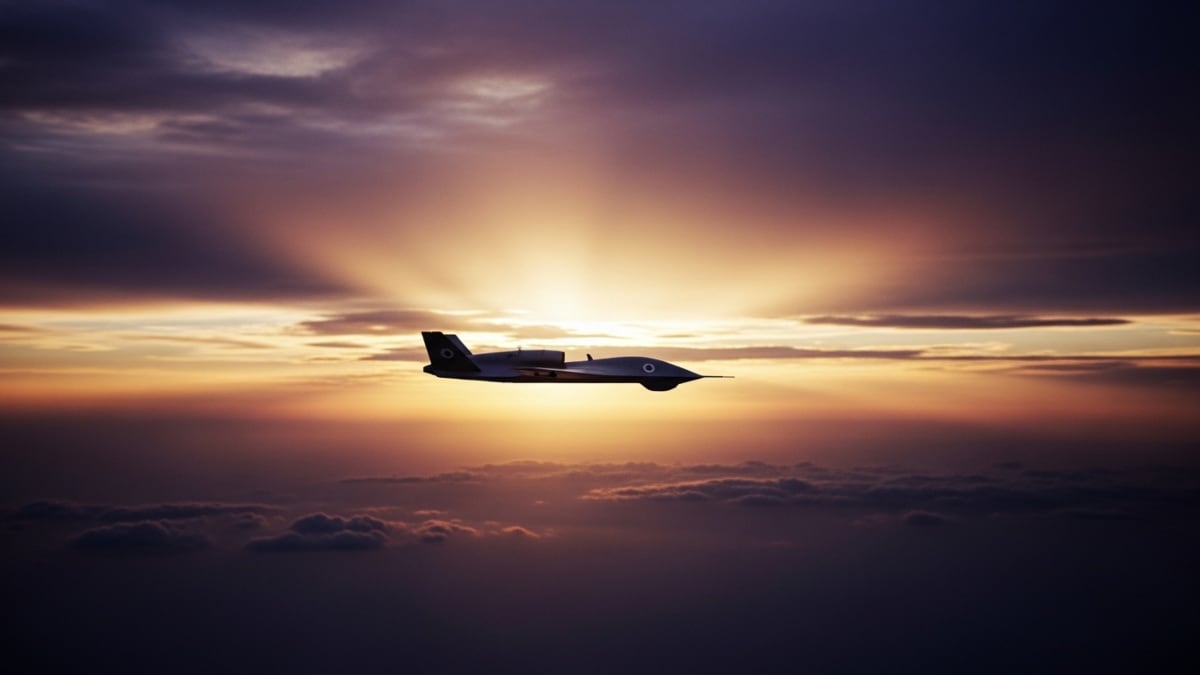
As drones increasingly become a decisive element of modern warfare, the Indian Air Force (IAF) is looking to strengthen its unmanned capabilities through a new partnership model with the domestic industry.
According to media reports, the IAF has decided to jointly develop kamikaze drones with Indian companies, marking a shift from the conventional procurement approach in which the armed forces specify operational requirements and leave the design and manufacturing to industry.
According to a report in The Tribune, the IAF recently issued a limited tender enquiry to select Indian firms for the programme. The IAF has stipulated that the drones must be designed, developed and manufactured within the country, in line with the government’s push for self-reliance in defence.
A key feature of the initiative is the IAF's plan to retain the intellectual property rights (IPR) of the platform. According to the report, this would allow the service to undertake future upgrades and modifications while also enabling the Base Repair Depots (BRDs) to scale up production whenever required.
"Retaining ownership of the design and intellectual property will give the Air Force the ability to modify, upgrade and customise the system as operational needs evolve. It will provide a decisive edge by allowing faster capability enhancements without being constrained by vendor-controlled technologies," a source was quoted as saying by India Today.
Under the requirement, the IAF is seeking a fixed-wing unmanned aerial platform capable of operating at altitudes of up to 16,000 feet and carrying out missions round the clock. The drone must be able to carry a payload of at least 30 kg and support interchangeable payloads, including weapons, sensors and airborne data relay systems, depending on mission requirements.
One of the major conditions laid down by the IAF is that the drone should not contain any Chinese-origin components or technology.
The joint development effort will cover the airframe as well as other major systems and subsystems. The airframe is expected to withstand the stresses encountered during launch, cruise, manoeuvring and mission execution.
The project also envisages the development of a fully autonomous autopilot system capable of handling launch, waypoint navigation, loitering, mission execution and return-to-base functionality.
