



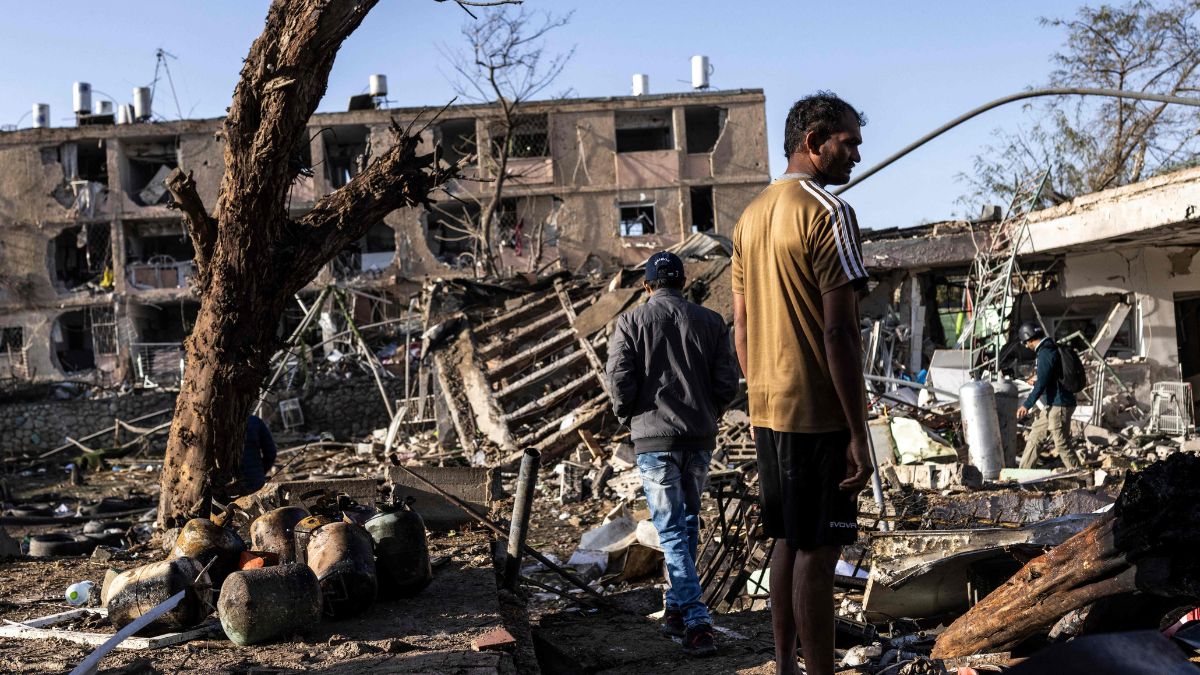
The ongoing West Asia conflict has evolved far beyond its initial contours. What may have begun as a campaign aimed at coercing regime change in Iran has now transformed into a complex, multi-domain confrontation—centred on energy security, maritime chokepoints, strategic signalling, and competing narratives of legitimacy.
Sustained air and missile campaigns have targeted Iran’s military and economic infrastructure, while Iran has responded with drones, precision-guided munitions, and—most significantly—the credible disruption of the Strait of Hormuz. The result is no longer a contained regional conflict but a global economic shock with cascading consequences.
At its core, this is not a conventional war with defined frontlines or decisive battles. It is a layered contest—military, economic, and psychological—where outcomes remain uncertain and escalation pathways unpredictable.
From this evolving theatre, ten critical lessons emerge—ranked not by visibility, but by strategic consequence.
1. Wars cannot be based on flawed strategic assumptions
A foundational miscalculation appears to have shaped the conflict: the assumption that external military pressure would trigger internal political collapse in Iran.
Such expectations of easily achievable end-states—often rooted in selective intelligence or ideological bias—have historically proven unreliable. Instead of fragmentation, external aggression tends to consolidate national resolve, even among populations otherwise discontented with their leadership.
War, by definition, is a high-risk enterprise with a snowball effect across political, economic, and human dimensions. When it is launched on ‘hopeful assumptions’ rather than grounded intelligence, it risks spiralling into prolonged and costly entanglements.
2. Chokepoints matter more than geography
The Strait of Hormuz has emerged as the decisive lever of this conflict. Iran’s demonstrated ability to threaten or disrupt maritime traffic has imposed disproportionate costs on adversaries and the global economy.
This marks a structural shift in strategic thinking. Control over narrow economic arteries can outweigh control over vast territories. A few miles of sea can influence global energy flows more than thousands of square kilometres of land.
For energy-dependent economies, this represents a critical vulnerability—one that cannot be mitigated by conventional military superiority alone.
3. Economic warfare is now central, not peripheral
The most immediate and far-reaching effects of this war have been economic rather than military. Volatility in oil prices, disruptions in gas supply, rerouting of shipping, rising insurance costs, and supply chain disruptions have had global repercussions.
Economic coercion is no longer a secondary effect of war—it is a primary instrument. States can impose systemic costs on adversaries and the international system without achieving battlefield dominance.
This blurs the distinction between war and peace. Economic disruption can be calibrated, sustained, and weaponised without formal escalation—making it both effective and deniable.
4. Technological superiority does not guarantee strategic success
Despite overwhelming technological advantages—airpower, naval capabilities, cyber operations, and precision strikes—decisive outcomes remain elusive.
Lower-cost systems such as drones, loitering munitions, and missile swarms have offset high-end technological superiority. More importantly, strategic resilience—political will, decentralised command structures, and ideological cohesion—has enabled sustained resistance.
Modern warfare exposes a paradox: superior technology can dominate tactically, yet fail strategically when confronted with adaptive and resilient adversaries.
5. Leadership assassinations have limited strategic value
Targeted killings of senior military and political figures have been a recurring feature of the conflict. While tactically disruptive, their long-term effectiveness is questionable. Rather, it may harden resolve to resist.
Institutional systems tend to adapt quickly. Leadership is replaced, often with hardened successors. Martyrdom narratives strengthen internal cohesion, while retaliatory pressures intensify escalation cycles.
Decapitation strategies may deliver short-term gains, but they rarely produce strategic collapse. More often, they entrench conflict and reduce space for diplomacy.
6. Deterrence is now fluid and transactional
Traditional deterrence frameworks—based on clear red lines and predictable responses—have eroded. In their place is a dynamic model of signalling, response, and counter-response.
Actions such as threatening the Strait of Hormuz are not merely military moves; they are bargaining tools. Deterrence today is less about preventing action altogether and more about managing escalation thresholds.
This creates an inherently unstable equilibrium, where miscalculation is not an exception but a constant risk.
7. Multi-domain warfare is the new normal
The conflict is being waged simultaneously across multiple domains: kinetic strikes, maritime disruption, cyber operations, economic pressure, and information warfare.
There is no linear escalation ladder. Pressure is applied across domains in parallel, forcing adversaries to respond on multiple fronts.
This requires a level of coordination and resilience that traditional doctrines—designed for sequential and geographically bounded warfare—struggle to accommodate.
8. Airpower alone cannot deliver political outcomes
Sustained air campaigns have demonstrated reach, precision, and destructive capability. Yet they have failed to compel strategic submission.
Airpower can degrade infrastructure and eliminate targets, but it cannot secure political objectives or reshape deeply embedded state behaviour—particularly in large, ideologically driven systems.
The enduring lesson remains: wars are ultimately decided by political outcomes, not by tactical success alone. And the desired political outcomes may require a land campaign – with attendant risks of an unacceptable level of casualties.
9. Legitimacy and narrative shape strategic outcomes
Beyond the battlefield lies a critical dimension: perception. Is the war seen as justified? Are the rules of engagement being followed? Are civilian casualties being minimised?
Competing narratives—self-defence, deterrence, aggression—are shaping global opinion. In an interconnected world, legitimacy influences diplomatic support, economic partnerships, and long-term strategic positioning.
Closely tied to this is the battle for narrative dominance. Real-time information flows amplify both actions and missteps. A state perceived as disproportionate or coercive in its actions or response risks losing the narrative—even if it retains military superiority.
And in modern conflict, losing the narrative can translate into strategic loss.
10. Globalisation amplifies every conflict
What might once have remained a regional crisis now generates immediate global repercussions. Energy markets, financial systems, and supply chains react in real time.
Even limited disruptions—such as harassment of shipping lanes—can trigger disproportionate economic consequences worldwide.
This interconnectedness is no longer just a feature of globalisation; it is a vulnerability increasingly targeted in conflict. Strategic actors recognise that influencing global systems can yield leverage far beyond conventional battlefield gains.
Implications for India
For India, these lessons are immediate and structural.
Energy security must be treated as a national priority. Heavy dependence on Gulf hydrocarbons exposes India to chokepoint disruptions beyond its control. Diversification of sources and expansion of strategic reserves are no longer optional.
Maritime strategy requires recalibration. Protecting sea lanes—from the Arabian Sea to critical chokepoints—will be central. This may demand a shift towards more survivable and deterrent capabilities, including submarines and distributed naval assets.
Strategic autonomy must be exercised with greater sophistication. Balancing relations with Iran, the United States, and Gulf partners requires nuanced diplomacy to avoid entanglement while preserving influence.
Economic resilience must be strengthened. As demonstrated, economic shocks travel faster than military ones. Preparedness must extend beyond defence to financial and supply chain stability.
Military modernisation must prioritise adaptability—integrating technology, doctrine, and operational flexibility to respond across domains.
Finally, India has a potential diplomatic role. Its relatively balanced relationships position it as a credible intermediary. However, such a role requires sustained engagement, consistency, and the willingness to invest political capital.
Conclusion: The limits of power
The West Asia war is not an isolated conflict; it is a template for the future of warfare.
It reveals a world where chokepoints can outweigh geography, economic disruption can rival military force, and narrative legitimacy can shape outcomes as much as firepower. It also reinforces a hard truth: decisive outcomes are difficult to achieve without escalation into ground conflict—an option fraught with political and human costs.
Above all, the conflict underscores a fundamental shift. Power, in its traditional military sense, is no longer sufficient.
Success—if it can still be defined as such—lies at the intersection of military capability, economic leverage, and narrative legitimacy. Neglect any one of these, and outcomes become partial, temporary, or even illusory.
That is the enduring lesson of this war—and a cautionary note for those who may be preparing for the next.
(The opinions expressed in this article are those of the author and do not purport to reflect the opinions or views of THE WEEK.)
