



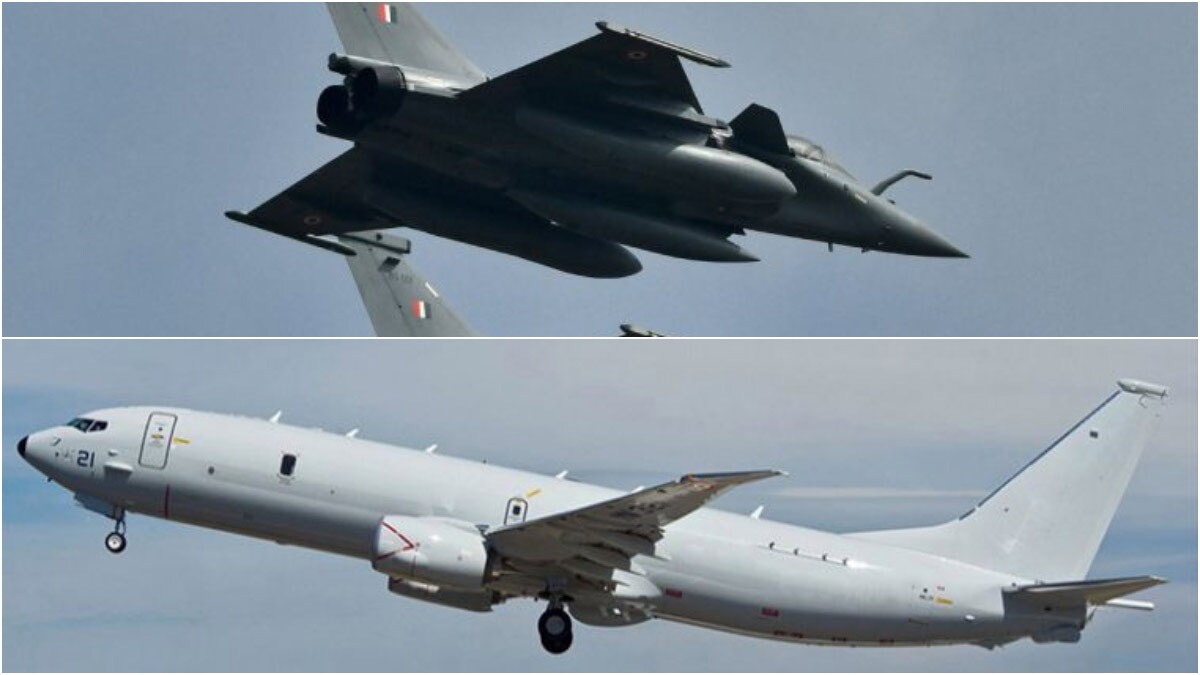
When Emanuel Macron’s aircraft touches the tarmac at New Delhi’s airport on Monday (February 16), the French President’s mind may be more on a massive ₹3.25 lakh crore fighter aircraft deal rather than the summit on artificial intelligence that he is to attend in the national capital on February 18.
Because by that time, the defence minister-headed Defence Acquisition Council (DAC) meet, likely to be held on February 12, may have already okayed the likely 114-Rafale fighter deal.
The 114 fighters mean an additional six-seven fighter squadrons for the Indian Air Force (IAF), but even that is not enough to adequately equip the force as per the required mandate. Needing to field at least 42 squadrons, the IAF has only about 30 squadrons—the lowest it has operated in decades.
The additional requirement of seven-eight squadrons is expected to be filled in by the home-made LCA Tejas aircraft, the rolling-out of which has been plagued by notorious delays. A typical Tejas squadron would comprise 20 aircraft, including four in reserve.
The DAC is the apex procurement panel of the defence ministry. Proposals once cleared by the DAC are placed before the prime minister-headed Cabinet Committee on Security (CCS) for the final approval.
The DAC is also expected to take up the Indian Navy’s requirement for more ‘eyes in the sky’ by giving the green signal to acquire six more P-8I Poseidon, the multi-mission long-range maritime patrol and reconnaissance aircraft developed by SS-based Boeing Defense, in addition to the existing fleet of 12.
Truly the first responder platform that everyone turns to, the versatile maritime surveillance aircraft is deployed for an entire range of operations, from specific counter-insurgency operations to being deployed to keep an eye on submarines of the adversary in the oceans.
Having clocked much more than 40,000 mishap-free flight hours, the dozen-odd P-8Is in the Indian Navy have completed more than a decade of deployment with the force.
Besides these two critical buys, the DAC may also take up for consideration the issue of indigenously developing marine gas turbine engines for the Indian Navy—a key requirement if India is to roll out its own warships.
Several firms, including the state-owned Gas Turbine Research Establishment (GTRE), Hindustan Aeronautics Limited (HAL) and Bharat Heavy Electricals Limited, are understood to have been pursuing efforts to make engines for marine military platforms.
