



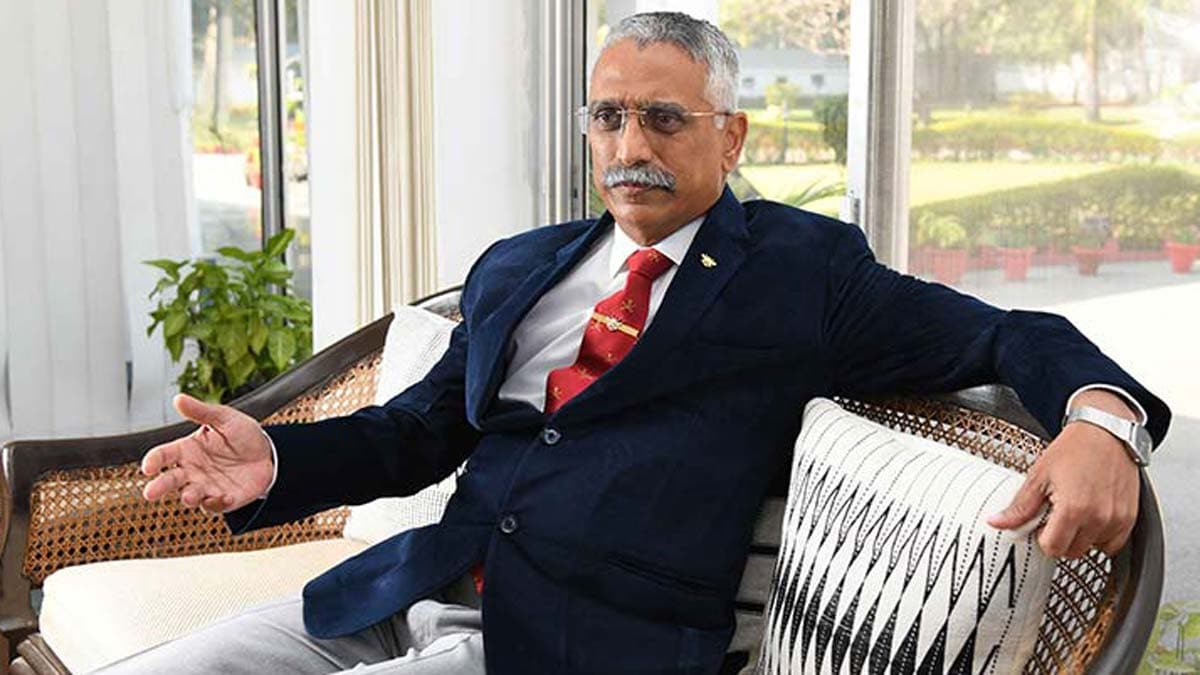
The unpublished memoir of former Indian Army chief M.M. Naravane sparked a row in Lok Sabha on Monday after opposition leader Rahul Gandhi tried to quote a line from an article about the book that appeared in a magazine.
The article, which appeared in The Caravan, details the 2020 India-China conflict, starting with the time when the Indian Army's Northern Command received a call regarding the movement of Chinese tanks towards Rechin La in eastern Ladakh.
According to the article, Naravane "grasped the severity of the situation" and began making "frantic calls to the leaders of India’s political and military establishment," including Defence Minister Rajnath Singh, the then chief of defence staff Bipin Rawat, and National Security Advisor Ajit Doval.
“To each and every one, my question was, ‘What are my orders?’” Naravane writes, according The Caravan article.
ALSO READ: Rebalancing of forces is to reassure Pak, warn China, says ex-Army chief Naravane
Even as the situation continued to deteriorate, according to Naravane, there were clear orders not to open fire "till cleared from the very top.”
Naravane called the defence minister again, asking “for clear directions,” but the article claims he wasn't given any.
The former Army chief writes that as Chinese tanks were not stopping, he was informed that “only way to stop them was by opening up with our own medium artillery, which he said was ready and waiting.”
According to him, he was “the Command who wanted to open fire with all possible means” and the government “which had yet to give me clear-cut executive orders.”
According to the article, the defence minister promised to call back after Naravane's third call to him. Singh called back after speaking to the prime minister, whose instruction was merely “Jo uchit samjho, woh karo,” leaving the decision to the military. This was to be “purely a military decision,” according to the article.
“I had been handed a hot potato,” Naravane writes. “With this carte blanche, the onus was now totally on me.”
He was worried about many things. The article quotes him as writing in the book: “Would we be able to ensure a steady supply of spares, etc., under these conditions, in case of a long-drawn-out action? Who were our supporters in the global arena, and what about the collusive threat from China and Pakistan?”
“We were ready in all respects,” Naravane wrote in the book, “but did I really want to start a war?”
