



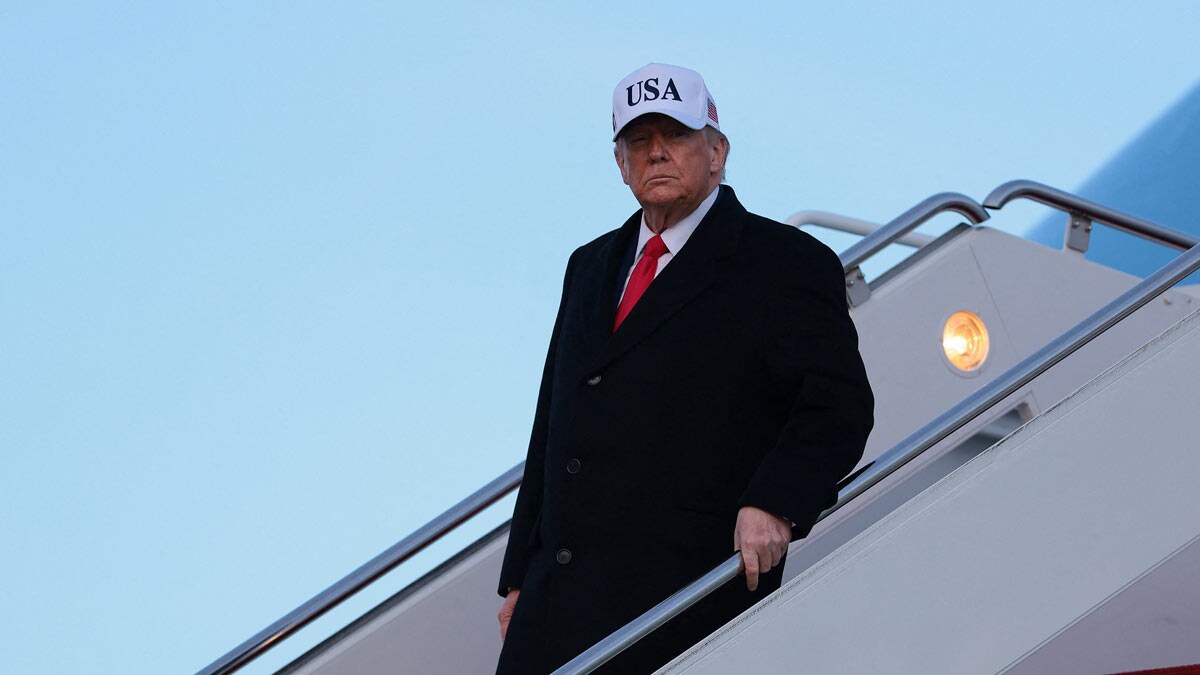
The second term of President Donald Trump is witnessing an accelerated shift in the US foreign policy and its implementation around the world. Since the collapse of the Soviet Union, the United States has functioned as the prime power that created the unipolar world and functioned as the referee and manager of geopolitical shifts across the globe. There existed international alliances, world institutions, and norms that kept the globalized world, security, and diplomacy functioning. President Trump has stripped away the illusion that Washington will continue to play the role of global referee. The reality that followed is one of fragmentation and vacuum in the world political order, where no one is ready to lead but everyone is trying to adapt.
From shock to clarity
Trump’s return was seen as a shock to an already unstable world, stretching from the Atlantic to the Indo-Pacific. But what is now unfolding is not chaos but clarity. From confronting European partners over NATO funding, pushing Ukraine to accept a peace plan, confronting Iran, engaging in Gaza with caution, pushing strategic partners to accept the US demands through threats of taxation, to the recent arrest of Venezuela’s Nicolas Maduro without regime change but with an understanding on oil deals, and threatening Greenland with territorial ambitions, the United States is acting in its own interests.
For the first time since the Cold War, Washington is acting more like a self-interested global power than a global manager. Multilateral institutions are heavily impacted by this new direction. The United Nations, World Trade Organization, and international financial institutions were built for a US-led world. Without strong American backing, they struggle to enforce rules or mobilise resources.
The recent withdrawal of the US from 66 key international organisations is proof that the US is not interested anymore in fixing the problems of the world. This brings in a question of who will fill this gap, which already has answers of Chinese presence in global institutions, which brings in the competition rather than the cooperation.
The world America built
After 1991, the world order was constructed around a simple idea: the United States would anchor global stability. NATO provided security, the WTO governed trade, the United Nations managed crises, and American economic dominance kept markets open. Even countries not aligned with Washington relied on this structure. The system was not perfect, but there was a country willing and able to lead it. In 2025, President Trump did not dismantle this structure— he exposed its fragility. He treated alliances as business transactions, questioned security guarantees, and withdrew from multilateral commitments. He made it clear that Washington no longer wants to bear the costs of global leadership. With his return, this shift has become irreversible.
The new age of hedging
Trump’s decisions have created confusion among the US allies. European countries and strategic partners around the world still behave as if Washington will eventually return to global leadership. This expectation is wishful thinking and requires serious reconsideration. The political leadership in the United States now operates with a different playbook for global affairs.
In reality, the world is moving toward regional power groupings led by states with the resources and capacity to dictate terms. China dominates parts of Southeast Asia; Russia shapes the Eurasian space; Israel, Türkiye, Iran, and Saudi Arabia compete in West Asia; and India seeks influence across the Indo-Pacific. No single power sets the rules. Countries are hedging, not aligning.
This leads to multi-alignment. From India to the Gulf states to Vietnam, countries are no longer choosing sides; they are choosing options based on national interest. They trade with China, buy weapons from the United States, cooperate with Russia, purchase Russian oil, and sell into European markets. Through this strategy, they avoid permanent commitments. This new strategy of multi-alignment is not ideology; it is survival in a world without stable leadership.
The real risk
The new global order now taking shape is introducing new patterns into geopolitics. The danger in the transformation led by President Trump is not recklessness but the vacuum it creates. When stability disappears, power fragments, conflicts become harder to contain, trade becomes more politicised, and crises grow more regional. The world is becoming more unstable, not because it lacks rules, but because no one can enforce them. This also enables powerful states to take punitive actions against others in the name of national interest. The absence of a stabilising force risks pushing the system toward disorder, where every state follows its own rules.
The world after the sheriff
President Trump’s return under the slogan Make America Great Again should be taken seriously. He is not governing for the world but for the United States. It is time to accept that the post-Cold War order is coming to an end. What lies ahead is a messy, competitive, multipolar era, where countries such as China, India, South Africa, and Brazil will shape their own spheres of influence. The question is no longer whether the old system can be saved, but whether a new one can be built before instability fills the gap.
