



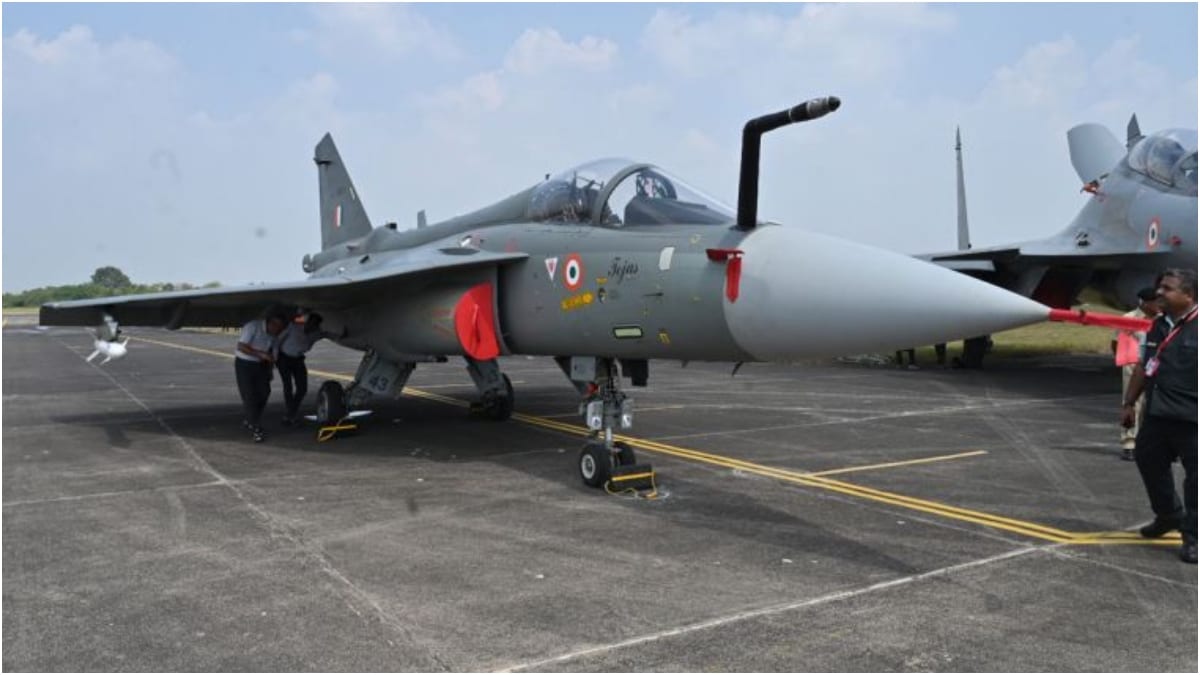
The Light Combat Aircraft (LCA) Tejas, India's indigenous light combat aircraft, achieved its first flight on January 4, 2001, flying for about 18 minutes and reaching speeds of up to 280 knots. Over the course of the past 25 years, the aircraft has completed over 5,600 successful flight trials.
So far, 38 Tejas aircraft (32 fighters and 6 trainers) have been inducted into two squadrons of the Indian Air Force (IAF).
India benefited enormously from the development of LCA Tejas, as the country has now acquired both the capability and capacity to build fighter aircraft indigenously.
According to the defence ministry, the LCA programme is one of the most successful indigenous defence programmes, through which the IAF has been provided with an exceptional air superiority fighter.
Speaking about the aircraft programme, Indian Air Force chief Air Chief Marshal Amar Preet Singh said, "It is an exceptional milestone that we achieved in 2001, and that has changed the history of our defence aviation and defence designing."
He further said the IAF is looking forward "very eagerly" to further programmes, Mark II and AMCA (the fifth-generation Advanced Medium Combat Aircraft).
ALSO READ: Did the 'Year of Reforms' make India's armed forces more combat ready?
The LCA Mk1A is an advanced variant of the Tejas fighter aircraft and will serve as a potent platform to meet the operational requirements of the IAF. LCA Mk II and LCA Navy are currently under development.
"I am sure they are going to be more successful than what Tejas was, with better timelines," he said.
Speaking after inaugurating the two-day national seminar ‘Aeronautics 2047,’ organised by the Aeronautical Development Agency (ADA) to mark 25 years of LCA Tejas, he said the ADA must strictly adhere to delivery timelines to keep the IAF operationally ready in a rapidly evolving security environment.
