



During Operation Sindoor, the Indian Air Force (IAF) had shot down Pakistan's Airborne Warning & Control System (AWACS) plane along with a handful of fighter jets. The AWACS was about 300 km away when hit, and bringing it down critically hampered Pakistan's ability to strike back, Air Chief Marshal A.P. Singh had said in August. AWACS is a modified aircraft equipped with a radar capable of detecting air traffic over large distances and at low altitudes. In simplest terms, they are planes tasked to monitor a nation's airspace in real-time.
How could the Chinese PL-17s give Pakistan the edge?
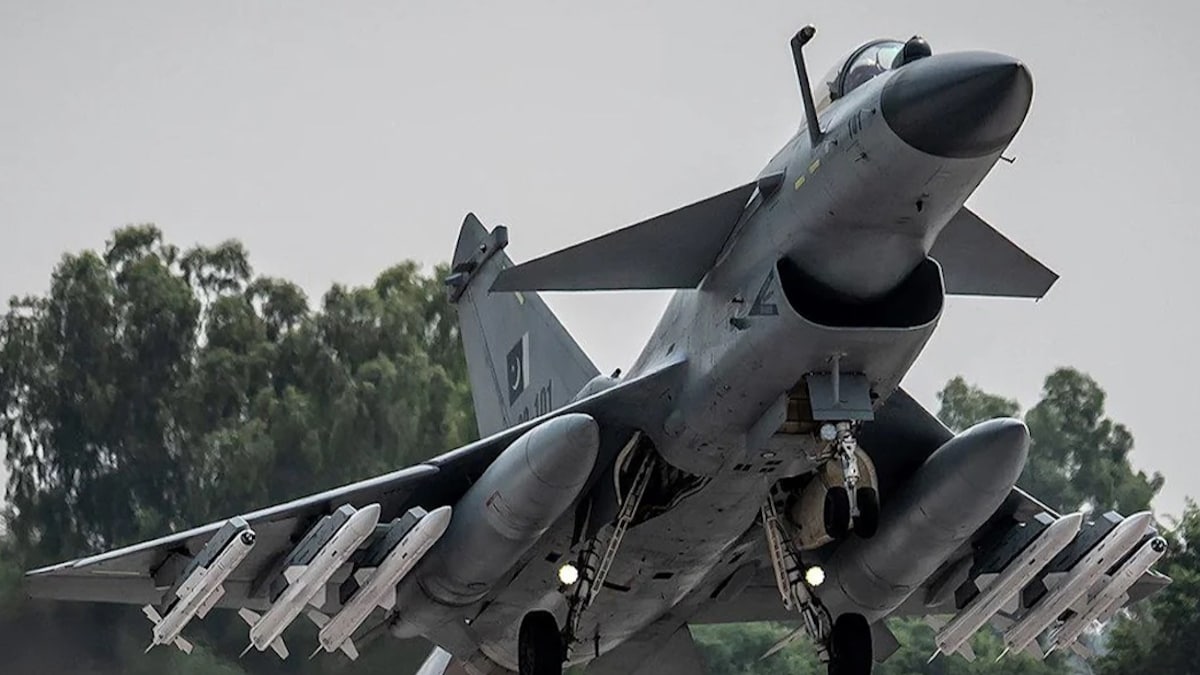
China's PL-17 is unparalleled in terms of range and the long-range missiles being integrated into Pakistan’s J-10C fleet could pose a real challenge to New Delhi, including a serious threat to its own "Big Birds" a.k.a AWACS. The People's Liberation Army Air Force's (PLAAF) most potent weapon was created to cripple the adversary’s command, control, and surveillance ecosystem located even at great distances.
The initial setbacks that the IAF openly confessed to have suffered while striking the terror launchpads in Pak-occupied Kashmir was said to be a consequence of underestimating the Pakistan Air Force (PAF) J-10C fighters armed with the PL-15Es, Defence Central Asia said in a report. The PL-15E already outclasses many of India’s Beyond Visual Range (BVR) assets and the PL-17 now threatens New Delhi's AWACS, refuellers, ISR aircraft, and stand-off jammers, the report added. It named India’s Netra and Phalcon AWACS, IL-78 refuelling tankers, and long-range maritime surveillance aircraft as "exactly the types of high-value assets the PL-17 was built to destroy."
"The pairing of the PL-17 with the J-10C would effectively give Pakistan a stand-off anti-AWACS strike capability comparable to those traditionally reserved for major air powers such as the United States and China," Defence Central Asia said in a report. As a consequence, IAF will be forced to operate its AWACS and refuellers well inside its mainland, which could significantly reduce its radar coverage and capability to contribute to frontline operations. In case of AWACS, its early-warning timelines could well be affected if forced to stay deeper inside Indian airspace for its own safety.
