



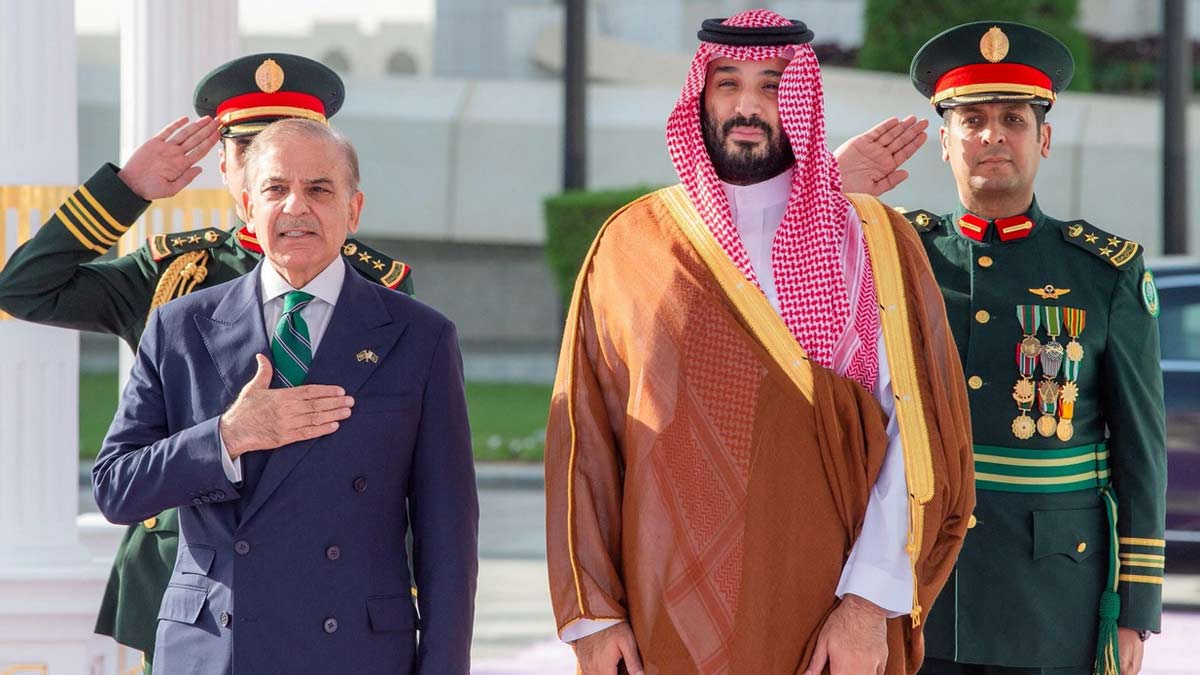
On September 17, 2025, Saudi Arabia and Pakistan inked the Strategic Mutual Defence Agreement (SMDA), a pact declaring that an attack on one is an attack on both—a bold echo of NATO’s Article 5. Forged in the shadow of Israel’s September 9 airstrike on Doha, which targeted Hamas leaders with scant US response, this alliance reshapes Middle Eastern and South Asian geopolitics. For India, the SMDA is a stark challenge, amplifying tensions with Pakistan and threatening regional stability
A deepening alliance rooted in history
The Saudi-Pakistan bond is no fleeting affair. Anchored in shared Sunni identity, their partnership dates back to the 1960s, with Pakistan training Saudi forces and conducting joint exercises. Riyadh’s financial aid has long propped up Pakistan’s fragile economy, with whispers of Saudi funding for Pakistan’s nuclear programme in the 1980s. The SMDA transforms this informal alliance into a formal pact, potentially laying the groundwork for a broader 'Islamic NATO' involving other Gulf states.
Saudi Arabia, wary of Iran’s growing influence and its Houthi proxies targeting its infrastructure, seeks robust defence options amid doubts over US reliability. For Pakistan, mired in economic collapse, the pact promises financial salvation and strategic clout.
The nuclear shadow
The pact’s nuclear undertones are chilling. Pakistan, the only Muslim nation with nuclear weapons, boasts roughly 170 warheads. While the SMDA avoids explicit mention of nuclear capabilities, its vague reference to “all military means” suggests a Pakistani nuclear umbrella for Saudi Arabia. This is particularly alarming as Saudi Arabia advances its uranium enrichment programme with Chinese support, potentially bypassing US oversight. This de facto nuclear alignment escalates regional tensions, particularly for India, which faces a Pakistan bolstered by Saudi resources and Chinese arms.
Economic lifelines and strategic costs
Economically, the pact is a lifeline for Pakistan. Saudi Arabia, a key provider of oil subsidies and home to 2.5 million Pakistani expatriates, is set to funnel over $5 billion into Pakistan’s defence and infrastructure. This support is vital for Pakistan’s military modernisation, including new jet fighters, amidst IMF scrutiny. For Saudi Arabia, however, this financial
commitment risks straining its Vision 2030 diversification plans. The pact’s economic entanglement binds the two nations closer, but raises questions about long-term sustainability.
Regional ripples and global shifts
The SMDA has sparked alarm across the region. Iran views it as a direct counter to its influence, deepening rivalries in Yemen and Syria. Turkey, despite its NATO membership, sees an opportunity to bolster its “Islamic army” ambitions, strengthening defence ties with Pakistan through arms sales. The pact also signals waning US influence, underscored by
Washington’s passivity during the Doha strike. Gulf states, sensing America’s pivot to Asia, are forging independent security frameworks. Israel, emboldened by its Doha operation, now faces a fortified Saudi-Pakistan axis, halting prospects for Saudi-Israeli normalisation and reinforcing Palestinian solidarity.
India’s precarious position
For India, the SMDA has strategic implications. Pakistan, already a nuclear-armed rival, gains Saudi financial and strategic backing, narrowing India’s conventional military edge. Saudi investments could modernise Pakistan’s arsenal, escalating risks in future conflicts, as seen in India’s Operation Sindoor post-Pahalgam. Pakistan is presently managing a delicate equilibrium in its relationships with China and the United States, each considered a close partner, thereby complicating India’s strategic calculations.
India’s $43 billion trade with Saudi Arabia, including 18 per cent of its crude oil imports (over 600,000 barrels daily), faces uncertainty if Riyadh tilts further toward Pakistan. India must now bolster its defences, deepen ties with Israel—its second-largest arms supplier—and engage Gulf states diplomatically to counter the pact’s fallout. A potential Sunni military axis risks sparking a costly arms race, diverting resources from India’s economic priorities.
Navigating a multipolar future
The SMDA heralds a multipolar world where declining US dominance fuels unconventional alliances. India, reliant on Saudi oil and trade, must tread carefully to balance security and economic interests. While the pact does not immediately heighten our nuclear threats, it complicates India’s rivalry with Pakistan, risking entanglement in broader regional conflicts.
By strengthening defences and fostering Gulf ties, India can mitigate these challenges, ensuring its sovereignty amid shifting geopolitical tides. The Saudi-Pakistan pact is a wake-up call—India must act decisively to safeguard its future.
