



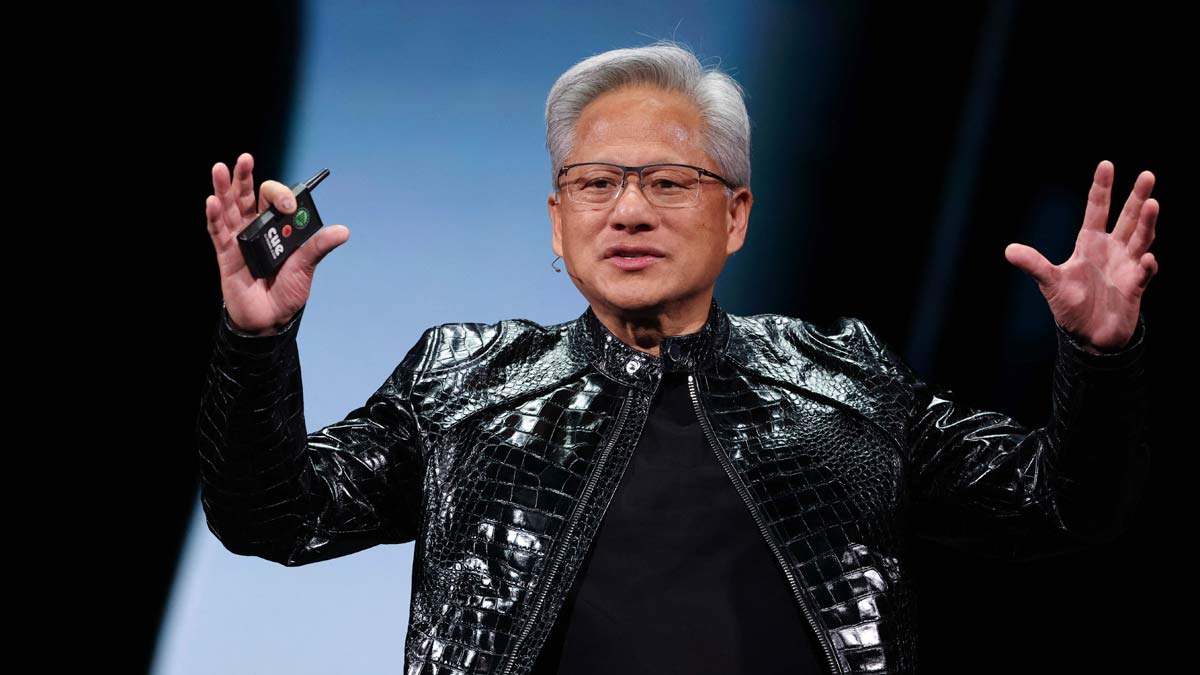
Jensen Huang, the founder and chief executive of Nvidia, faces mounting uncertainty over his future at the semiconductor giant, with the company's board set to meet on Wednesday to decide on the next course of action.
Huang has been engulfed in controversy following reports alleging two extramarital relationships, one of which involved a businesswoman suspected of having links to Chinese intelligence services.
His possible departure would leave a significant leadership vacuum at the roughly $4 trillion chipmaker, which he co-founded and built over more than three decades into the world's leading supplier of AI chips and a central player in the global artificial intelligence boom.
According to Reuters, Huang, 63, has no obvious successor and owns approximately 3.6 per cent of Nvidia's shares. He also has dozens of direct reports, reflecting the highly centralised leadership structure he has maintained at the company.
Gil Luria, head of technology research at D.A. Davidson, told Reuters that removing Huang immediately could prove difficult for Nvidia, given the absence of a clear succession plan.
“If Mr. Huang broke the law or violated company policies, the board is likely to act as soon as they have proof,” Luria said.
The controversy erupted after the New York Times reported last week on Huang's alleged relationship with a Chinese businesswoman identified as Alice Huang. The report raised suspicions that she had cultivated a close relationship with the Nvidia chief executive and may have facilitated the transfer of advanced Nvidia AI chips and sensitive information to Beijing.
The newspaper subsequently reported another alleged extramarital relationship, this time involving Kimberly Powell, Nvidia's vice-president of healthcare, who reports directly to Huang. The allegation has raised questions about potential conflicts of interest and compliance with the company's workplace policies.
Nvidia's code of conduct calls on employees to avoid situations in which their actions could create conflicts of interest, including those arising from personal relationships.
The controversy has also weighed on investor sentiment. Nvidia has reportedly lost around $600 billion in market capitalisation this week amid concerns surrounding the allegations and the board's investigation.
