



India’s mobility debate often begins with electric vehicles. Cleaner transport is widely seen as requiring a shift away from petrol and diesel, and EVs are central to that shift.
But electrification is not the whole story. Millions of cars, trucks, autos and buses will continue to run on petrol, diesel and CNG for years. Their owners, drivers and fuel stations will remain part of India’s daily mobility system. The question is not whether India should pursue electrification. It is whether the existing fuel network can be made more efficient while that transition happens.
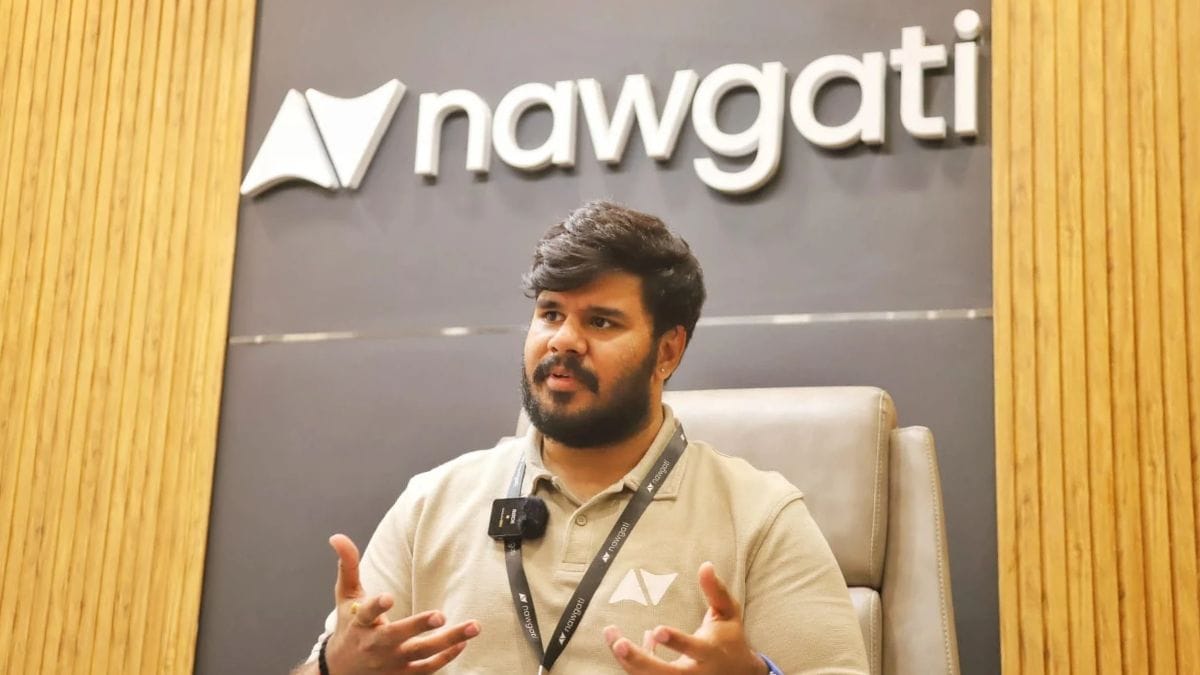
Vaibhav Kaushik, co-founder and chief executive of Nawgati, argues that fuel-tech startups can help modernise this network. In the conversation below, he explains why queues, fuel shortages and poor station-level data matter—and how simple technology could improve the system without rebuilding it from scratch.
Of late, whenever we talk about mobility, we end up picturing futuristic upgrades of current electric vehicles. But not all future is electric. If anything the history of India has taught us, is that change happens in phases. And we need to factor in infrastructure and facilities for this transition period.
The same goes for electrification. Millions of cars, trucks, autos and buses will continue to run on petrol, diesel and CNG for years. Their owners, drivers and fuel stations will remain part of India’s daily mobility system.
Of course, India should pursue electrification as one of the possible futures. But it also has to explore whether the existing fuel network can be made more efficient while that transition happens.
On that note, THE WEEK recently spoke to Vaibhav Kaushik, co-founder and chief executive officer of Nawgati, a fuel-tech startup backed by the Department of Science and Technology and the Ministry of Electronics and Information Technology (MeitY). It also partners with Indian Oil, Torrent Gas, HP Gas, JioBP, and Mahanagar Gas. Here are a few excerpts from the interaction.
Q: Isn’t the future of mobility in India all about electric vehicles? Why should we also focus on the existing fuel network?
Vaibhav: “When we talk about the future of mobility in India, the conversation usually stops at electric vehicles. That is understandable, as EVs are important for cleaner air and lower oil imports. But for the next ten years or more, most of the cars, trucks, autos and buses on our roads will still run on petrol, diesel and CNG. If we focus only on what is coming, we ignore a system that millions of people use every day.”
Q: What does this gap look like in practice at a fuel station?
Vaibhav: “The problems with that system are easy to spot at any fuel station. Drivers often join a queue without knowing how long the wait will be. CNG users may reach a station only to find it has run dry. For taxi and delivery drivers, time spent waiting is money lost, since a vehicle standing in a queue earns nothing. Station owners also struggle, because they rarely have clear data on how many vehicles arrive and when. India has more than one lakh fuel stations, yet very few offer drivers any live information.”
Q: Is the fuel-station network broken? Has it failed to keep pace with technology?
Vaibhav: “The network itself is not broken. It simply was not built for a world of apps, digital payments and real-time data. Rebuilding it from scratch would cost far too much and take far too long. Fortunately, it does not need to be rebuilt. It needs to be upgraded.”
Q: What can fuel-tech startups actually do to improve stations that already exist?
Vaibhav: “This is where fuel-tech startups can help. Simple technology can be added to stations that already exist. Cameras can count vehicles and measure waiting time. Digital systems can track fuel stock, so a station knows when to reorder before it runs out. Apps can show drivers which nearby station has fuel and the shortest queue. None of this needs new land, new vehicles or a new power grid, so improvements can show up quickly.”
Q: Won’t improving petrol, diesel and CNG stations distract from India’s electric-vehicle transition?
Vaibhav: “Better fuel stations also support the move to electric. Charging stations will soon face the same challenges: unclear availability, long waits at busy points and poor planning. The lessons we learn from managing fuel stations today, such as tracking demand and reducing crowding, will apply directly to charging points tomorrow. CNG matters here too, as many cities depend on it for public transport and deliveries.”
Q: What practical steps can fuel companies, city gas distributors, and policymakers take now?
Vaibhav: “A few steps could speed this up. Fuel companies and city gas distributors should run pilot projects with young technology firms instead of waiting for perfect products. Data about fuel availability should be shared in a common format, so that drivers and planners can use it easily. And government and corporate buyers should favour solutions that deliver clear results, such as shorter queues and fewer stock-outs.”
Q: Finally, should Indians choose between petrol, diesel, CNG and electric vehicles?
Vaibhav: “India does not have to choose between petrol and electric. It has to make sure that every part of its mobility system, old and new, works well. Improving the fuel network we already have is one of the fastest and most practical ways to do that, and it can start today.”
