



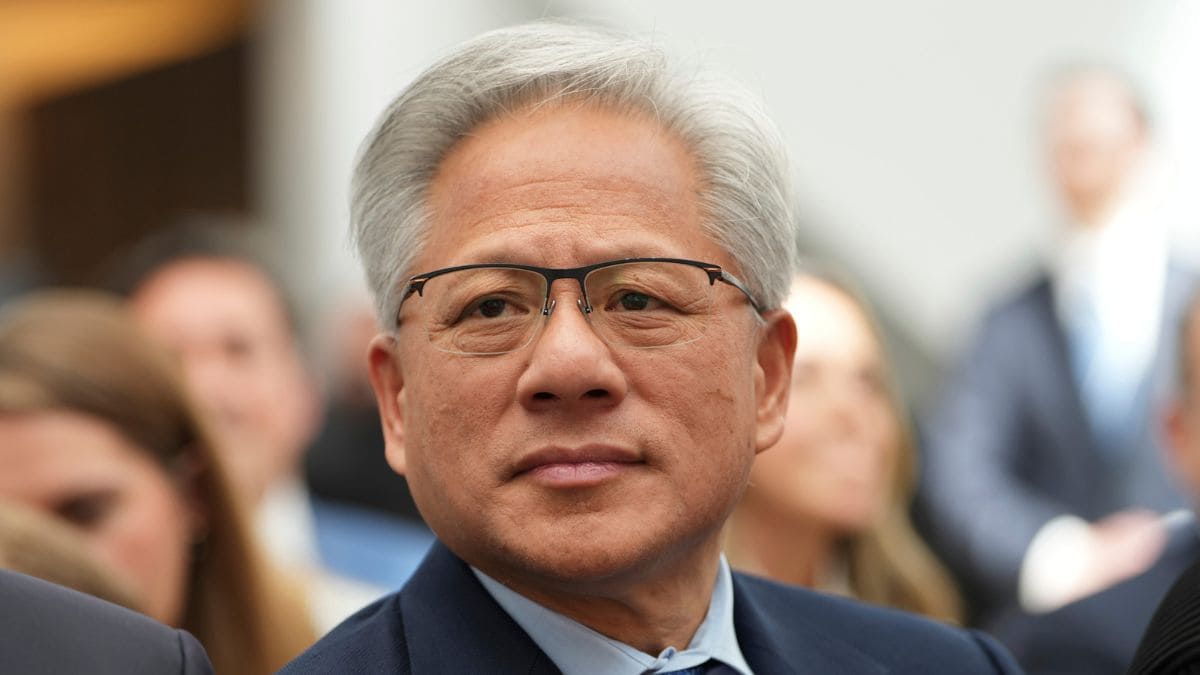
As Nvidia founder and CEO Jensen Huang faces the heat for an extramarital affair with Chinese businesswoman and alleged spy Alice Huang, the controversy's ripples are bound to spread across the heavyweight tech company’s stocks and financials. The incident has drawn scrutiny onto the company’s corporate governance and has affected investor confidence.
Nvidia Corporation on Sunday said that it was investigating Huang’s relationship after he apologised for the romantic relationship he pursued with Alice, whom US intelligence has determined to be a Chinese spy.
Nvidia has reiterated that national security or company secrets were not compromised. Investors are awaiting the results of the investigation to know whether Huang was targeted by a foreign intelligence operation.
The controversy arrives at a testing time for most AI-linked stocks in the US market, as investors fear disruptions to AI infrastructure growth and stricter regulatory action following the Democrats' win in the US midterm elections. Both the issues stacked on top have snowballed into a share price drop of over 12 per cent for Nvidia.
The company, which frequently competes with Apple for the world’s most valuable publicly traded company, hovers near a massive $5 trillion market capitalisation. The company’s business is driven by explosive growth in AI data centres. Of the company's $96.2 billion revenue in Q2 2027, $89 billion was accounted for by AI data centre revenue.
The company has partnered with six major Wall Street and alternative asset management firms, including Apollo Global Management, BlackRock, Blackstone, Brookfield Asset Management, Goldman Sachs, and KKR, to issue over $500 billion in third-party capital. However, Nvidia has the option to act as a safety net and can pay up to $125 billion to help customers and partners. Critics frequently term this circular financing.
In June 2026, the company also returned to the debt capital markets as it required massive operating cash flow for AI infrastructure, raising $25 billion through a US bond issuance.
Nvidia’s credit default swap (CDS) cost, the annual price of insuring its debt, more than tripled in 2026, signalling that the risk associated with the company’s debt is rising.
Hence, if Huang’s authority is challenged, Nvidia might adopt a defensive strategy against vendor financing to customers. This might potentially worsen the tech sell-off on the global markets.
The controversy also worsens Nvidia’s sensitive business relationship with China as export restrictions on Nvidia AI chips may face further scrutiny. The businesswoman Alice was associated with Singapore-based Megaspeed, an Nvidia customer that was scrutinised for alleged efforts to obtain advanced AI chips amid from export restrictions to China.
Republic lawmakers have reportedly asked Huang to brief Congress, and any resulting regulatory action might worsen AI exports to Asia from the US. This might potentially hurt tech-heavy markets such as Japan’s Nikkei 225.
