



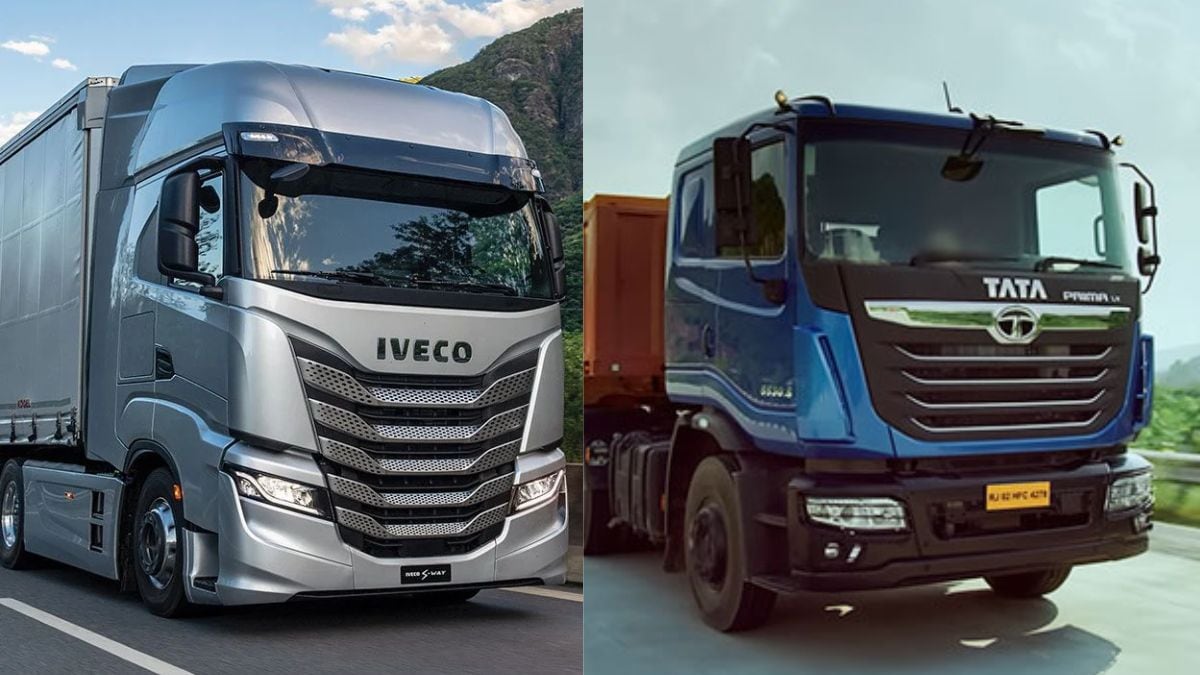
Following it's demerger in 2025, the commercial-vehicle entity of automobile giant Tata Motors will now compete in the Latin American market through the Italian company Iveco.
Tata Motors made a cash-only voluntary tender offer on October 30 through its Dutch-based subsidiary TML CV Holdings to acquire the Italian commercial vehicle company. It acquired an initial 89.42 per cent stake in Iveco for approximately $4.5 billion.
Later, the company reopened the tender offer window on November 6, during which it acquired 18.31 million common shares at the price of $16.06 per share, raising its stake to 96.29 per cent. The settlement for the second round of offers is scheduled for 13 November.
TML CV can now initiate the Dutch squeeze-out process. The statutory process allows a company holding at least 95 per cent of the company’s issued share capital and voting rights to force the remaining minority shareholders to transfer their shares in exchange for cash compensation.
The acquisition gives Tata immediate access to factories in Sete Lagoas, Brazil, and Córdoba, Argentina. The merged Tata-Iveco entity is projected to have a revenue of $23 billion, distributed across Europe, India, South America and the rest of the world. It is also expected to achieve annual sales of over 590,000 vehicles in the commercial vehicle sector.
It gives the company access to advanced European tech (such as Euro 7 emission standards) and electric or alternative-fuel platforms, saving years of organic research and development.
IVECO is best known for commercial vehicles ranging from buses to heavy-duty trucks. The company is the second-largest player in Argentina’s market and the fifth-largest player in Brazil.
However, the company faced recent financial struggles, reporting a net loss of €45 million for the July–September quarter, marking its second quarterly loss of the year.
Tata Motors has followed a similar game plan with overseas acquisitions before. Buy a struggling business and ease into markets where otherwise building a business from scratch would take multiple years.
In 2004, the company bought South Korea’s Daewoo Commercial Vehicle for about $102 million. It followed the same pattern in 2008, acquiring Jaguar and Land Rover from Ford Motor Company for an even larger sum of $2.3 billion. The company is now known as Jaguar Land Rover (JLR), a wholly owned subsidiary of Tata Motors.
Tata Motors struggled with JLR. From 2018, the company was hit by US-China trade tensions and weak demand for diesel cars in Europe. It also faced high investment spending for electric and luxury vehicle rollouts, resulting in Tata Motors’ reported net loss of 3,483 crore in the third quarter of FY26.
However, this is not the reason for the stock drop in the company’s shares around 2025. That was a price adjustment following the demerger of Tata Motors Passenger Vehicles Ltd (TMPVL) and Tata Motors Commercial Vehicles Ltd (TMLCV).
The Iveco acquisition may be different, as TMLCV is already a leader in India with a 55.7 per cent share of the Heavy Commercial Vehicles market. In the case of JLR, Tata was only gaining access to luxury passenger vehicles.
