



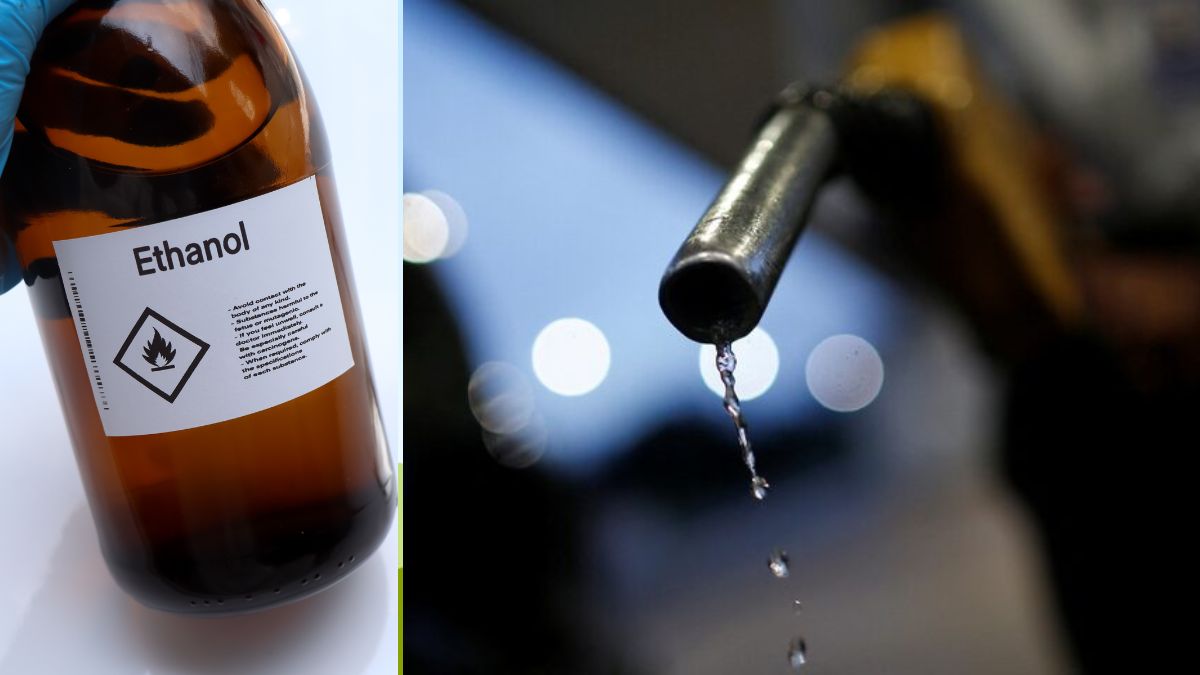
State-run oil marketing companies (OMCs) on Saturday rejected claims that petrol samples from some outlets in Karnataka contained ethanol exceeding the legal 20 per cent limit.
According to a statement from the Karnataka state government, petrol sold in seven districts in the state contained ethanol blends as high as 31.2 per cent.
The statement followed the Karnataka Department of Food, Civil Supplies and Consumer Affairs, with the Legal Metrology Department, launching an inspection after OMCs failed to clearly disclose ethanol levels.
They collected 63 samples from IOCL, HPCL, BPCL, Shell and Nayara fuel stations in the seven districts. The ISO-certified Shriram Research Institute in Bengaluru conducted the tests and found ethanol levels ranging from 13.5 per cent to 31.2 per cent.
The Karnataka state government demanded that the Centre take strict action against the OMCs and set up a nationwide mandate requiring every fuel station to clearly display the exact ethanol blending percentage on display units.
OMCs claim testing is unreliable
OMCs reacted sharply to the accusation, claiming that the samples were collected without the participation of their representatives and challenged the testing methods.
In a joint statement, IOCL, HPCL and BPCL said, “The OMCs would like to clarify that the claims, as reported, are not supported by testing conducted in accordance with the prescribed statutory and technical procedures.”
The test conducted had found up to 31.2 per cent ethanol in samples from IOCL, while HPCL samples contained upto 30.5 per cent ethanol and the ones from BPCL had 26.5 per cent.
The OMCs reiterated that they follow the prescribed specification from the IS 17021, the Bureau of Indian Standards (BIS), for ethanol-blended motor gasoline. According to them, the sampling and testing of petrol are regulated under the Essential Commodities Act and further specified by the Marketing Discipline Guideline (MDG).
The OMCs claimed they sought retention samples, outlet-wise details and laboratory reports from the State Level Coordinator but did not receive them. They added that the findings are from a third-party laboratory rather than testing conducted at a laboratory specified under the control order.
The companies added that they are monitored by the Centre for High Technology (CHT), an arm of the petroleum ministry. They cited a study that found prescribed ethanol content in the range of 19 to 21 per cent in 893 samples.
“The findings are inconsistent with the substantially higher ethanol levels reported in the Karnataka press release and reinforce the need for a transparent, technically sound and jointly verifiable testing exercise,” the OMCs added.
They further requested the state government to share the complete sampling documentation, outlet-wise report and details of the test methodology. The OMC’s have also sought access to the counterpart samples, so they can be tested at an authorised laboratory.
