



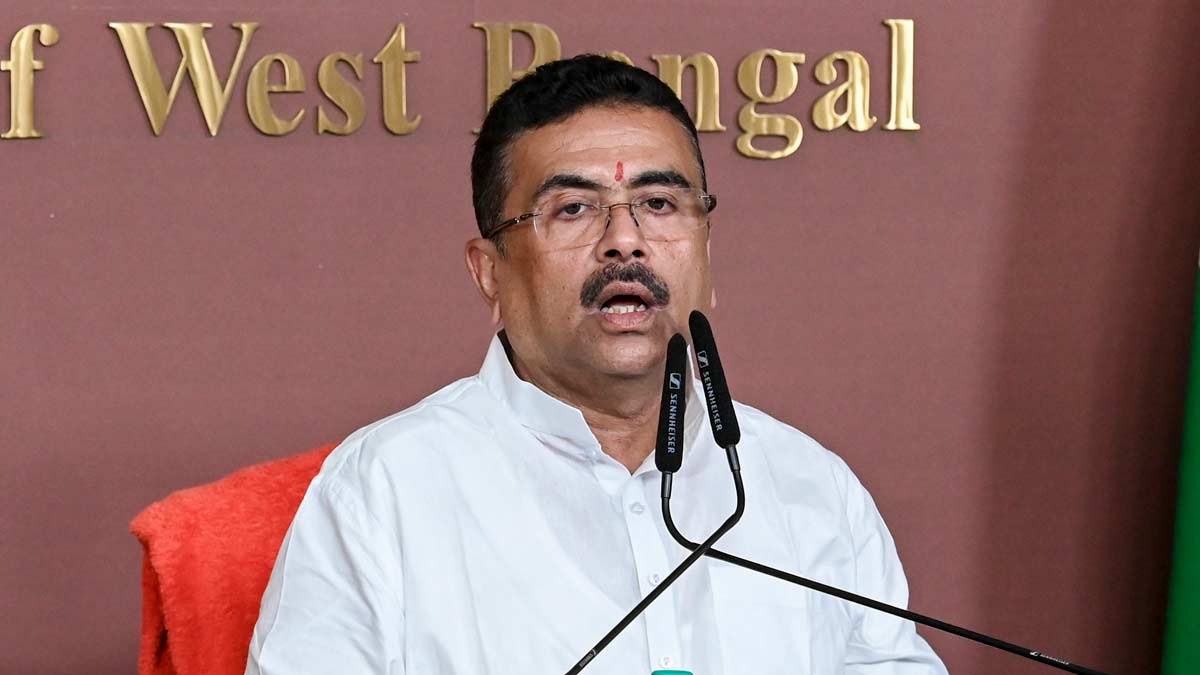
The state government unveiled the West Bengal Investment Promotion Policy, 2026, on Thursday, keeping with Prime Minister Narendra Modi’s Viksit Bharat and Atmanirbhar Bharat vision. Chief Minister Suvendu Adhikari said West Bengal failed in the past because there was no industrial policy. While the new policy was unveiled on Thursday, it comes into effect since May 9 when the BJP government took over. There is a backlog incentives of ₹50,000 crore, which will not be possible for the government to entirely give, but will try to lower the gap of the shortfall with time.
The industrial policy aims to focus on manufacturing, advanced technology, clean energy and strategic sectors of defence, semiconductors and electric mobility, which will take the state towards self reliance, according to the authorities.
While the erstwhile Trinamool Congress (TMC) government stopped all key incentives for industries in the state since it came to power, the new regime looks at overturning that and attracting industries, expansion of existing industries and also keeping it a part of its expenditure on reviving closed units and industries. There was no industrial policy in the state since 2025 and existing and new industrialists keenly awaiting the new industrial policy.
“We are very positive about industrialisation. We are working to build a business and industry friendly environment in our state. We are trying to stop hooliganism in our economy,” said Chief Minister Suvendu Adhikari, referring to “cut money” and “syndicate”. The CM, however, acknowledged trade unions as stakeholders in Bengal’s contribution in making the industrial policy work in favour of growth of industry in the state.
Special emphasis has been given to women employees with 100 per cent Employee Provident Fund (EPF) contribution towards women and transgender employees in the MSME sector for 10 years. 75 per cent EPF for women in service units with more than 200 employees will be covered for five years and 50 per cent for men. Another 50 per cent EPF will be covered in large units and strategic and mega projects with at least 200 jobs in 400 priority areas for five years.
Incentives that were withdrawn by the erstwhile government was a drawback for industries. The present government has now placed incentives for Fixed Capital Investments (FCI) and has set caps on fixed capital for industry, which the government will pay out for 10 years or after production starts. There will be 100 per cent assistance for regular units, 110 per cent for thrust sector unit and 120 per cent for unit in a priority area.
The state government said it studied industrial policies of Gujarat, Tamil Nadu, Uttar Pradesh and Maharashtra for the four years before drafting Bengal’s policy. The state is open to suggestions from industrialists to amend the policy to eradicate any roadblocks. There will be a buddy representative from the government to assist industrialists from the time of the start of the project till it goes on ground, whether this be new industries or industry expansions. The government had already started an industry helpline number.
The CM spoke about getting back migrant labourers back to the state and working on better wages, who are instrumental in building industries in the state. There will be focus on skill training to be industry ready and help generate employment.
Land acquisition has been a major challenge in the state since the Left Front government’s time, with forceful land acquisition from farmers which marred the state’s reputation. TMC failed to generate large scale investments and in turn employment in the state. The BJP government says they will assist industrialists with land purchase, land pooling and land development and not leave it entirely up to industrialists like in the past. The government says they have enough land for the short and medium term. “In the long term, there has to be a lot of modifications to the Land Tenancies Act, particularly pertaining to the barga which had a historical role to play, but not relevant in today’s context,” said Finance Minister Swapan Dasgupta.
Dasgupta spoke about instilling confidence in investors by improving law and order and build infrastructure.
“We have come up with something which is doable in the short and medium term. It is not a 10-commandment of the policy. This is something which is the basic scaffolding of the architecture of the future has been set out here. We will build on these. It is to give this degree of confidence and predictability to the investing community,” said Dasgupta.
The FM spoke about the backlog due to the erstwhile government. “As the Chief Minister pointed out, there is a backlog. There is a certain sovereign commitment which needs to be honoured. We will have to work it out, but rough estimates are ₹50,000 crore. We will honour it, but the timing and scheduling of it may take time,” added the minister.
The government is setting up an escrow and ring-fencing certain resources so that investors remain confident that what has been committed will be given and not used for something else.