



Imagine going to the store to buy your favourite pack of potato chips, only to find the brightly coloured packaging replaced with a black and white one.
This is the reality awaiting many Japanese consumers, as Calbee, a potato chip brand in the East Asian island nation, announced on Tuesday that it will temporarily change its vivid packaging to greyscale, citing supply chain disruptions caused by the West Asia conflict. Although the company did not explicitly state it, the decision concerns the availability of naphtha, a component used in the production of ink.
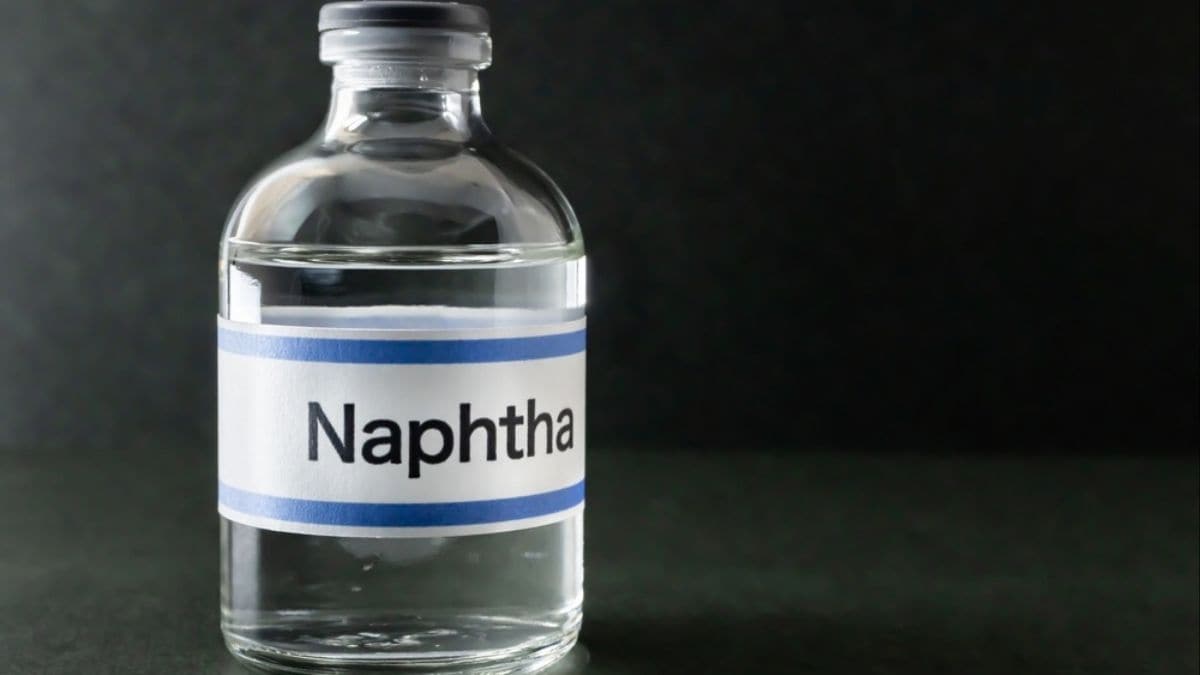
Naphtha, largely exported by the West Asian countries, is a byproduct of crude oil. From ink to plastic, it is a crucial component used in the manufacturing of many such products. Amid the US-Iran war and tensions around the Strait of Hormuz, supply from the Middle East tightened, almost doubling the price of naphtha in Asia. Countries like Taiwan and India have shifted this dependence and are now relying on Russia for Naphtha imports.
India is the second largest importer of naphtha in Asia and a significant exporter in the global market. According to the Petroleum Planning and Analysis Cell, India consumed about 9.43 lakh metric tonnes of Naphtha in March 2026 alone. In FY2024-25, this was around 120 lakh metric tonnes.
The naphtha specifically used in ink production is solvent naphtha. India imported solvent naphtha worth $310.89 million in FY 2025, up around 2 per cent year-on-year. Though India's solvent naphtha exports decreased by 13 per cent, they remained comparatively high in FY2025, with around $1,460 million in exports. Given the higher amount of exports, it is evident that India has a robust production of solvent naphtha.
However, naphtha, being a byproduct of crude oil, makes Indian brands indirectly susceptible to the crisis. According to the Ministry of Statistics, the import dependency of crude oil was around 89 per cent during FY 2024-25. In February 2026, India imported 91 per cent of its crude oil requirement, out of which 54 per cent was imported from West Asian countries.
The US-Iran conflict is making crude procurement difficult, leaving several of India's industries dependent on crude oil derivatives—like the package printing industry—vulnerable to global energy shocks.
