



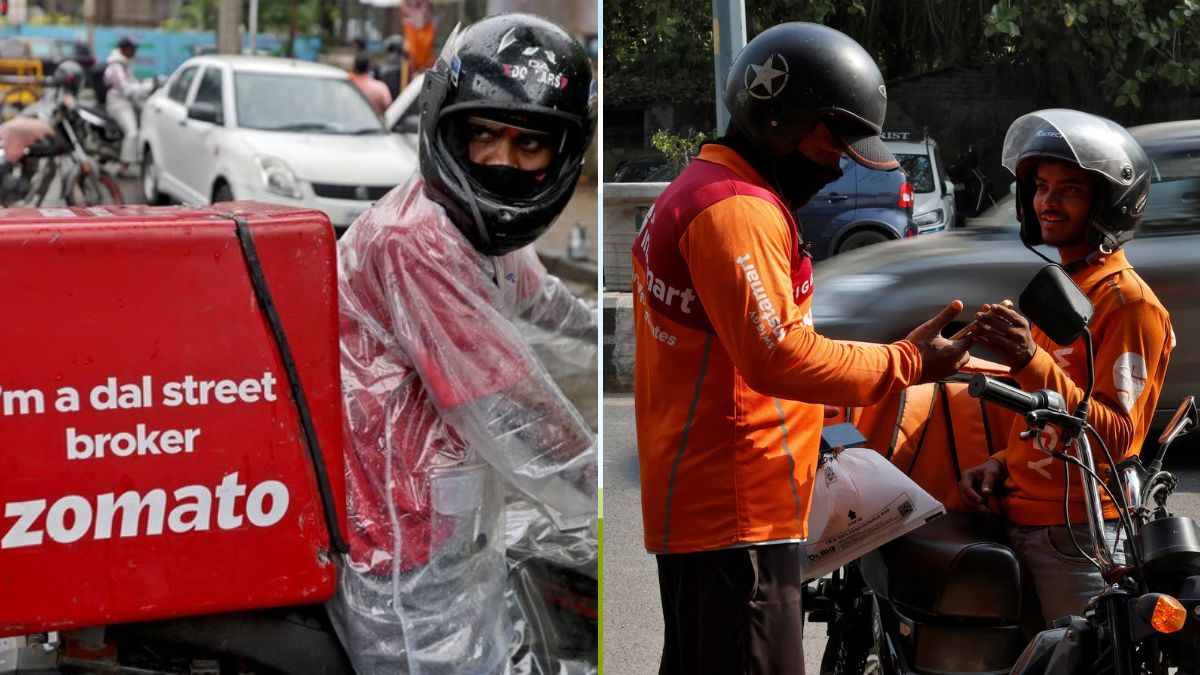
Think of the last time you were in a bind. Perhaps dinner plans fell through, a sudden rainstorm made a walk impossible, or guests were arriving at a house that was far from ready. A few taps on a smartphone screen and someone showed up on time to solve the problem. No questions asked.
In the rush of our modern lives, we rarely stop to ask who these individuals are or what their lives look like beyond the blue dot moving across a digital map. They are the gig workers, the invisible backbone of urban convenience. Millions of them are currently powering food delivery, mobility, home services and logistics.
Current estimates place this workforce anywhere between 15 and 23.5 million, with the growth curve pointing steeply upward as India’s digital economy matures.
However, these millions of individuals existed in a legal blind spot for the longest time. Historically, Indian labour jurisprudence was built around a relatively simple, binary idea: the stable employer-employee relationship. This framework was defined by fixed wages, predetermined working hours, clear lines of accountability and statutory protections such as provident funds, health insurance and gratuity.
The moral and legal basis for these protections was economic dependence, the theory being that if a worker depends on a single employer for their livelihood, the law must step in to balance the scales of power. It was a model designed for the industrial age, for factories and offices where the relationship was long-term and the responsibilities were clear.
Gig work completely dismantled this traditional model. In the platform economy, there is no fixed employer, no guaranteed wage and no continuity of work. A worker logs in and out at their own discretion or at will, as the platforms like to phrase it. The companies themselves rarely identify as traditional employers, instead calling themselves digital intermediaries or aggregators. Control still exists, but it has been abstracted. It is exercised through an algorithm rather than a human manager. Pricing, task allocation, ratings and penalties are all decided by code.
While the control is centralised, the responsibility remains diffused. This is precisely why the model was able to scale with such velocity. Labour became a variable cost rather than a fixed liability for platforms. They could scale on demand by removing payroll burdens and long-term commitments. While this is undeniably efficient and profitable for the digital economy, it inherently transfers the operational risk downward to the individual worker.
The numbers on the ground tell a much more sobering story. While earnings for delivery partners or drivers are often advertised at attractive rates of ₹30,000 to ₹40,000 a month, the actual take-home pay is significantly lower. To reach the incentive thresholds required to make a living wage, 14 to 16-hour workdays have become the standard rather than the exception. These workers operate without the safety nets that traditional employees take for granted. There is no sick leave, no protection against wrongful termination and workers can find themselves de-boarded or blocked from the app instantly without any formal discussion or recourse.
This is where the new Labour Codes represent a shift in India's economic history. For the first time in independent India, the law is acknowledging the reality of the 21st-century workforce. The government is bringing millions out of the shadows by officially including terms like gig workers, platform workers, and aggregators in the legal vocabulary. It recognises a middle category of employment, individuals who are economically dependent on a platform but remain operationally flexible.
The Code on Social Security is the centrepiece of this legislative evolution. It creates a dedicated social security architecture specifically tailored for gig workers. Under this framework, aggregators are required to contribute a portion of their turnover, typically between 1% and 2%, into a dedicated fund meant for insurance, health benefits, pensions and general welfare schemes. This indicates a transition from zero obligation to a statutory contribution. The design is intentionally pragmatic, recognising that a gig worker is not tied to one platform. They might deliver food for one app in the morning, drive for another in the evening and work across different cities throughout the year. Consequently, the system is built to be portable, Aadhaar-linked, and national in scope, ensuring that benefits follow the worker rather than the job.
Even the eligibility thresholds within the Code reflect a deeper understanding of the gig economy's fluid nature. A worker needs to be active for only 90 days in a year to qualify for benefits. This is a calibrated entry point, light enough to be inclusive of those who work part-time, but strong enough to provide meaningful support. In traditional employment sectors, these thresholds often run as high as 180 to 240 days for comparable benefits. The law ensures that the most vulnerable segments of the workforce are not excluded by arbitrary administrative hurdles by lowering the bar. However, as with any major policy shift in a country as vast as India, the real story is no longer just about the law itself. It is about the honesty and efficiency of its execution.
The government has already laid the foundation by issuing Aadhaar-linked Universal Account Numbers (UAN) through the e-Shram portal. This has effectively ended the legal blind spot, transforming the 1-2% aggregator contribution from a suggestion into a statutory mandate. The bones of the system, the legal recognition and the portable identity are now officially in place across India.
The next critical step is the Digital Handshake, moving from annual paper compliance to real-time, API-based transparency. Workers will finally see their benefits reflected per task on their own screens by integrating platform data directly with government systems. When the government’s legal framework and the platforms’ technology combine in this way, it creates a seamless, AI-driven safety net that is as fast and flexible as the gig economy itself.
We are moving away from a binary world of "employee vs. contractor" toward a more sophisticated understanding of labour. The gig economy is now central to how urban India functions.
India has a unique opportunity to lead the global stage by building one of the first large-scale, digital-first social security systems for non-traditional work. If implemented with integrity, it will be a system designed for the future of work.
The author is CEO and co-founder of Teamlease Regtech, a Pune-based company that provides companies with regulatory, legal and operational compliance software.
Opinions and views expressed in this article are those of the author and do not purport to reflect the opinions or views of THE WEEK.
