



It's a scenario every Indian shopper knows. You see a product marked as available on a brand's website. You try to order it online, but it's out of stock. You check the store locator—available nearby.
You make the trip, spend ten minutes searching the aisles, and finally approach the store manager. He checks his system. It shows the product is in stock. He checks the back. It isn't there. "Our system hasn't been updated yet," he says. "We'll send you a message as soon as it's back in stock."
In the boardroom, this is called a store transfer failure. On the street, it's a lost customer.
India's retail conversation has, rightly, obsessed over last-mile delivery. We've built sophisticated infrastructure around getting a package from a warehouse to a consumer's door—real-time tracking, AI-driven reattempts and same-day promises.
The D2C world has metrics for everything: RTO rates, delivery success percentages, NPS scores. B2B gets a WhatsApp group and a spreadsheet.
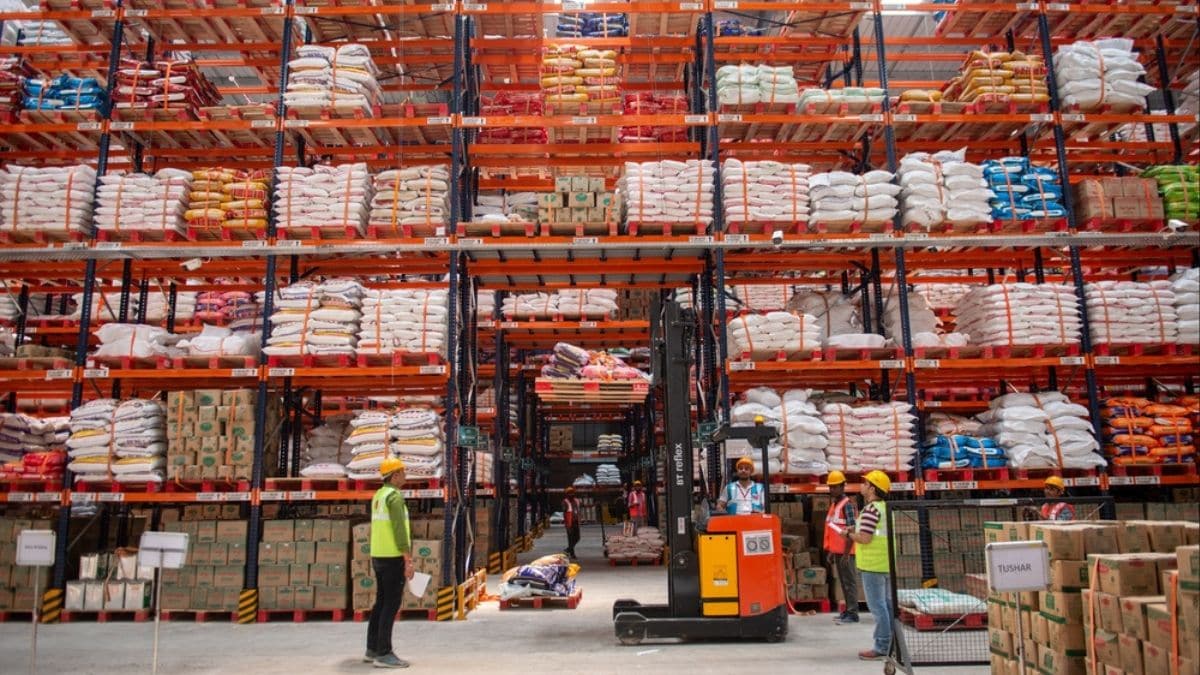
The movement of goods between warehouses and stores, the leg that actually keeps retail shelves stocked, carries almost none of that intelligence.
It runs on phone calls, manual documentation, and the institutional memory of a logistics coordinator. When it fails, the failure is invisible until it becomes an empty shelf. And by then, the consumer has already moved on.
A billion-dollar systemic blind spot
India is building a Unified Logistics Interface Platform (ULIP) to modernise supply chains at the national level. Yet internal stock movements between warehouses and stores, the most basic of transfers, still run on dockets written by hand and tracking that exists only inside someone's head. The result: billions in inventory that is physically moving but financially frozen.
When we talk about national logistics efficiency, we look at port turnaround times and highway speeds. But for a retailer, efficiency is defined by the velocity of a single SKU. Every day a shipment sits in an untracked truck between a warehouse and a mall is a day that capital is dead. It cannot be sold, it cannot be promised to an online buyer, and it cannot be liquidated.
The numbers are not abstract. A mid-size consumer brand processing 100+ B2B invoices a day entirely by hand can expect roughly 2 per cent of shipments to be routed to the wrong locations every month—incorrect pin codes, billing addresses where shipping addresses should be. Those errors compound quickly: rerouting alone adds 4–5 per cent to per-shipment costs, and that's before accounting for delayed shelf availability and the sales lost in the gap. Multiply this across India's organised retail sector, and the figure runs to thousands of crores annually, silently absorbed as operational cost.
The rise of ghost inventory
The core problem is what you might call ghost inventory. A brand's system says the product exists. But because the B2B handshake between warehouse and store broke down somewhere due to a delayed truck, a documentation error, or a missed delivery window at a loading dock, the product is functionally non-existent for the consumer standing in front of an empty rack.
On the surface, it may seem just an ops problem, but it's really a bigger revenue problem. A customer who can't find what they came for doesn't wait; they switch, often to a competitor. The marketing team doesn't know this happened. The D2C ops team doesn't know. The failure occurred two steps upstream, in a part of the supply chain nobody was watching closely enough.
Omnichannel promise vs middle-mile reality
As India moves toward true omnichannel retail, where inventory is supposed to be fluid across warehouses, stores, and quick commerce nodes, the stakes of getting this wrong are only rising. The promise of omnichannel is that if a product isn't selling in one location, it moves to where it is. That promise lives or dies in the B2B middle mile.
The good news is that the tools to fix this largely exist. The same data infrastructure that transformed D2C logistics, carrier performance intelligence, exception management, and automated workflows for failed deliveries is applicable to B2B. The question is whether businesses are demanding it for their internal supply chains with the same urgency they demand it for consumer delivery.
The next frontier of Indian retail won't be won with faster checkout or a better app. It will be won in the middle mile—in the unglamorous, under-instrumented movement of goods between a manufacturer, a warehouse, and a shelf.
B2B logistics isn't a back-office cost to be managed. It's a customer experience problem in disguise. It's time the industry started treating it like one.
The author is the co-founder and CEO of ClickPost.
The opinions expressed in this article are those of the author and do not purport to reflect the opinions or views of THE WEEK.
