



In nearly six decades of membership, the United Arab Emirates has been one of OPEC's most reliable anchors. On Tuesday, that ended. The UAE announced it will leave both OPEC and OPEC+ effective May 1, 2026, in a shock decision that its energy ministry said was taken in the country's "national interest" following a comprehensive review of its production policy and capacity.
For India, the world's third-largest crude oil importer, dependent on imports for roughly 85 per cent of its energy needs, the development is the most consequential energy market shift in years.
Brent crude was trading around $111 per barrel on Wednesday morning, barely moved by the UAE's announcement, since the market's dominant driver remains the ongoing closure of the Strait of Hormuz.
Iran shut the Strait after the US–Israel conflict deadlocked into a stalemate, with President Donald Trump now reportedly preparing aides for an extended blockade of Iranian ports.
The UAE's oil pumping capacity stands at approximately 4.8 million barrels per day, which has been hindered in the near term by the Hormuz blockade.
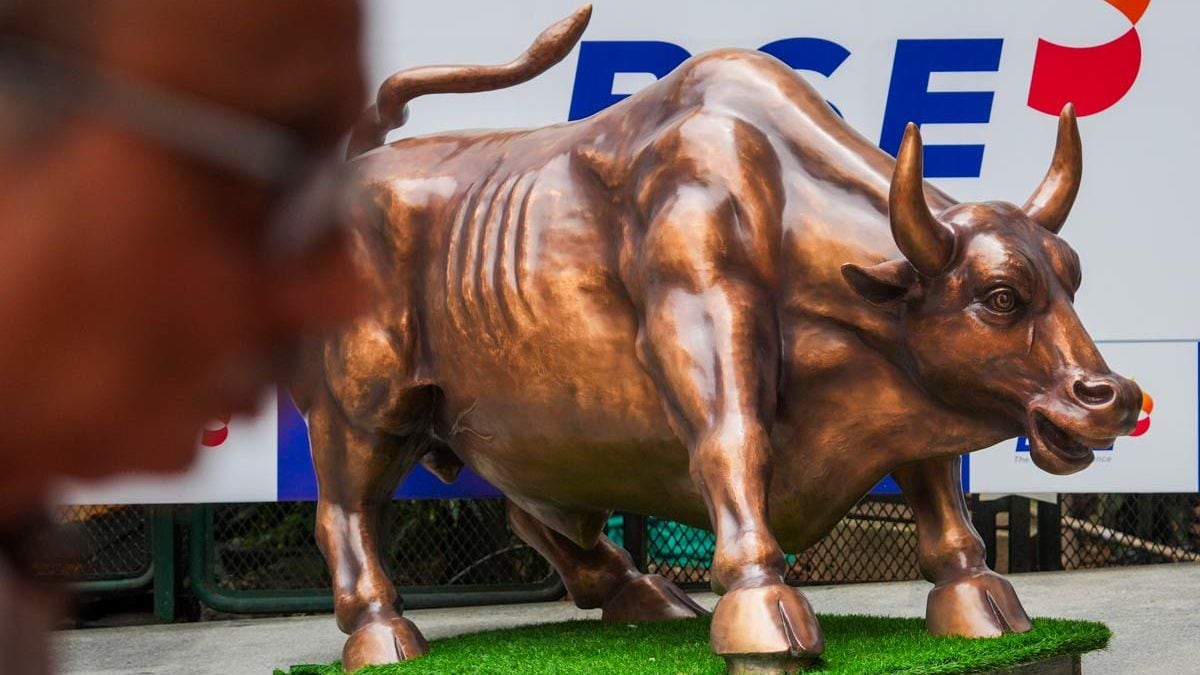
However, in a rare feat, thanks to a robust earnings season, Indian stock markets chose to look past this development and at the longer-term opportunity. As of 10.30 am, the Sensex surged to an intraday high of 77,879.68, up sharply from Tuesday's close of 76,886.91, marking a gain of nearly 993 points.
The Nifty 50 hit an intraday high of 24,296.30, compared to the previous close of 23,995.70. Fourteen of the sixteen major Nifty sectors were in the green, with the auto index leading gains on earnings optimism.
The rupee, however, slipped to 94.81 against the US dollar in early trade on Wednesday, weighed down by elevated oil prices, month-end dollar demand, and lingering safe-haven flows.
A weaker rupee directly raises India's crude oil import bill. India's industrial production growth also decelerated to a five-month low of 4.1 per cent in March, as the Middle East crisis derailed the manufacturing momentum.
Now, all eyes are also on the US Federal Reserve's rate decision later on Wednesday, which will mark Jerome Powell's final policy meeting as Fed Chair.
Once the Hormuz situation stabilises, the UAE, unshackled from OPEC's production quotas, is widely expected to ramp output toward its stated ambition of 5 million barrels per day by 2027.
Greater UAE output, combined with the country's geographic proximity to India and strong bilateral ties, could translate into better supply terms and pricing for Indian refiners.
OPEC's share of India's crude imports had already slipped below 50 per cent in FY2025, its lowest ever, as India diversified toward Russia, the US and other suppliers.
