



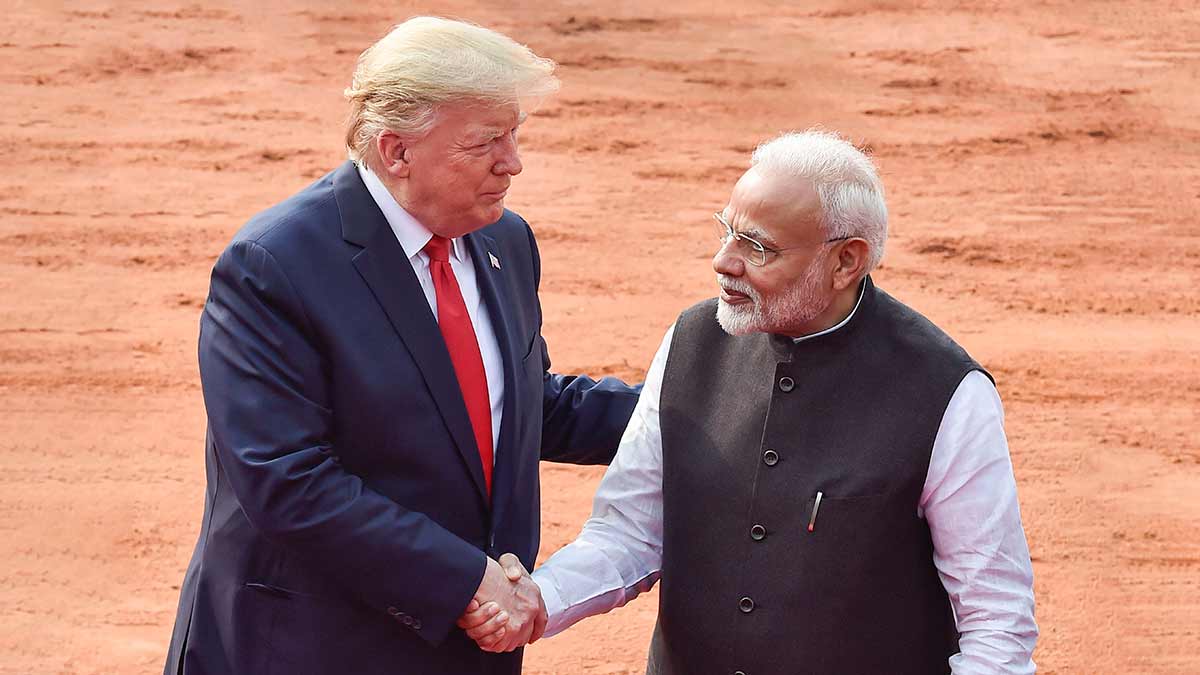
India’s exporters, tech sector and energy planners stand to gain significantly from a new India–US trade framework that aims to reset one of New Delhi’s most important economic partnerships.
In a joint statement issued in Delhi, the two countries announced they have reached a framework for an Interim Agreement on “reciprocal and mutually beneficial” trade, paving the way for a broader Bilateral Trade Agreement—something that had been in the works since 2025.
For Indian industry, the biggest upside lies in better and more predictable access to the world’s largest market. The United States has committed to providing preferential market access to India in sectors of interest and, subject to the successful conclusion of the Interim Agreement, to remove special reciprocal tariffs on key Indian exports such as generic pharmaceuticals, gems and diamonds, and aircraft parts. This could unlock higher value-added exports and support jobs across India’s pharma, jewellery and aerospace supply chains.
The deal also promises relief from earlier US national security–linked tariffs. Washington will remove certain tariffs on aircraft and aircraft parts from India that were imposed under past decisions on aluminium, steel and copper imports. India will, in turn, receive a preferential tariff-rate quota for automotive parts, improving the competitiveness of Indian manufacturers in the American market.
India also stands to gain from the promise of tackling non-tariff barriers that have long frustrated local businesses. The two sides will work together on standards and regulations, and India has secured a commitment that the United States will consider its request for further tariff reductions during the broader trade talks. Clearer rules of origin, applied jointly, aim to ensure that the benefits of the agreement largely stay within the two economies rather than being diverted via third countries.
Strategically, the statement signals a major push in energy and technology ties. India intends to purchase $500 billion worth of US energy products, aircraft, precious metals, technology products and coking coal over the next five years, while both sides plan to significantly increase trade in technology products such as GPUs and other data-centre hardware.
This, along with proposed cooperation on supply chain resilience, investment screening, export controls and digital trade rules, could strengthen India’s position in global value chains and support its digital and manufacturing ambitions.
Indian stock markets have shown their pleasure in the news. Benchmark index Sensex closed the week at 83,580.40, gaining a whopping 2,618.16 points (+3.23%) in the past 5 trading sessions.
