



Finance Minister Nirmala Sitharaman, in her ninth budget speech of 85 minutes, laid out a growth-oriented policy roadmap built around higher public investment, domestic manufacturing, and infrastructure expansion. She stayed away from populist announcements to focus on continued fiscal consolidation.
The Budget comes at a time when India’s real GDP is estimated to grow by 7.4 per cent in FY26, with nominal GDP projected to expand by 10 per cent in FY27, supported by steady domestic demand and investment momentum.
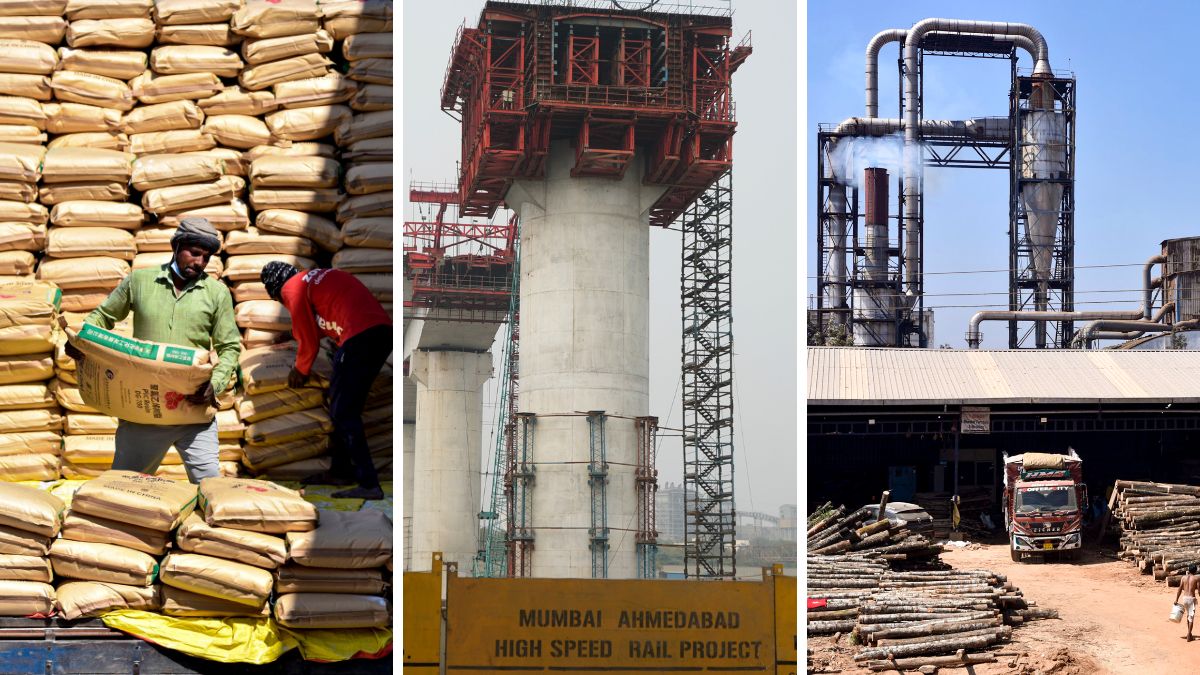
Avoiding measures that could have given big headlines for the government, the Budget reinforces the government’s preference for capital expenditure-led growth, even as it signals targeted support for youth, MSMEs and strategic sectors. Public capital expenditure has been raised to Rs 12.2 lakh crore for FY27, an increase of over one lakh crore over last year’s budget. This is in tune with the decade-long focus on infrastructure spending as the main lever for growth and employment generation. Even for the poll-bound states, the announcements were mostly related to infrastructural projects.
Prime Minister Narendra Modi presented the political frame of the budget as he described it as a forward-looking blueprint aligned with India’s long-term development goals. “This budget is a strong base for our high flight towards a Developed India of 2047,” Modi said, positioning the exercise as one focused on opportunity creation and long-term capacity building rather than short-term relief.
Unlike her previous eight budgets, Sitharaman did not use poetry or cultural references to soften the long narrative.
The budget also moved towards emerging fields like the use of AI, the creator economy, and the development of semiconductors.
Sitharaman anchored the Budget in a three-kartavya framework. The first focuses on accelerating and sustaining economic growth by enhancing productivity, competitiveness and resilience amid volatile global conditions. The second aims to fulfil aspirations and build the capacity of the population, while the third seeks to ensure that every region, sector and community has access to resources and opportunities.
Within this framework, the Budget outlines interventions across six areas: scaling up manufacturing in strategic and frontier sectors, rejuvenating legacy industries, creating “champion” MSMEs, delivering a sustained infrastructure push, ensuring long-term energy security, and developing city economic regions.
The Finance Minister acknowledged the challenging external environment marked by trade disruptions, supply-chain constraints and rising demand for critical minerals and energy, arguing that the Budget seeks to strengthen domestic capacity while remaining integrated with global markets.
We look at the five key takeaways from the budget.
Infrastructure and public investment
Infrastructure remains the centrepiece of the growth strategy. The Budget proposes seven high-speed rail corridors connecting major urban and industrial centres, including Mumbai–Pune, Hyderabad–Bengaluru and Delhi–Varanasi. A new dedicated freight corridor linking eastern and western regions and the operationalisation of 20 national waterways over the next five years are aimed at lowering logistics costs and improving cargo movement.
Urban infrastructure receives renewed attention, particularly in tier-2 and tier-3 cities that have emerged as growth centres. The government plans to map City Economic Regions based on sectoral strengths, with Rs 5,000 crore allocated per region over five years through a challenge-based, reform-linked funding mechanism.
To encourage private participation, the Budget proposes an Infrastructure Risk Guarantee Fund to provide partial credit guarantees during the construction phase of projects. Training institutes and regional centres of excellence are also planned along major waterways to address skill requirements.
Manufacturing push
Another pillar of Budget 2026–27 is the scaling up of manufacturing across seven strategic and frontier sectors, including semiconductors, electronics, chemicals, biopharma, textiles, capital goods and critical minerals.
The launch of India Semiconductor Mission 2.0 marks a shift from assembly-led incentives to a broader ecosystem approach covering equipment manufacturing, materials, full-stack design and supply-chain resilience. The mission will focus on industry-led research and training to address skill gaps in advanced manufacturing.
In electronics, the outlay for the Electronics Components Manufacturing Scheme has been increased to Rs 40,000 crore, reflecting strong investment commitments since its launch in 2025. Dedicated Rare Earth Corridors are proposed in mineral-rich states such as Odisha, Andhra Pradesh and Tamil Nadu to support mining, processing and downstream manufacturing.
To reduce import dependence, the Budget announces schemes for chemical parks, container manufacturing and high-tech tool rooms, alongside incentives to strengthen domestic capital goods capability. The labour-intensive textile sector will be supported through an integrated programme covering fibre self-reliance, cluster modernisation, sustainability and skilling, with mega textile parks to be set up through a challenge mode.
Biopharma SHAKTI, with an outlay of Rs 10,000 crore over five years, aims to position India as a global hub for biologics and biosimilars, supported by new and upgraded pharmaceutical institutes and a network of accredited clinical trial sites.
Even Defence spending has received a significant boost, in the post-Sindoor operation, with an allocation of Rs 7.85 lakh crore for FY27, accounting for nearly 15 per cent of total central government expenditure. Capital expenditure within the defence budget has risen sharply, reflecting the government’s focus on modernisation, operational preparedness and domestic defence manufacturing.
The enhanced allocation is intended to meet requirements arising from recent emergency procurements while supporting long-term capability development under the Atmanirbhar Bharat framework.
MSMEs, youth and employment
MSMEs continue to be positioned as a key engine of growth. The Budget proposes a Rs 10,000 crore SME Growth Fund to support scaling enterprises, alongside liquidity measures through TReDS and professional support via trained compliance facilitators in tier-2 and tier-3 towns.
Youth-focused interventions span health, tourism, creative industries and sports. These include expansion of allied health education, establishment of five regional medical hubs to promote medical tourism, AVGC content creator labs in schools and colleges, and the launch of a long-term Khelo India Mission aimed at developing sports talent and infrastructure.
The Budget also proposes one girls’ hostel in every district to improve access to higher education, and a structured programme to upskill tourist guides across major destinations.
Tax reforms and ease of doing business
On the tax front, the Budget announces that the New Income Tax Act, 2025 will come into effect from April 2026, alongside simplified rules and redesigned forms. Measures to rationalise penalties and reduce litigation include integrating assessment and penalty proceedings and lowering pre-deposit requirements.
For businesses, the Budget proposes a single category for Information Technology Services with a common safe harbour margin of 15.5 percent and a higher threshold of Rs 2,000 crore. Foreign cloud service providers using India-based data centres will receive tax holidays till 2047.
Customs reforms aim to simplify tariffs, promote domestic manufacturing and ease trade. The tariff rate on dutiable goods imported for personal use has been reduced from 20 percent to 10 percent, while basic customs duty has been exempted on select drugs, capital goods for critical minerals, lithium-ion battery manufacturing and nuclear power projects. While the income tax slabs remain unchanged, she marginally increased STT on options and futures trading to discourage its use.
Fiscal discipline and outlook
Despite the expansionary capex stance, fiscal consolidation remains intact. The fiscal deficit is estimated at 4.3 per cent of GDP in FY27, down from 4.4 per cent in the revised estimates for FY26. Central government debt is projected at 55.6 per cent of GDP, continuing a gradual decline.
Private consumption is expected to remain a key growth driver, accounting for over 61 per cent of GDP, while gross fixed capital formation is projected to grow by nearly 8 per cent.
Union Budget 2026–27 reinforces the government’s strategy of prioritising investment, manufacturing depth and infrastructure over short-term consumption stimulus.
