



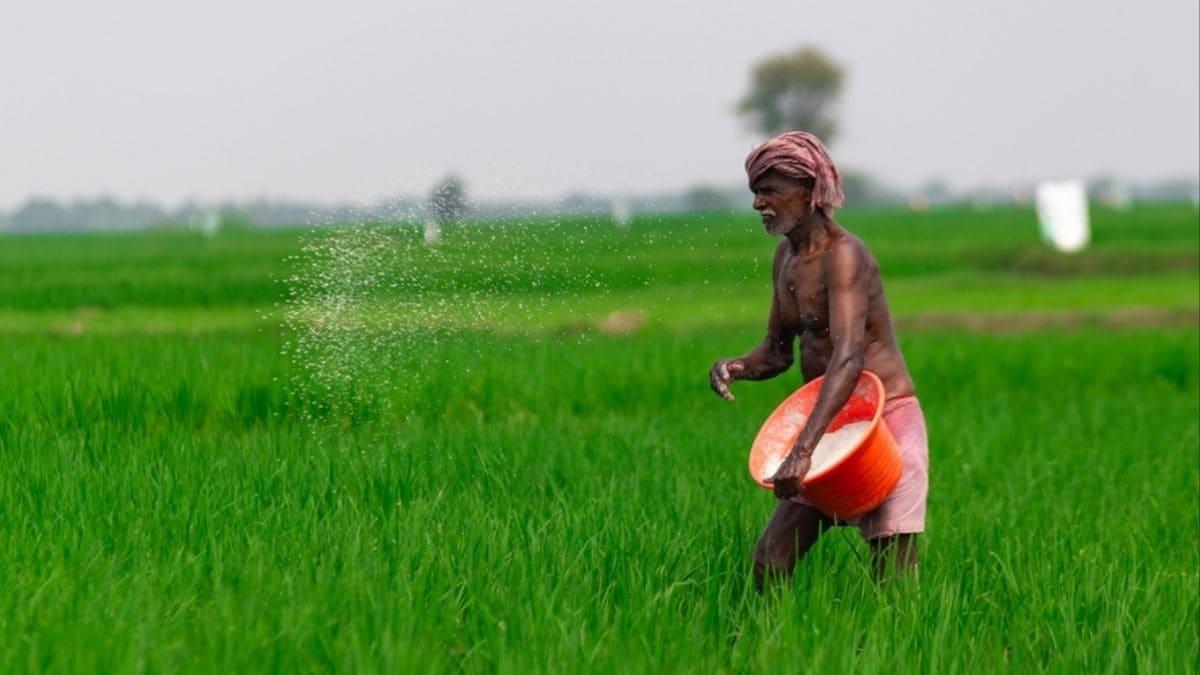
GST 2.0 corrects several visible distortions in Indian agriculture. It rationalises rates, eases compliance burdens, and lowers input costs. But it leaves untouched a deeper, more consequential flaw: a tax regime that exempts raw produce while taxing value addition. The outcome is not neutral. It systematically favours large agribusinesses and quietly discourages small farmers, Farmer Producer Organisations (FPOs), and cooperatives from moving up the value chain.
This is not an Indian anomaly alone. But India is unusual in persisting with it despite overwhelming evidence elsewhere that value addition, not raw production, is where farm incomes are stabilised.
The efficiency tax
Under GST 2.0, unprocessed agricultural produce remains zero-rated. But add basic value; washing, grading, cutting, packaging; and the same produce attracts 5 per cent GST. Fresh tomatoes pay zero. Washed, pre-cut tomatoes in a tray? 5 per cent.

The economic signal is unmistakable: efficiency is taxable; rawness is not.
The consequences are costly. India loses Rs 1.5 lakh crore annually to post-harvest wastage, with fruits and vegetables suffering 6-15 per cent losses. According to the NABCONS 2022 study for the Ministry of Food Processing Industries (MoFPI), India suffers food losses worth $18-19 billion annually, with more than one-fourth of the value lost in horticulture alone. Minimal farmgate processing—sorting, cold storage, primary packaging—is the single most effective intervention. Yet GST actively disincentivises this activity.
India processes barely 10 per cent of its agricultural output, compared with 60-70 per cent in developed economies. While advanced economies process nearly 70 per cent of produce and developing countries average around 40 per cent, India’s overall processing share is closer to 2 per cent. Disaggregated data underscores the gap: 4.5 per cent for fruits, 2.7 per cent for vegetables, 21 per cent for milk and 34 per cent for meat (MoFPI, FAO, OECD). A tax system that penalises value addition while exempting raw produce virtually guarantees this gap will endure.
Scale wins, small producers lose
Some say that Input Tax Credits (ITC) neutralise these levies. That is correct in theory, but only for firms with scale, liquidity and compliance capacity.
Large agribusinesses operate integrated supply chains, maintain dedicated tax functions, claim ITC efficiently and pass GST downstream without locking up working capital. Small FPOs and cooperatives in India operate under very different constraints: limited accounting capacity, thin cash buffers, and an inability to fully monetise blocked credits. The distributional outcome is predictable. Large firms move up the value chain; small producers retreat to selling raw produce, where margins are thinner, and volatility is higher.
This matters because about 86 per cent of Indian farmers are small and marginal, operating on holdings below two hectares. Marginal farmers alone account for around 65 per cent of cultivators but control just 24 per cent of cultivable land, with average holdings of 0.38 hectares (NITI Aayog, Agriculture Census 2015-16, Government of India). Globally, such farm structures survive only when cooperatives are tax-neutral or tax-favoured. India does the opposite.
The expensive middle
GST 2.0 leaves intact some of agriculture’s most distortionary levies. Many warehousing, cold storage and logistics services for agriculture are still taxed at or near the standard 18 per cent rate, making mid‑chain services relatively expensive compared with zero‑rated farm output.
Compare this with global practice. In many EU countries, cold storage and agri-warehousing are either taxed at reduced VAT rates or supported through explicit energy tax rebates, recognising storage as an extension of food security rather than a revenue base.
Thailand and Vietnam go further, offering tax holidays and indirect tax exemptions for agri-logistics and cold-chain infrastructure as part of their export-led agricultural strategies.
China, meanwhile, treats agri-logistics as strategic infrastructure eligible for preferential tax treatment, subsidised power tariffs and policy credit, reflecting a deliberate choice to prioritise loss reduction and price stability over indirect tax collection.
India’s outcome is predictable: nearly 70 per cent of fresh produce still moves through fragmented intermediary chains, and price discovery at the farmgate remains weak.
Lower GST on tractors and fertilisers improves production efficiency. But without affordable storage and processing, surplus becomes volatility; repeatedly visible in onions, tomatoes and pulses. GST 2.0 lowers costs at the agri value chain’s start while keeping the middle expensive. That is an imbalance, not reform.
Three fixes GST 2.0 needs
First, nil-rate minimal processing, in line with global best practice seen across the EU and Australia. Activities such as washing, grading, sorting, cutting and primary packaging, especially when undertaken by FPOs and cooperatives, should be treated as an extension of agricultural activity, not as manufacturing. Taxing these steps penalises efficiency, discourages farmgate value addition and locks small producers into low-margin commodity sales.
Second, slash GST on warehousing and cold chains, which remain taxed at 18 per cent. If India loses likely upwards of Rs 1 lakh crore every year to post-harvest wastage, taxing storage and preservation at the highest standard rate is economically indefensible. Globally, storage is treated as insurance against loss and volatility, not as a taxable luxury. Making cold chains cheaper would do more to stabilise prices and farmer incomes than repeated ad hoc market interventions.
Third, provide targeted compliance and credit support for FPOs, modelled on the EU’s flat-rate farmer schemes. Without simplified returns, longer ITC credit windows, and subsidised accounting and digital infrastructure, input tax credit will remain theoretical for the very producers it is meant to help. A GST regime that small farmers cannot practically comply with may be neutral on paper but regressive in effect.
Making farming cheaper for the future
GST 2.0 has made farming cheaper. It has not made farming more rewarding. By taxing value addition while exempting rawness, India has built a system that quietly rewards scale over inclusion, placing it out of step with global best practice.
Until small producers can process without penalty and store without prohibitive taxes, India’s food economy will remain trapped between abundance and fragility, losing produce even as most farmers struggle to move beyond commodity sales.
Simplifying GST rates is not enough. The real reform lies in simplifying the farmer’s journey from field to market, and ensuring the tax system does not stand in the way.
The authors are, respectively, Senior Visiting Fellow and Research Associate, Pahle India Foundation.
The opinions expressed in this article are those of the author and do not purport to reflect the opinions or views of THE WEEK.
