



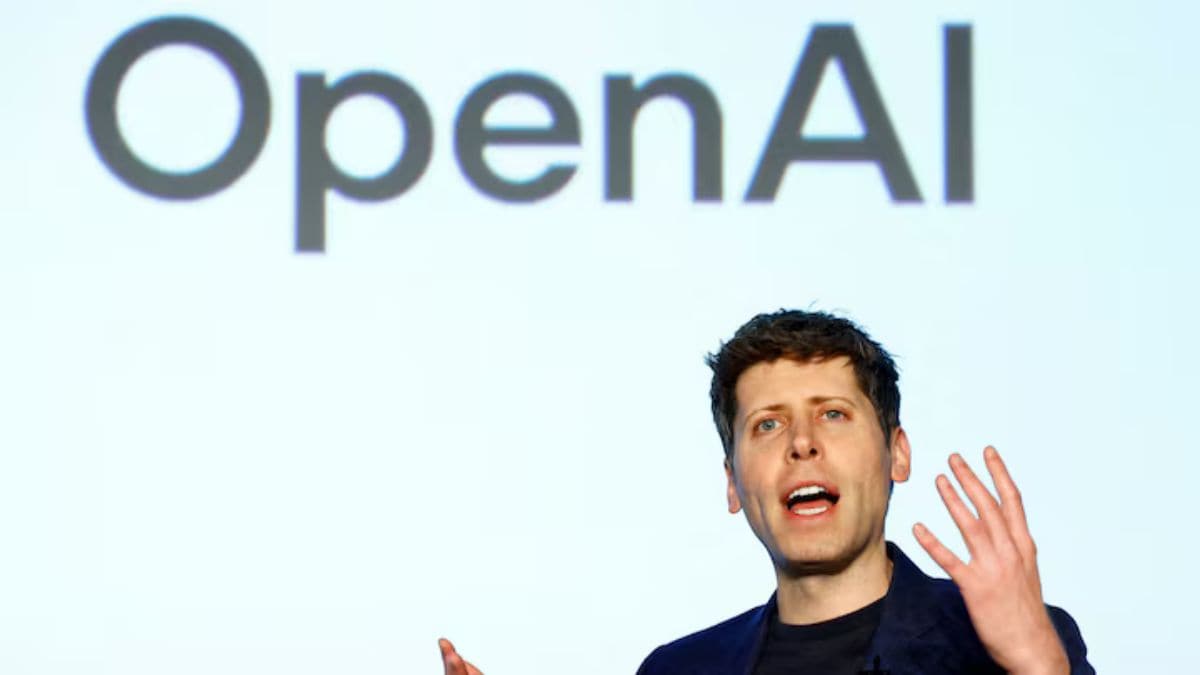
ChatGPT owner OpenAI is reportedly "falling apart in real time", veteran hedge fund investor George Noble claimed on Tuesday, as he flagged deeper issues behind the AI giant's $500 billion valuation.
Noble pointed out that the 'Code Red' the AI giant had declared back in December 2025 to catch up with Google's Gemini—that was overtaking ChatGPT—was a major red flag.
He also cited how Salesforce CEO Marc Benioff publicly ditching ChatGPT for Gemini after using it for two hours made things worse.
However, Noble added that OpenAI's biggest red flag was in their finances.
The decline of ChatGPT's traffic in November—the second month-on-month decline of 2025 while Gemini jumped to 650 million users at around the same time—made matters worse for revenue.
This decline could be seen in OpenAI's finances—the company lost $12 billion, Noble said, citing Microsoft's disclosures.
"No startup in history has operated with losses on anything approaching this scale," he said, paraphrasing analysts at Deutsche Bank.
Even a lead engineer at Sora, OpenAI's video tool, has said that the finances are "completely unsustainable", despite the tool using up $15 million per day to run.
The mass talent exodus at OpenAI has further complicated the issue—CTO Mira Murati, Chief Scientist Ilya Sutskever, and half the AI safety team have gone out the door, which Noble said was taking ChatGPT in a dangerous direction, as GPT-5 could not reportedly match GPT-4.
The last straw? Enter Elon Musk and his $134 billion lawsuit against the AI giant over it breaking its promise to him to stay a non-profit.
"OpenAI is chaos dressed up in a $500 billion valuation," he added, not mincing his words.
Noble's bottom line: With the AI hype reaching a peak, OpenAI needs to grow its revenue by 15 times of what it is now in just five years—despite the out-of-control costs—to stay in the game.
