



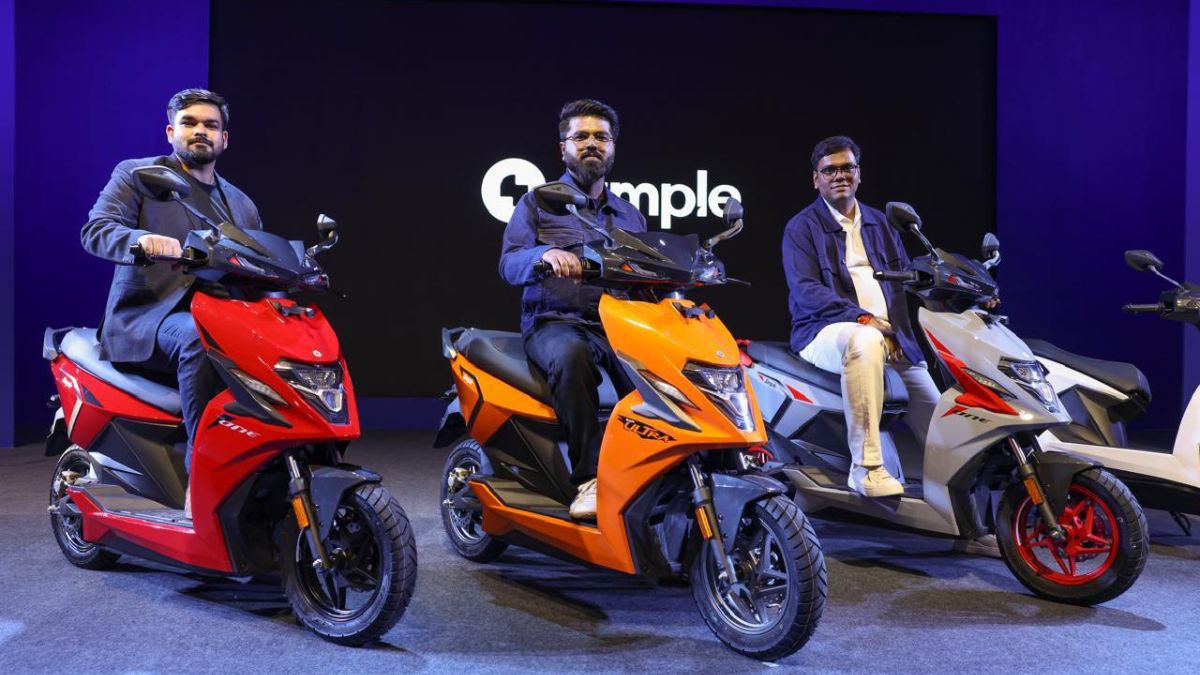
In the beginning, it was all mighty simple. You set up a company, import either a cost-effective battery from abroad, or the full two-wheeler scooter body even, then slap your brand on it and sell it as a ‘Made in India’ electric two-wheeler.
Thanks to sustainability concerns, the generous government subsidies like FAME, and the various tax-free incentives offered by many state government RTOs, not to forget the promise of freedom from the vagaries of petrol prices, this managed to kickstart India’s electric vehicle (EV) ecosystem in the last decade.
But in many ways, there was a lacuna in what was being served to the public. The vehicles were basic with hardly any performance or form factor to exult about, and it wasn’t really about setting up a brand as much as about exploiting the government incentives (as it turned out later when the authorities found out that FAME subsidy norms were being flouted and cracked down on some of the EV startups).
More than one early e-scooter model manufacturer faced flak after reports of their smartly marketed electric two-wheelers catching fire emerged from many places, particularly during the unrelenting Indian summer.
Now, finally, it seems like India’s two-wheeler EV scene is moving into its next phase of evolution. New models, including that of Simple Energy’s new generation launched this week, signal an intent to thrive on innovation, while the financing stage is also moving beyond family offices or VCs to IPOs and other avenues of institutional investment.
Simple Energy, a Bengaluru EV technology startup, is a pathbreaker in many respects. The company has insisted on developing from the ground up its own R&D capabilities as well as first-principles engineering. The company’s launch of the Gen 2 versions of ‘Simple One’ amply displays the Indian EV sector’s intent to come out of the Chinese shadow in most respects—the four new models go beyond the basic and the ‘urban commute’ focus that most other electric scooters in the country have so far targeted.
For example, the Simple Ultra, the heavy-duty performer, is India’s longest-range electric scooter with an IDC (Indian Driving Cycle, a domestic standard of testing under optimal conditions) range of 140 km, and powered by a 6.5-kilowatt-hour battery. It is the largest ever battery fitted on an electric scooter in India, and that means a shift in focus to just being city commute-friendly to long drives and power-packed performances for those who need it.
“Our Gen 2 portfolio reflects a deliberate, innovation-first approach - offering differentiated products across range and performance needs, all built for real-world reliability,” said Suhas Rajkumar, founder & CEO of Simple Energy.
“Indian commuters are not one-size-fits-all, and a growing segment clearly demands extreme range and performance without compromise. Simple Ultra is built precisely for that customer,” he added.
Simple’s Gen 2 line-up also includes three other models, with the ‘lightest’, Simple S, offering a lighter 4.5kWh battery. The entire range has been upgraded with a host of connected features—Safety and control features include Find My Vehicle, TPMS, intelligent regenerative braking, and Park Assist with forward and reverse movement for easy manoeuvring, and running on Android 12. There is also a lifetime warranty on motor and battery across the vehicle portfolio (there is a warranty on the portable 750kW home charger, too, extending to 3 years and 30,000km).
The significance of the Simple Gen 2 launch is that it evidently shows the sector evolving upwards, not just in design and performance, but also in its aim for the big stakes, spurred by IPOs and a bigger corporate vision. Initially many EV startups ran either on the promoter’s funding from their other businesses (Bajaj’s EV venture, for example) or generous funders (Simple Energy’s biggest funder was the family office of Arokiaswamy Velumani, the billionaire founder of Thyrocare Diagnostics) or big corporates who were testing the waters of the EV world (Ather Energy, which was initially funded by Hero MotoCorp and even the Flipkart founders), etc.
Now, the companies are aiming to expand their horizons. While Ola Electric had the brand name strength to push it through when it came out with its IPO two years ago, it was Ather’s IPO last year that perhaps turned the tide. The 3,000-crore IPO got immense retail interest, showcasing the potential of emerging technologies like EV and how everyone wanted a slice of the pie. In fact, there have been around five EV sector-related firms going in for raising market capital over the past one year or so, a trend Simple Energy also hopes to ride on, with its reported 3,000 crore or so IPO plan later this year.
