



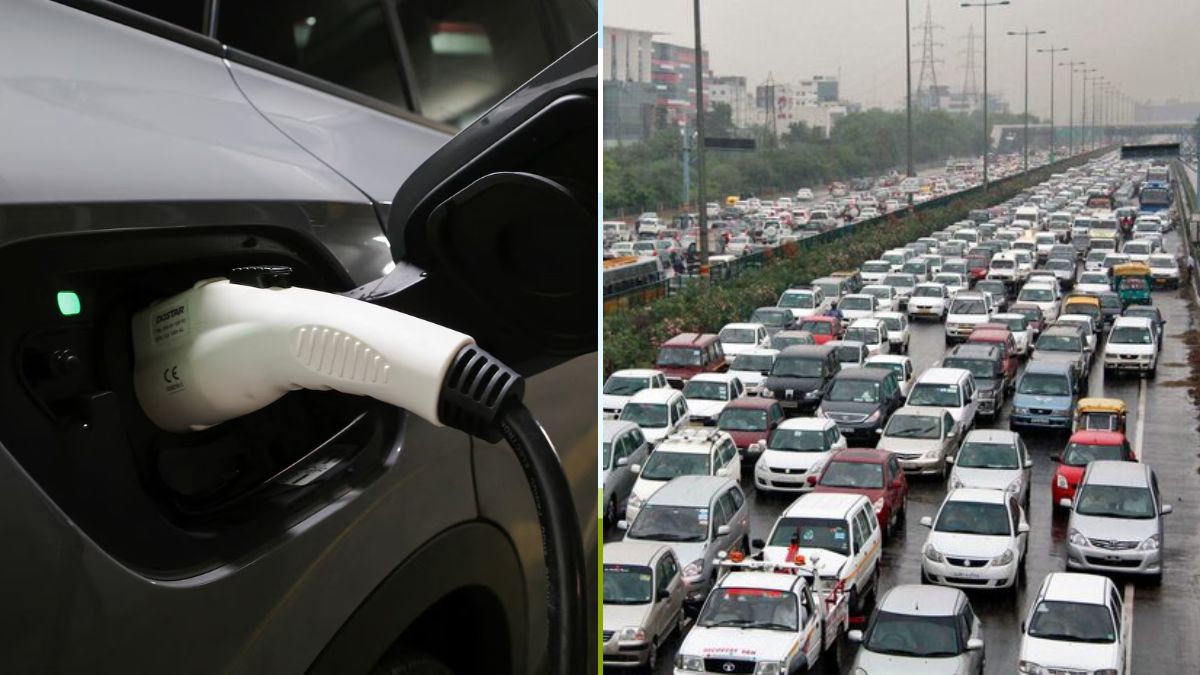
Can't bear to see your beloved old car scrapped or sold outside Delhi?
Fret not, as the state government is currently planning a Rs 50,000 incentive—for the first 1,000 cars that need retrofitting—to encourage people to convert their diesel/petrol cars into electric vehicles (EVs).
This subsidy is part of the Transport Department's draft EV Policy 2.0, which aims to boost the production and usage of electric vehicles over the coming years, an Indian Express report said, citing an official in the know.
Retrofitting allows car owners to replace internal combustion engines (ICEs) in their diesel/petrol cars with battery-operated electric kits.
Notably, this is not a new idea, as it was tried at one point by the previous AAP government. The biggest hurdle that retrofitting still presents is the cost involved—both retrofit kits and the process itself have never been cheap.
"The plan is under consideration, and a final decision will be taken after Cabinet approval,” the official said.
Another official also said that the retrofitting of old vehicles would especially benefit those with expensive cars.
“We have observed that a large number of people owning Mercedes or BMW cars do not want to sell their vehicles or scrap them. They invested, for instance, Rs 50 lakh, and in return, they get very little. So, the incentives will promote and help people to reuse their costly vehicles,” the official explained.
Other aims of the draft EV Policy 2.0 include:
Incentives for those buying EVs after scrapping their end-of-life vehicles
Increasing funds for Research and Development (R&D) into EVs—from Rs 5 crore to Rs 100 crore.
Increasing the number of electric two-wheelers in Delhi from 5 lakh to 12 lakh over the next few years.
Safety ratings for e-rickshaws and e-carts
This comes after the Delhi government lifted restrictions under Stage III of the Graded Response Action Plan (GRAP) a few days ago, as the Air Quality Index (AQI) level for Delhi-NCR on January 2 was 263 ('Poor')—under the threshold for GRAP III.
While the Pollution Under Control (PUC) certificate rule still applies to Delhi-NCR—under which vehicles without a valid PUC certificate would be denied fuel at petrol pumps—the rules for vehicle entry have changed.
BS4-complaint vehicles (and above) are now allowed into Delhi-NCR with valid PUC certificates, but BS3 petrol vehicles are still not.
