


Will your train ticket price go up after Indian Railways fare revision from Dec 26? What you need to know

Indian Railways's fare revision from December 26 onwards is expected to bring in Rs 600 crore in additional revenue

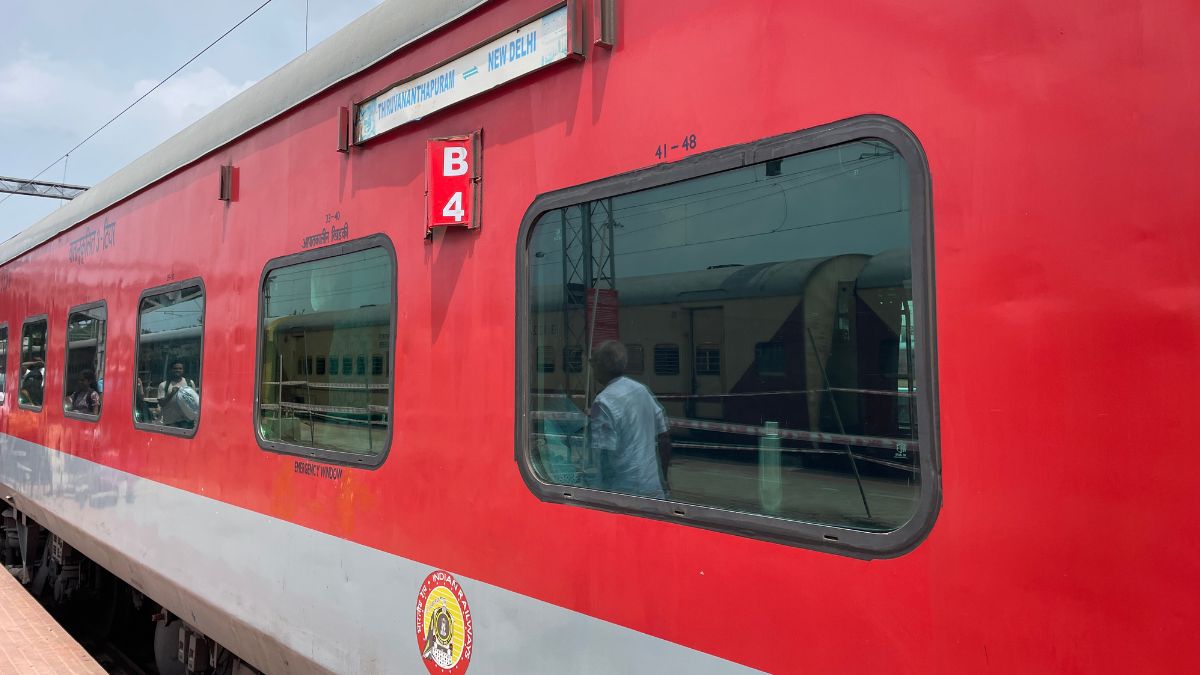
Thiruvananthapuram Central - New Delhi superfast train File photo: A Thiruvananthapuram Central - New Delhi superfast train at Thiruvananthapuram in May 2024 | Nitin SJ Asariparambil

The Indian Railways (IRCTC) on Sunday announced that it would be hiking passenger fares from December 26 onwards, in a move that is expected to bring in a Rs 600 crore revenue gain for one of India's largest employers this fiscal year.

Under the new fare structure, passengers will be charged an extra fare of Rs 0.01 per kilometre on journeys beyond 215km in Ordinary Class. The extra fare increases by Rs 0.02 per kilometre for Mail, Express Non-AC, and AC classes.

For passengers travelling more than 500km, in the Non-AC Class, there will be a hike of Rs 10, while there will be no change in ticket rates for those travelling via routes less than 215km.

The IRCTC has also not increased fares for the suburban and monthly season tickets, in the interest of keeping tickets affordable for low-income and middle-income families.

The fare revision is expected to generate Rs 600 crore in additional revenue, which is expected to offset the operational costs, which the railways ministry said had risen sharply in recent years.

"Railways has expanded its network and operations significantly over the last decade. To cater to a higher level of operations and to improve safety, it is increasing its manpower," the railways ministry statement said, justifying the rationalisation.

Claiming that India had become the second-largest cargo-carrying railway in the world, the statement added that just the increase in manpower costs to Rs 1.15 lakh crore in FY 2024-25 had led to the increase of total operational costs to Rs 2.63 lakh crore over the same period. Pension costs had also increased to Rs 60,000 crore. 

In addition to the fare hike, the IRCTC is also focusing on increasing cargo loading. In that regard, the railway ministry said last month that the IRCTC's cumulative freight loading volume had crossed the one-billion-tonne mark, reaching 1,020 million tonnes (MT) as of November 19.

Coal transport contributed the most to this record at 505 MT—far ahead of iron ore (115 MT) and cement (92 MT), the second and third largest contributors.

The Indian Railways has also vowed to become a net-zero carbon emitter in the future by "offsetting carbon emissions with the usage of power through non-fossil sources".

Railways minister Ashwini Vaishnaw had also declared in March this year that as much as 756 MW of renewable energy—obtained from solar power, wind energy, and other renewable sources—had been commissioned for rail transport, as of February 2025.

This accompanies the electrification of almost 98 per cent of the total BG network (till that period), and development of research into the use of hydrogen gas to drive trains and further reduce rail emissions.
