



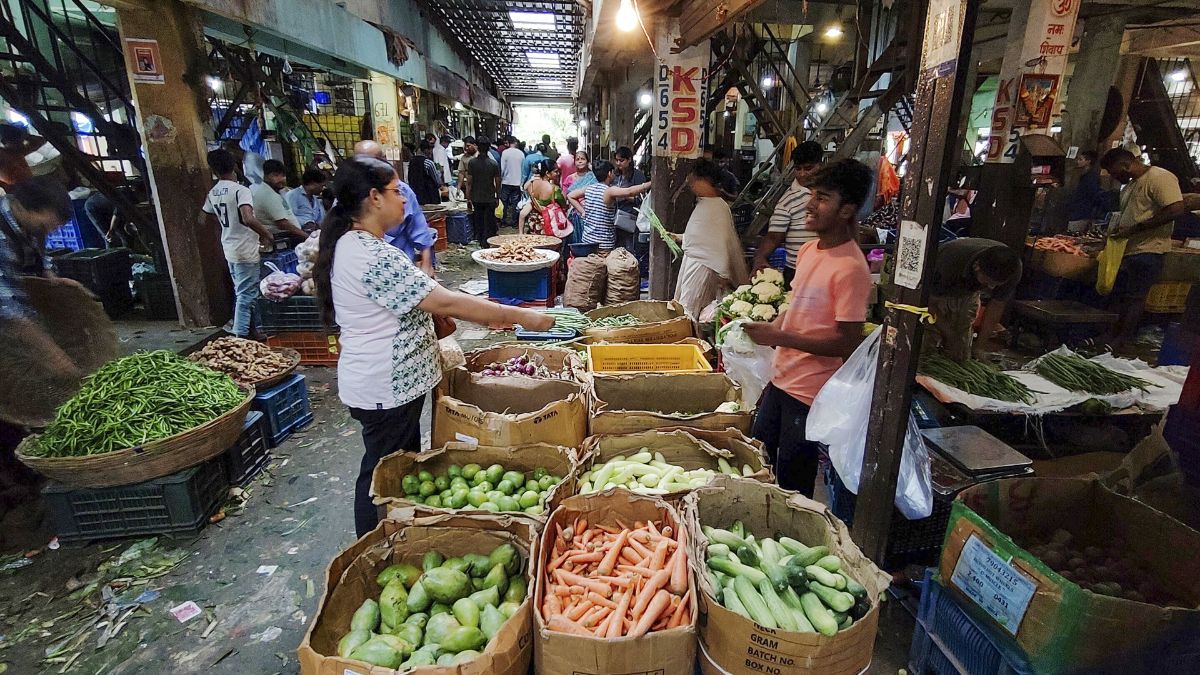
Inflation measured by the consumer price index (CPI) has eased considerably through 2025. However, the latest print has seen a slight uptick for the first time in 10 months. Looking ahead, while it's still expected to remain benign, heavy rains and flooding in many parts of the country in recent weeks have raised concerns over kharif crop output and, in turn, food prices. Could that play a spoilsport?
CPI or retail inflation in August was at 2.07 per cent, compared with 1.61 per cent, still well below the Reserve Bank of India’s 4 per cent target and within the 2-6 per cent tolerance band. As we look ahead, most economists still see inflation well under control. The high base effect of the same time last year will be at play here. But, there is some worry creeping in on the food inflation front.
Concerns around food
“A good monsoon progress, adequate reservoir levels, and strong kharif sowing bode well for food price stability. That said, risks remain from the late withdrawal of the monsoon and heavy rains in certain regions, which could risk crop damage,” said Rajani Sinha, chief economist at CareEdge Ratings.
The Maharashtra government had revealed recently that over 14 lakh hectares of standing crops were damaged due to the excessive rainfall between August 15 and 20. Heavy rains and floods have devastated Punjab too, with around 1.9 lakh hectares of standing crops estimated to have been affected in the state. The monsoon fury hit several other states this year, including Gujarat, Haryana, Himachal Pradesh and Jammu and Kashmir, among others.
So far, food prices have been low over the last few months. In August, food inflation remained in the negative zone for the third consecutive month at -0.69 per cent. However, that was still 107 basis points higher than the food inflation in July 2025.
“The torrential rainfall in most of the north-west states (India’s largest kharif crop producers) is a matter of worry and may impact food inflation,” said Soumya Kanti Ghosh, group chief economic adviser at State Bank of India.
He pointed out that all-India rainfall between August and September 11 was nearly 8.7 per cent above normal, with sharp excesses in Punjab (+109 per cent), Jammu and Kashmir (+78 per cent), Haryana (+66 per cent), Rajasthan (+47 per cent) and Gujarat (+29 per cent).
However, there is a strong, favourable base effect in play in the near-term. Food inflation in September 2024 was way higher at 9.2 per cent.
“The flood situation in key agricultural areas may push food prices up. However, the strong base effect of last year may keep food inflation in check until December 2025,” opined Paras Jasrai, associate director at India Ratings and Research.
Meanwhile, core inflation (excluding fuel and food prices) last month edged up slightly to 4.1 per cent due to rising gold prices.
However, the recently announced GST cuts from fast-moving consumer goods to small cars and the majority of two-wheelers should help ease any upward pressures. Since the GST on close to 295 essential items has been cut to 5 per cent or nil from 12 per cent, the CPI inflation in this category is expected to come down by 25-30 bps at least in the current financial year.
Kerala outlier
While the overall national CPI is still benign, Kerala has been an interesting outlier, with inflation there trending at around 9 per cent.
“In the case of Kerala, the steep rise in coconut oil prices has driven the trend. Another factor is that the weight of personal care in CPI for Kerala is higher than in other states, which includes gold prices, and has also contributed to the build-up in state-level CPI in Kerala,” according to SBI’s Ghosh.
Looking ahead
Overall, though, for FY26, economists have still pencilled in a lower CPI, even as there are food price concerns. Sinha of CareEdge, in fact, now expects full-year CPI to trend at 2.7 per cent, compared with the earlier expectation of 3.1 per cent.
Jasrai of India Ratings expects inflation to average around 3 per cent in the year ending March 2026. Dharmakirti Joshi, chief economist at Crisil, has revised the inflation forecast to 3.2 per cent for the year, from 3.5 per cent.
In the previous monetary policy committee meeting in August, the Reserve Bank projected CPI inflation at 3.1 per cent for 2025-26.
Interest rates
The MPC, after cutting the repo rate by 100 bps (1 per cent) so far in 2025 to 5.5 per cent, left the benchmark rate at which it lends money to commercial banks, unchanged in August. Other than inflation, what drives the RBI’s moves on interest rates is economic growth. The GDP growth for the April-June quarter was a big surprise, hitting a five-quarter high of 7.8 per cent.
In this backdrop, the MPC may choose to maintain interest rates on hold in the next meeting in October. But, while there is comfort in domestic inflation and GDP, if the steep 50 per cent import tariffs announced by the US administration get prolonged without resolution, that could put pressure on growth and may prompt the RBI to relook at interest rates.
Separately, the US Federal Reserve is expected to cut interest rates this month, and if it gets aggressive in the months ahead with more cuts, that could also prompt the RBI to cut rates, if the inflation also remains benign.
“While we do see a pause by the RBI in the upcoming policy, we do see some scope for rate cuts worth 25-50 bps opening up from December policy if downside risks to growth materialise and the Fed moves ahead with aggressive rate cuts,” said Upasna Bhardwaj, chief economist at Kotak Mahindra Bank.
Given the expected easing of core inflation due to the GST cuts, Joshi of Crisil also expects another 25 bps cut in the repo rate later in the year.
Ghosh of SBI, on the other hand, feels that a rate cut in October looks “onerous” given the inflation trending tad higher than 2 per cent in August. If growth numbers are considered, then a cut in December would also be difficult, he added.
