



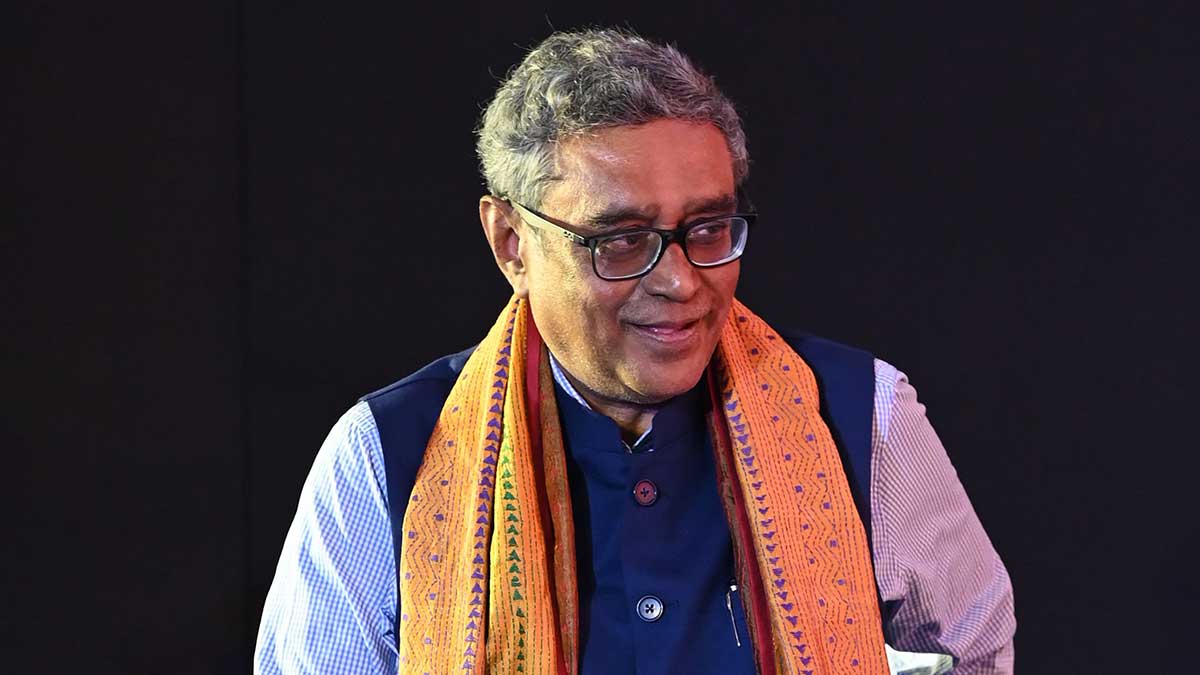
Interview/ Swapan Dasgupta, finance minister, West Bengal
Q/ You presented an optimistic budget.
We inherited a devastated Bengal, both in terms of the economy and the morale of the people. There was a sense of hopelessness that had gripped the whole state in terms of business. But beyond that, ordinary citizens felt that education had come to a standstill. No institution in the state was sacred any longer. For us, winning an election is one part, but the ultimate goal is the reconstruction of Bengal. That is why in my budget speech I called it a mission. We have to make it a mission; there is no alternative.
Every aspect of this society has to be re-nurtured and made fit for purpose—made fit for the 21st century. One part of India is racing ahead, while another part is just plodding along.
Q/ You are planning many things.
First, we have to remove a few roadblocks. The Urban Land Ceiling Act of 1976 was passed at a time when the legacy of India was moving in a very different direction. That has to go. We will also try to reclaim a lot of land that is lying vacant and wasted—old British industries that are gone or huge estates that are a shambles.
Land is a valuable commodity in West Bengal. Most land holdings are tiny fragments, the size of a handkerchief. They are unsustainable in terms of farming, yet they hold a certain emotional lineage for those who farm them. So, land acquisition is a bit difficult in this case. If there is land lying idle, we want to acquire it and make it useful.
We are also facing a skill deficit, partly because most of the cutting-edge talent has left the state due to a lack of opportunities. We have to draw them back. That is why we are planning an incubation fund, startup labs, and the AI mission.
Q/ And the single-window policy.
We have to work out the finer details. But we want to press the accelerator and make up for lost time. I think we lost out a lot for 50 years. We have to try and make up for it. Generations have gone by without knowing what Bengal was prior to 1967. They do not know the glorious days of Calcutta. We have to start afresh.
Q/ You want to revive the old industries in Bengal while also looking forward to the AI impact mission and the semiconductor hub. You are looking to bridge the old and the new.
Absolutely. But it would be unfair to say we have forgotten the entire welfare aspect. We have maintained the same degree of cushioning that was available to the people, because it is going to take some time for robust economic activity to resume.
We have focused on infrastructure in the districts outside Kolkata. A lot of people said this is a North Bengal-centric budget. That is a fair comment. North Bengal had been neglected for such a long time. Apart from Kolkata, we also want to create big urban centers, like Siliguri.
If we can get the second airport off the ground in Kalyani, it will create a "Greater Kolkata" akin to Navi Mumbai. The hills also felt deeply alienated; we have tried to address their problems as well. There were a lot of local needs that had to be identified and addressed. If those local needs are not met, then the larger projects—like AI, creating new alternative centres, and infrastructure linkages—get slowed down. For the health of the modern sector, the traditional part also needs to be safeguarded.
Q/ You are looking at airports and seaports across the state.
Bagdogra Airport (Siliguri), Hasimara Airport (Alipurduar), and the existing one in Cooch Behar will be expanded. Malda and Balurghat are also being singled out for development. Furthermore, we have the prospect of a deep-sea port.
Q/ So you are focusing not just on urban clusters.
Everyone talks about Bengal’s potential. I have heard the term "potential" for such a long time. I want to say that we can actually build it into reality. The gap between potential and reality used to irritate a lot of us in the past. We were always thought of as a place where the past was more glorious than the future.
Heritage is lovely; there will always be a part of Kolkata that retains a certain charm. We hope that charm never goes away. But we have to move ahead; we have to build more cities and more alternatives. We have to get Bengalis from outside to come back to Kolkata.
The list of what we need to do is daunting, challenging, and yet exciting. I can say it is going to take a lot of hard work and relentless attention to detail. But I think there will be a sense of satisfaction at the end of the day.
Q/ You have also inherited a Rs8.15 lakh crore debt. But there is also a breath of fresh air because of central schemes, which will take some of the burden off the state exchequer.
The debt burden is unacceptable; everyone knows that. We were on the cusp of bankruptcy. A lot of the Central schemes were underutilised or unknown to us. For the past 50 years, West Bengal has disengaged itself from national activity—first gradually, then in the most dramatic way.
People here are unaware of what is happening in the corridors of power. Our lobbying potential has been zero. We have to change that. Certain people, notably the prime minister and Finance Minister Nirmala Sitharaman, have walked the extra mile for us, for which we are indebted.
Q/ The women's empowerment aspect has been spoken about, but in terms of implementation, it is quite tough.
It is tough, and there will be challenges. Already I am getting negative feedback saying, "You are cutting us out from the market." It is not like that.
I have always felt that women in West Bengal, particularly Bengali women, have an extra dynamism that enables them to live up to the potential and expectations we are aiming for.
We have innovative new schemes, like cloud kitchens for women. That is based on two goals: first, to bring the cloud kitchen business into the organised sector; second, to transform these spaces into community kitchens that can serve as centres of business. We hope our policy for 24/7 shops will galvanise urban centres, create more energy in the metropolis, and make retail much more attractive.
At the same time, we have to be careful. We cannot have bars open 24/7, creating a social problem. There have to be certain checks and balances. But overall, we have to be innovative.
Q/ What were your thoughts before and after you presented the budget?
There were mixed emotions. At one level, I was overwhelmed because I am not a professional politician; I have simply been asked to do this. It is quite overwhelming. Second, I have been associated with this party since 1990. For the party, this was a dream come true. We never thought we would see this in our lifetime. Many people have made immense sacrifices for the party. It was a massive occasion, and I felt humbled to have been chosen to deliver this.
