



TEHRAN
I WAS IN A TAXI heading to my university office on February 28 when I heard several explosions and saw smoke rising a few kilometres away in Tehran’s downtown Jomhoori neighbourhood. The following morning, the worst fears were officially confirmed. Iran’s highest-ranking political figure, Ayatollah Ali Khamenei, had been killed in the initial attacks carried out by the US and Israel.
A few minutes later, at around 6am, I headed towards Inqilab Square, one of Tehran’s central public spaces, where hundreds of thousands had gathered spontaneously. Since then, the square has remained one of 427 locations across Tehran where residents gather every evening, alongside similar gatherings in 1,020 cities across the country. It represents a form of public mobilisation that Iran has not witnessed since the 1979 revolution.
Such public unity should not be interpreted as the disappearance of the social diversity and political polarisation that Iranian society has long experienced. Nevertheless, it reflects a temporary form of social cohesion and political resilience that a 3,000-year-old civilisation presents in response to a foreign invasion threatening its territorial integrity and national sovereignty.
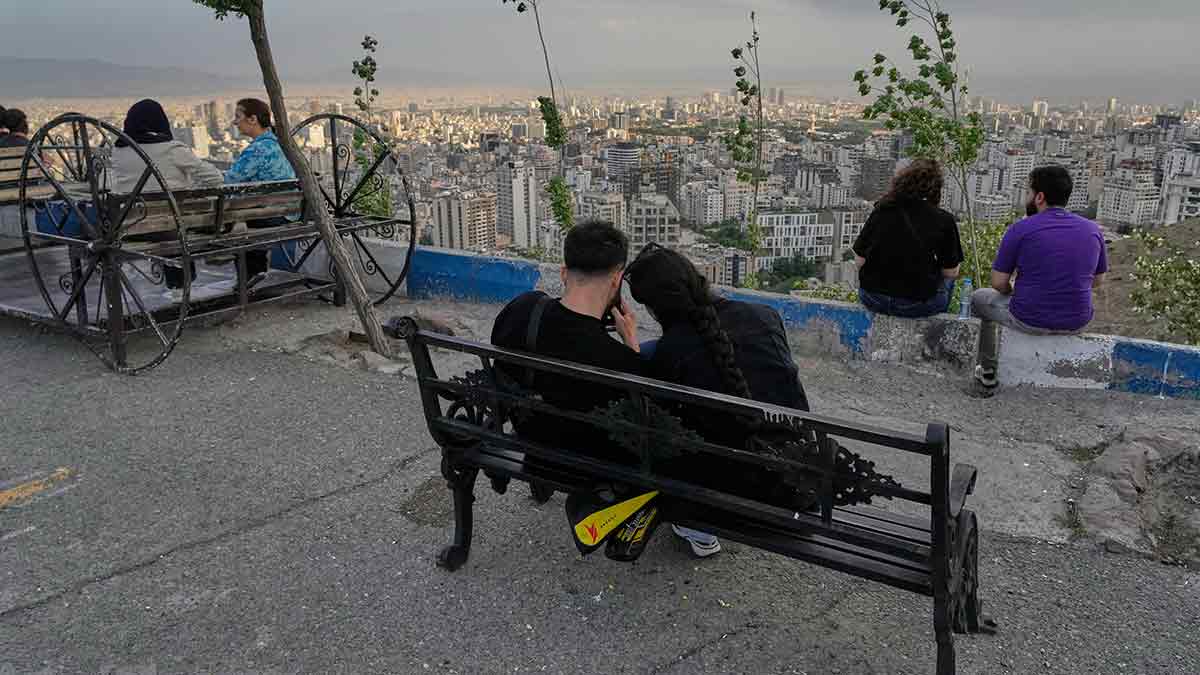
Nearly three months later, Iranian society has largely returned to normal life, although reshaped by an emerging post-war social contract. Universities are open for faculty members and postgraduate researchers, while classes continue online. Public departments are fully operational. Most citizens have returned to their hometowns. Businesses are recovering faster than expected in response to rising market demand. Patriotic cultural productions, including internationally recognised Lego animations, films and war music, now dominate the entertainment industry. Reconstruction projects are also about to begin.
However, Iranian society continues to face major challenges. Security concerns remain serious, as Donald Trump and Benjamin Netanyahu continue issuing ultimatums. Workers are struggling with unemployment caused by industrial destruction. Daily economic life is under pressure from rising inflation. International digital platforms remain inaccessible, although domestic platforms continue to function relatively well. Political divisions over negotiations with the US are also likely to return to the forefront. Most importantly, the condition of neither war nor peace has left society with a deep sense of uncertainty and unpredictability. It has cast serious doubt over the country’s long-term development prospects.
While the war has claimed thousands of Iranian lives and severely damaged military and industrial infrastructure, it has also transformed patriotic sentiment, rallying society around the flag and uniting people in defence of sovereignty and national dignity. The manner in which Iranian society responded to two rounds of war imposed by the US, alongside what Iran regards as the internationally recognised genocidal regime of Israel, has not only surprised political observers but also undermined the aggressors’ assumption that Iran would rapidly descend into social collapse and state failure.
As a political researcher, I would not oversimplify this remarkable level of sociopolitical resilience as a sudden phenomenon. It undoubtedly has deep civilisational roots in the long history of a nation that has resisted colonisation for centuries. However, I would also caution that such optimism does not guarantee either a smooth post-war economic recovery or a safe transition towards a more inclusive and less polarised society. Iranians must prepare themselves for a long and difficult period of national resistance and strategic rebalancing.
Seyed Emamian is assistant professor at Tehran Polytechnic University and founder and former director of the Governance and Policy Think Tank.
