



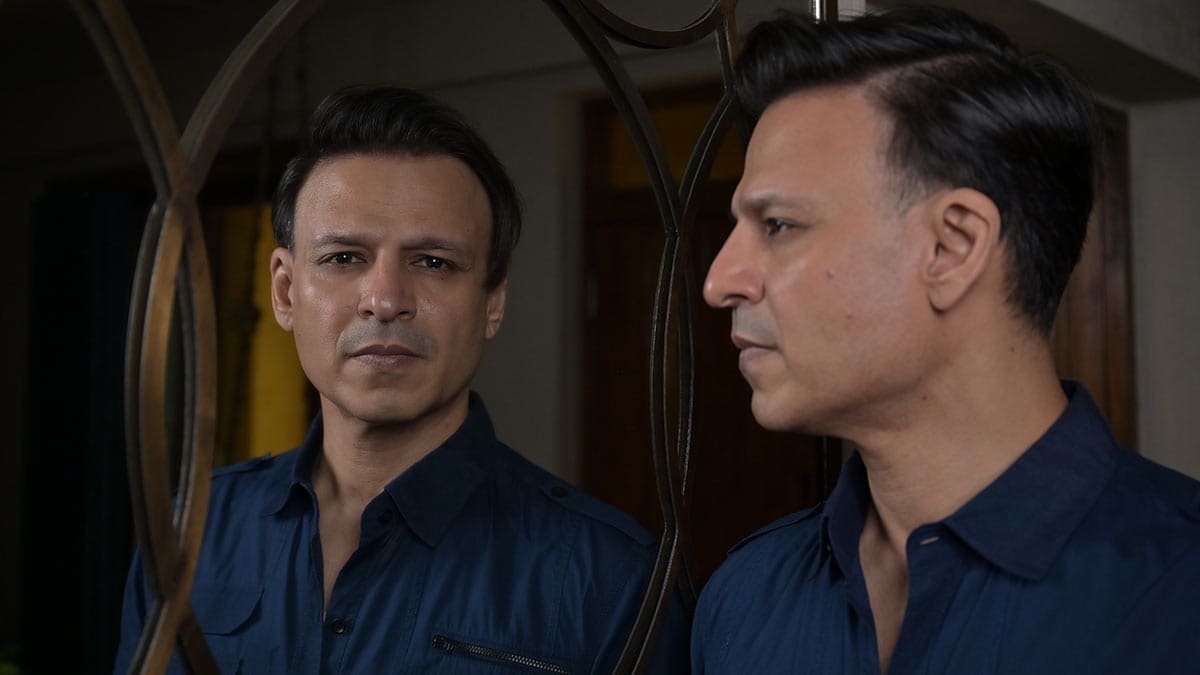
Interview/ Vivek Oberoi, actor
Q/ You were among the first public figures in India to actively seek legal protection for personality rights.
A/ Many people think personality rights are only about protecting the commercial value of a celebrity’s image. I believe the issue is much deeper. At its core, personality rights are about the sanctity of consent. As a society, we have fought long battles to establish the importance of consent in various aspects of life. The same principle should apply to an individual’s identity. Whether someone is a celebrity or an ordinary citizen, they should have the right to decide how their image, voice, likeness and reputation are used. Nobody should be allowed to spread falsehoods, manipulate a person’s identity, monetise that content and profit from damaging another person’s reputation, values or integrity. Personality rights are essentially a mechanism to protect that fundamental right of consent.
Q/ Your own image and persona have often circulated online without your consent. Have you ever felt powerless because the law has not fully caught up with technology?
A/ I think the law is evolving rapidly, and the judiciary has played a significant role in protecting societal values. However, technology is moving at an unprecedented pace. Every time a loophole is plugged, new ones emerge. There is a difference between harmless satire and malicious misuse. In a healthy democracy, people should be free to joke, criticise and express opinions. The problem begins when freedom of expression becomes a cover for deception, manipulation and character assassination.
What pushed me to seek legal protection was a personal experience involving one of my investee companies. A vendor who had violated contractual obligations attempted to threaten and extort the company. When legal threats failed, they resorted to attacking reputations. They filed a complaint containing allegations and circulated it among media outlets. A complaint is merely an accusation; it is not proof and is not equivalent to an FIR. Yet some organisations published stories based solely on those allegations. It affected my reputation, my business relationships and even how financial institutions viewed me. That experience showed me how vulnerable individuals can be when false narratives are amplified without verification.
Q/ Deepfakes and AI-generated content are becoming increasingly common. Are celebrities particularly vulnerable?
A/ Celebrities are vulnerable, but they are certainly not the only victims. One common scam involves using AI to create videos or images suggesting that a celebrity endorses a product or investment scheme. What people often forget is that genuine endorsements come with legal responsibilities. If I endorse something, I can be held accountable. But what happens when someone fraudulently uses my face, voice or image to deceive consumers? Unsuspecting people lose money, while the fraudsters disappear.
The problem extends far beyond celebrities. Imagine a young woman being targeted because someone wants to damage her reputation. A rejected admirer, for example, could create explicit deepfake content and spread it online. The emotional and psychological trauma such actions can cause is enormous. That is why consent must remain central to any discussion about digital identity and AI.
Q/ Does India need a stronger personality rights law, especially in the age of AI?
A/ Absolutely. When public figures pursue legal action, it creates awareness. People begin to understand that they, too, possess rights over their identity. But these protections should not be limited to celebrities. Every individual deserves protection over their reputation, likeness and digital presence. These rights should be clearly recognised in law and violations should attract swift consequences.
The risks are no longer limited to individual reputations. Fake content can be used to damage businesses, manipulate stock prices, undermine competitors or even create social unrest. Such attacks can originate from anywhere in the world. As AI becomes more sophisticated, misuse will become easier and harder to trace. That makes legal safeguards even more important.
Q/ Legal remedies often take years. Does the system need to move faster?
A/ I agree completely. One encouraging development is that judges are actively educating themselves about emerging technologies. Despite carrying enormous workloads, many members of the judiciary are investing significant time in understanding AI and its implications.
India already has useful legal tools such as John Doe orders, which can provide protection even against unidentified violators. The challenge often lies in enforcement. You may obtain a court order directing content to be removed, but implementation by platforms can sometimes be slow. When platforms fail to comply, additional legal action may become necessary. This process needs to become faster and more efficient. Stronger accountability mechanisms are essential.
Q/ What lessons can India learn from international approaches to regulating AI-generated content?
A/ There are several useful examples. In parts of Europe and the United States, platforms are increasingly required to disclose when AI has been used to create content. Such disclosures should be clear, visible and easily understandable. I believe India should adopt similar safeguards. Whether someone is young or old, educated or uneducated, they should immediately be able to identify AI-generated content.
I also believe people should have a legally recognised digital right to self-determination. In my view, anything linked to an individual’s identity in the digital world should belong to that individual. Without consent, it should not be used, manipulated or monetised.
