


 Add as a preferred source on Google

A woman stands before a fire. She has been abducted, held captive and finally rescued. Yet, she is asked to prove that she has remained pure. The men around her wait for her to step into the flames. The scene is from Lajja, Rajkumar Santoshi’s 2001 film. Madhuri Dixit plays Janaki, an actor in a village theatre troupe performing the Ramayan. When the performance reaches Sita’s agnipariksha, Janaki rebels. She questions why Sita must walk through fire when Ram does not have to. A clip of the scene has been circulating on Instagram, bringing the film to the attention of younger viewers. The scene is 25 years old, but the question it raises remains relevant.
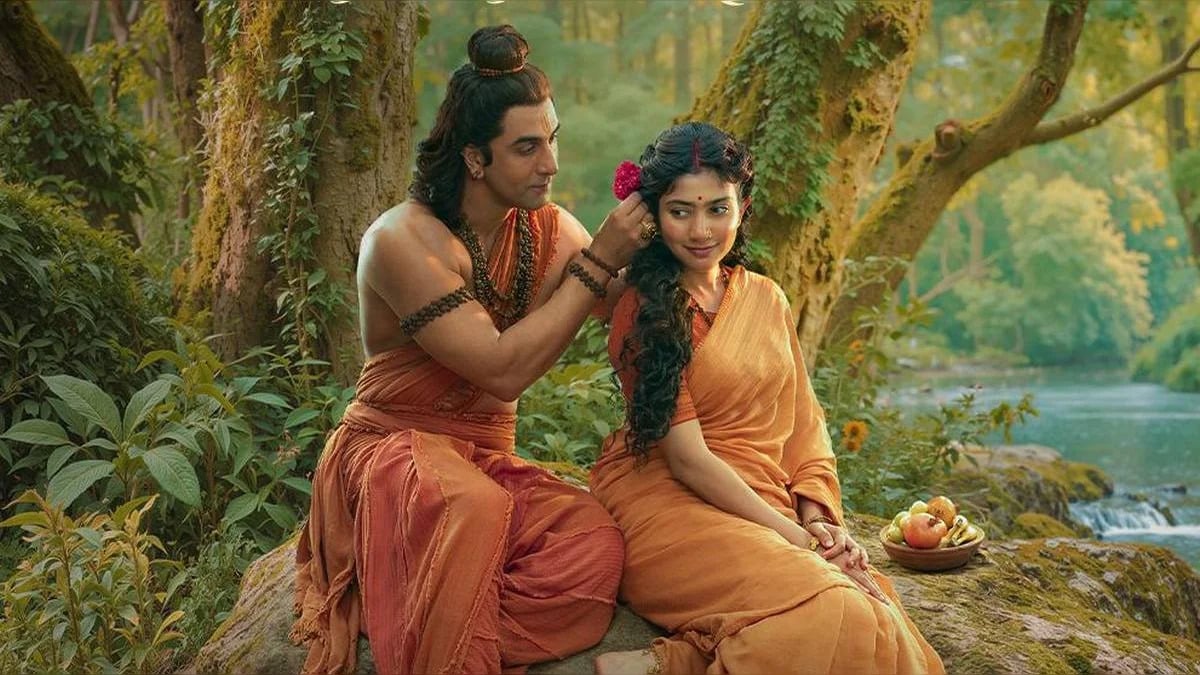
On November 5, Nitesh Tiwari’s Ramayana: Part 1, starring Ranbir Kapoor as Ram and Sai Pallavi as Sita, released in theatres. Made on an ambitious scale, the film brings one of India’s best-known epics to the big screen. But this generation might not accept unquestioningly the values the epic represents. They may admire Ram without agreeing with every decision he makes. They may respect sacrifice, but question why it should always be expected.
But Gen Z is not encountering the story for the first time. It has grown up with it through television reruns, family stories, religious gatherings, films and, more recently, social media. To understand the place the Ramayan occupies in popular memory, one needs to go back to a Sunday morning in 1987. Families gathered around television sets to watch Ramanand Sagar’s Ramayan. Streets in many parts of the country grew unusually quiet during the broadcast. Arun Govil, who played Ram, became so closely identified with the character that viewers often treated him with the reverence they associated with the deity. The serial went on to become one of the most-watched programmes in Indian television history.
Its popularity coincided with a period of significant political change. The Ram Janmabhoomi movement was gathering momentum. In 1990, L.K. Advani, who was then president of the BJP, led the Ram Rath Yatra. On December 6, 1992, the Babri Masjid was demolished by a crowd of kar sevaks. Television and the political mobilisation around Ayodhya unfolded around the same time. As Ram entered more homes through television, his image also became increasingly prominent in political discourse. A character who had been interpreted through hundreds of regional and cultural traditions was acquiring a powerful place in the politics of modern India.
For the Gen Z, these histories form part of the world in which the new film has arrived. The Ramayan they encounter has travelled through television, politics and popular culture. Its public meaning has changed with time. The questions young viewers bring to it are equally important. Ayush Kumar, a political science student in Delhi, respects Ram’s decision to accept 14 years of exile to honour his father’s promise, but cannot identify with it. He does not necessarily see it as a decision he would make himself. “For me, sacrifice must be a conscious, rational choice rooted in personal conviction, not an obligation imposed by family, tradition, or society,” he says.
Family duty, in his view, cannot automatically take precedence over individual will. This is the kind of conflict that makes Arjuna such an important character in the Mahabharat, and that is why many youth identify better with the Mahabharat than the Ramayan. On the battlefield of Kurukshetra, Arjuna is expected to fight, but cannot bring himself to do so. His opponents include relatives, teachers and people he has known all his life. He knows his duty as a warrior, but understands what carrying it out will mean. He stops and asks Krishna what he should do.
For youngsters negotiating family expectations, careers and relationships, Arjuna’s dilemma is recognisable. They may want to care for their families without giving up the right to decide how to live. Or they may value commitment but refuse to remain in a relationship that no longer works. Ayush’s position reflects this tension. He is willing to make sacrifices, but wants them to come from conviction rather than expectation.
The dilemma becomes sharper when the discussion turns to women and the stories they have inherited. Shreya Vajpayee, a working professional based in Mumbai, admires Sita but struggles with the idea that a woman abducted against her will had to walk through fire to prove her purity. “What troubles me is that even after surviving that ordeal, she was asked to prove herself,” she says. She grew up understanding the Ramayan through duty and righteousness. She still values these ideas, but does not want to accept every part of the story without question. Shreya further argues, “I don’t want to inherit an epic as a set of rules. I want to inherit its wisdom, but also have the freedom to disagree with it.”
There is another question surrounding the new film—whose Ramayan are we watching? Tiwari has spoken about the challenge of making a film rooted in Valmiki’s Ramayan while drawing from other traditions. There are hundreds of retellings across languages, regions and communities. The Ram of the Valmiki Ramayan is not always understood in the same way as the divine Ram of devotional traditions. The stories of Sita, Lakshman and other characters also change across versions. The epic has travelled through Sanskrit, Awadhi, Tamil, Bengali, Malayalam and many other languages. Each retelling has brought its own emphasis and interpretation.
The question of representation goes beyond language and tradition. It also touches caste and social power. In the Uttara Kanda (the seventh and final book of the Ramayan), the episode of Shambuka describes Ram killing a Shudra ascetic for performing penance. The episode has been debated for what it says about caste and access to religious practice. It is, however, not treated as equally authoritative in every version of the Ramayan.
The youngsters’ concern about social discrimination also has a parallel in the Mahabharat. Ekalavya is denied the opportunity to learn from Dronacharya because of his social position. Karna, despite his talent, is repeatedly judged by the circumstances of his birth. Both are capable, but their abilities do not guarantee them equal recognition. For the youth entering colleges and workplaces, these stories raise questions about merit and opportunity. Does talent matter if access to opportunity is unequal? And how often is merit separated from a person’s caste or background?
The debate does not end with the characters. If the Ramayan is a shared cultural inheritance, do all communities have an equal place in representing its revered figures? Just earlier this year, caste barriers were reinforced on the Ramleela stage in Chitrakoot. Dalit participants said they had not been allowed to play Ram because the role was considered the preserve of upper-caste performers. Their accounts show how social hierarchies can continue to shape who gets to represent a revered character.
For Alok Gautam, an engineer from Noida, questioning these hierarchies does not mean rejecting the epic. It means reading it with an awareness of the society in which its stories have been told and retold. “As Gen Z, we question even the things we have grown up believing, and I think that’s healthy. I can respect the characters, learn from their experiences, and still disagree with certain actions. For me, real respect for tradition doesn’t mean switching off our own thinking,” he says.
These conversations are taking place alongside the excitement surrounding Tiwari’s film. Not every young viewer will respond in the same way to the film. Some will admire Ram’s restraint and commitment to duty. Others may struggle with certain decisions. Some may see Sita’s endurance as a model of strength, and others might not. The Gen Z may still look up to Ram. But when it comes to difficult life choices, they may identify with Arjuna more—with his need to pause, examine the consequences and ask whether the accepted answer is the right one.
Perhaps that is why Janaki’s interruption in Lajja feels so relevant. She is in the middle of a familiar story, surrounded by people who expect her to finish the performance as written. Instead, she stops and asks a question. And that's Gen Z for you. They can sit through the story, admire its characters and still interrupt the familiar narrative with questions of their own.
