



Some memories and stories are best created over a meal. Each cuisine contains in itself a multitude of elements: stories of migration, trade, wars, families and changing tastes; of recipes carried across oceans via voyages and adapting to unfamiliar palettes. Somewhere along the way, these quaint establishments became part of a city’s memory. Some of these places have disappeared, leaving behind only names and memories; others continue to serve the generations that grew up with them.
From a bakery that baked for sailors crossing the seas to restaurants that introduced Kochi to new cuisines, here is a look at some such landmarks of a city in constant transition.
Rozario Bakery
The bakery’s history is intertwined with Kochi’s evolution. It once stood tall at the northern end of Broadway, close to the canal that once established Ernakulam as a bustling trade centre. Tsarina Abrao Vacha, a fifth-generation baker, said the bakery was founded during the reign of Maharaja Veera Kerala Varma, an Anglophile. He gave Ignatius Rozario a piece of land in Broadway to start a bakery.

Rozario Bakery tweaked the recipes according to the availability of ingredients in a predominantly rice-consuming area. The most notable example could be the breudher, a bread with Dutch connections. It is shaped by hand and baked in a bread tin. It was intensely fragrant with nutmeg and a little cinnamon, dotted with golden raisins and sultanas. Tsarina recalls that opening the tin was enough to perfume a room.
Tsarina recalls her great-grandmother, Clara Rozario, speaking of crates of Christmas cakes loaded onto steamers, ships whose journeys could last months, along with biscuits and other baked goods carefully packed to survive the rolling seas. There were no machines. “The only thing that runs on electricity is the lights and the fans,” Tsarina recalls. Everything else was done by hand.
Rozario’s legacy now lives on through Tsarina’s bakery in Kochi, Tsadough, where she crafts traditional sourdough breads and baked items with her heirloom recipe.
Hotel City Star (Balan Chettante Kada)
Originally from Palakkad, P.N. Balan came to Kochi nearly half a century ago and began working at a small tea shop near the Church of Our Lady of Life on Bazaar Road, delivering tea to nearby shops, offices, and warehouses in Mattancherry.
From a humble beginning in 1988, the tea shop grew into Hotel City Star, now fondly known as Balan Chettante Kada (chettan means brother and kada means shop in Malayalam). There was barely enough room for 10 people to sit, but Balan expanded the restaurant gradually, buying small shops and plots around it.
Even after Balan’s death, the chefs, staff and suppliers who worked alongside him remain. His son-in-law Nithin M.R., who had already shouldered much of the management while Balan was alive, now runs the restaurant, which is known for its Ceylon-style square porottas and beef chaps.
Hotel City Star’s philosophy is simple: serve good food at an affordable price.
Punjab House
Think aloo paratha, think Punjab House! Located in Broadway, the restaurant carries within its walls a story that began far from Kochi. The founder’s son, Bantu Krishanlal Dhupar, traces the restaurant’s beginnings to a journey his father made across a newly divided India.
Before 1947, Bantu’s father, B
Krishanlal Dhupar, served in the British Air Force. Partition changed the course of his life, as transfers took him to Agra, Bombay, and Kanpur. He later moved to Kochi with his family in 1966. Three years later, following the death of Bantu’s uncle, his father started Punjab House. Bantu and his brother grew up there working alongside their parents. After school and college, they would come to the restaurant, and do everything from washing vessels and cleaning to serving customers and making chapatis.
Bantu’s mother, Pushpa, was particular about keeping the kitchen vegetarian. During the Sabarimala season, pilgrims would arrive; Christians came before Easter during Lent; and during Ramadan, Muslim customers would sometimes arrive in the early hours to pack food for their pre-dawn meal. Marwari, Gujarati and Jain customers also became regulars.
The restaurant was clear that food should be affordable, and there should be as little waste as possible. Rather than a fixed thali, diners could order exactly what they wanted.
The restaurant has passed through several hands within the family. Bantu managed it after his father died in 1992, before his brother Brahmadev (Pappu) took it over in 2007. After his brother’s death last year, Bantu returned once again.
Malaya Restaurant
There was a time when Chinese food was still an unfamiliar proposition in Kochi. In the 1960s, when Malaya Restaurant first opened its doors, the customers were hesitant.
The founder, Hung Jui Lee, would invite people to come in and taste the food, said his daughter Noeleen Lee. He slowly introduced them to a cuisine that was still foreign to the city’s palate. The restaurant was initially called China Restaurant before becoming Malaya Restaurant. Word of mouth did the rest.
Families travelling from far for shopping would make the restaurant their obligatory pit stop. Their sweet corn crab soup and chilli chicken were bestsellers. Others carried the dishes home, with people requesting early-morning takeaways to take on flights to Delhi and Bengaluru.
Malaya eventually closed in the 1990s, around the time when her father was ready to retire. Its name, however, survived through other establishments that adopted variations of it. The family chose not to contest them.
Today, those restaurants may carry the name, but for the people who remember the original Malaya taste, swear that it cannot be replicated.
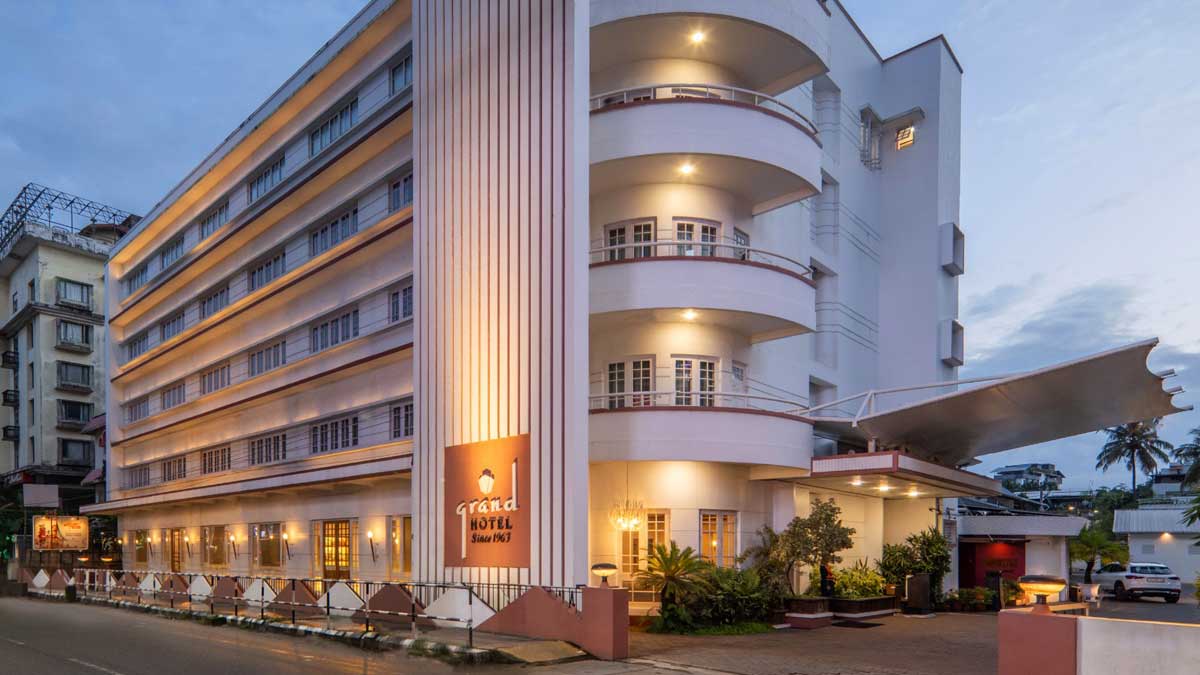
Grand Hotel
Founded by K.J. Joseph in 1963, the Grand Hotel began at a time when the city was still developing as an industrial and commercial centre. More than six decades later, the hotel has changed with the times, but one thing has remained stubbornly familiar: its food.
For K.J. George, the founder’s grandson, it means Kerala cuisine. Grand Hotel may be a multi-cuisine restaurant, but its strongest demand has always been for the food that feels closest to home, particularly the Central Travancore-style dishes, biryani and traditional meals.
George recalls his grandmother sending the fish to the Japanese guests, who were some long-staying guests due to the development of Cochin Shipyard, almost experimentally. They were among the first to try it and, eventually, began asking for more. Word spread, and karimeen (pearl-spot fish) became so closely associated with the restaurant that it grew into a speciality.
What makes these places endure is not simply the food they served, but the memories around it. In Kochi, food has always travelled, adapted and changed. But, in doing so, it has also left behind something that lasts: a taste of the city itself.
