



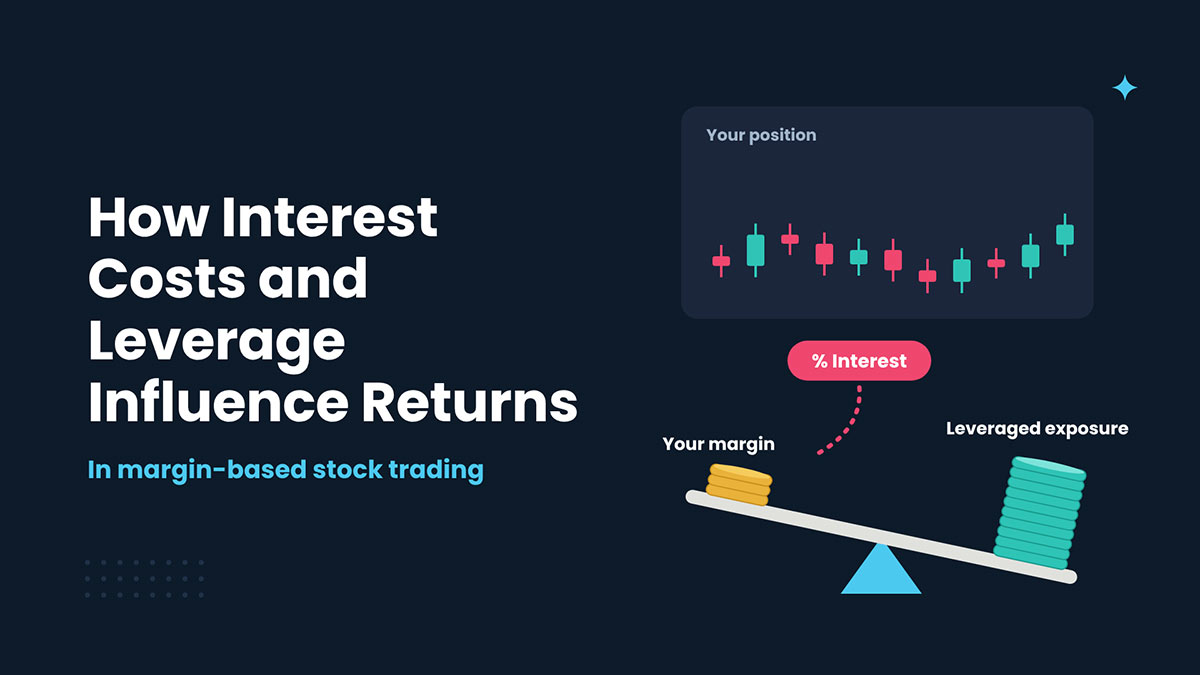
Margin-based stock trading allows investors to take positions in shares by using a combination of their own funds and funds provided by a broker. This can increase the value of a trade beyond the amount available in the trading account. However, using borrowed funds also involves interest costs and additional risks. While leverage can increase gains when share prices move in the expected direction, it can also magnify losses when prices move against the position.
Understanding how interest costs and leverage work is important before using margin-based trading facilities. This article explains their impact on trading returns and the factors investors should consider.
What Is Margin-Based Stock Trading?
Stock margin trading means buying stocks with a deposit. You pay a portion of the total cost of the trade and the rest is covered by your broker. This is often referred to as Margin Trading Facility (MTF).
For example, if you want to buy stocks that are worth ₹1,00,000 but only have ₹40,000 to invest, you can use the MTF trading facility with your broker if they allow. Your deposit will be ₹40,000 and you can borrow the remaining ₹60,000.
The stocks will usually be collateralised and you will pay interest on the money borrowed. The margin, interest and any other terms will depend on your broker.
How Does Leverage Influence Trading Returns?
As leverage means you have a bigger position than you typically could with your money, any slight movements in the stock price can have an effect on your capital.
If you buy stocks worth ₹1,00,000 with a deposit of ₹40,000 and you borrow ₹60,000 using MTF:
If the stock price increases by 10%, you now have stocks worth ₹1,10,000. Once you have paid back the borrowed capital of ₹60,000 you will be left with ₹50,000 (before interest and any additional charges). This is a profit of ₹10,000 on your initial deposit of ₹40,000.
However, if the price decreases by 10%, you will have stocks worth ₹90,000. Once you pay back the capital you borrowed, you will be left with ₹30,000. This is a loss of ₹10,000 on your initial deposit.
Particulars
Share price rises by 10%
Share price falls by 10%
Initial share value
₹1,00,000
₹1,00,000
Value after price movement
₹1,10,000
₹90,000
Borrowed amount
₹60,000
₹60,000
Remaining value
₹50,000
₹30,000
Gain or loss on own funds
₹10,000
-₹10,000
Note: This does not include interest, brokerage, taxes and any other charges.
This shows that using leverage will increase your percentage return on capital but can also increase your percentage loss if the market moves against what you anticipated.
How Do Interest Costs Affect Returns in Margin Trading?
When investing using borrowed money, interest is an important factor. As you are using the brokers money interest will typically be applied on the capital borrowed.
The interest charged will depend on many factors including how much capital you have borrowed, the interest rate and how long you have held the position.
If you borrowed ₹60,000 and were charged an interest rate of 15% per year, you would be charged around ₹740 in interest for holding the trade for 30 days. (based on a 365-day year).
This will impact the profit you receive. If the stocks trading price went up, you would have to consider the interest charged. If the price didn’t move the interest could reduce the value of your position.
The interest charged could be a bigger factor if you are holding the position for longer. Therefore, it is important to consider how long you expect to hold the trade and how much the price will move before using an MTF facility.
What Should Investors Consider Before Using Margin Trading?
Before taking a leveraged position, investors should understand the facility's interest rate, margin requirements, repayment conditions, and other applicable charges. It is also important to assess how much loss they can manage if the share price moves against their position.
Investors should avoid using the entire available margin simply because it is accessible. Keeping track of price movements, reviewing the position regularly and understanding the broker's margin call and liquidation policies can help them manage the associated risks.
Conclusion
Leverage and interest costs both influence the returns from margin-based stock trading. While leverage increases the value of a position, it can magnify losses along with gains. Interest and other trading charges further affect the final outcome, particularly when positions are held for longer periods. Investors should understand these costs and assess the risks before using borrowed funds to trade in shares. Trusted platforms like 5paisa Alpha provide complete details of all the charges involved. A clear understanding of the facility's terms can help them make more informed trading decisions.
