



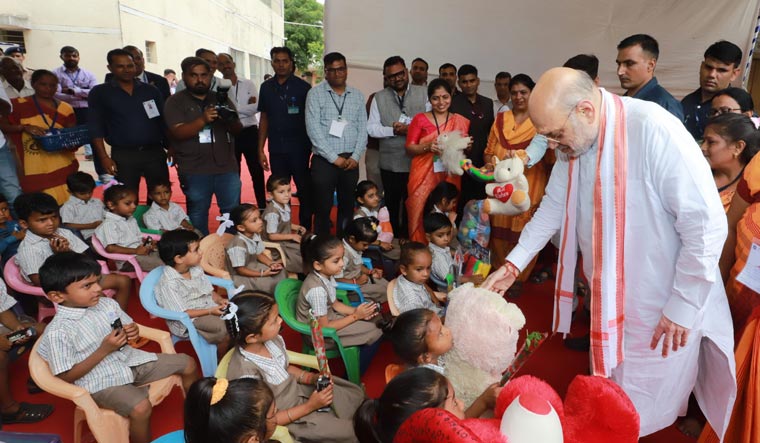
India has made remarkable strides in improving the lives of its children through targeted policy interventions and developmental programs. From expanding access to nutrition and healthcare to enhancing early education, several initiatives have contributed to better outcomes for millions. Today, the government is adopting comprehensive, holistic approaches to child development that address cognitive, emotional, social, and physical growth. Recognising the key enablers of inclusive child development, recent government efforts have focused on supporting working mothers through structured childcare facilities.
For example, the Palna Scheme, launched under the 'Samarthya' component of Mission Shakti—a comprehensive initiative for women's empowerment and protection—is a significant step in this direction. It offers crèche services for children aged 6 months to 6 years, addressing the growing need for safe, nurturing, and developmentally appropriate daycare, especially in the context of increasing nuclear families and rising women’s workforce participation.
By formalising care work and aligning it with the Decent Work Agenda (SDG 8), the scheme not only ensures child well-being but also enables more women to engage in gainful employment.
Palna builds on the existing ICDS infrastructure by strengthening Anganwadi centres through the introduction of Anganwadi-cum-Crèches (AWCCs). These centres combine early education with dedicated day-care facilities, ensuring both the safety of children and continuity in the care provided during working hours. As of current projections, over 11,000 AWCCs have been approved across 34 States/UTs, serving as vital nodes of support for nearly 29,000 children. In addition, 1,284 Standalone Crèches are operational, offering integrated services such as early stimulation for children below 3 years, preschool education, growth monitoring, health check-ups, and supplementary nutrition sourced locally.
Furthermore, in line with the amendments to the Maternity Benefit Act, all establishments with 50 or more employees are mandated to provide crèche facilities. The Palna Scheme supports this mandate by facilitating the registration and monitoring of such facilities through state-level digital platforms, ensuring compliance and promoting workplace-friendly childcare norms. This creates a direct link between workplace policies and child development.
Anganwadis, the backbone of the Integrated Child Development Services (ICDS) and Early Childhood Care and Development (ECCD), play a crucial role in early childhood education while also serving as essential hubs for regular health checkups, nutrition support, and preschool learning. These centers ensure that children receive timely medical assessments and nutritional care, laying the foundation for their overall well-being and development.
The growth of these services builds upon an already substantial foundation. As of March 31, 2021, approximately 1.387 million Anganwadi and mini-Anganwadi centers were operational across India. Improved access to ICDS services has had a positive impact on child nutrition and health. Utilisation of ICDS services increased from 58% in 2015-2016 to 71% in 2019-2021, with the prevalence of underweight children decreasing from 37% to 32% during the same period.
In addition, schemes like Poshan Abhiyaan and the Mid-Day Meal Scheme (now PM POSHAN) have been instrumental in ensuring better nutrition outcomes and supporting children’s cognitive and physical growth. The program serves approximately 120 million children across 1.27 million schools and is considered the world's largest school meal program that aims to improve nutritional status and encourage school attendance. Together, these nutrition and childcare services ensure holistic child well-being.
To further support early childhood development (ECD), the National Education Policy (NEP), launched in 2020, strengthens foundational learning through play-based and activity-based methods. Additionally, Mission Indradhanush provides essential immunisation to safeguard children's health, while Palna supports working mothers by providing safe daycare environments through Anganwadi and crèche facilities. These comprehensive efforts collectively enhance children's education, health, and overall development.
A child's survival, growth, and development depend on the quality of care and the provisions available for health, nutrition, and early learning. The intergenerational grip of poverty leads to multiple deprivations among children in their early years. To drive meaningful change, the landscape requires collaboration across sectors, with government institutions such as the National Institute of Public Cooperation and Child Development (NIPCCD) and organisations like the Forum for Creches and Child Care Services (FORCES) playing a crucial role. FORCES has been working with key stakeholders to achieve the universalisation of childcare services across the country. Through its partners in 12 states, FORCES is amplifying grassroots voices to inform policymakers about the urgent need for childcare services, especially for vulnerable communities. By addressing systemic gaps and prioritising the needs of marginalised groups, these efforts are helping break the cycle of poverty and foster a more inclusive environment for all children.
In India, holistic ICDS and ECCD frameworks are transforming the lives of the country’s most vulnerable children by addressing education, health, and nutrition holistically. Rather than treating these areas in isolation, successful models like ICDS, Palna, Poshan Abhiyaan, and community-based learning programs demonstrate the power of a multi-sectoral approach, ensuring that children receive comprehensive support from an early age.
The impact of early childhood development extends far beyond immediate benefits—it lays the foundation for long-term transformation, equipping children with the skills and well-being necessary for a brighter future. By scaling up these initiatives and investing in holistic child development today, India is shaping a healthier, more educated, and resilient generation, ultimately driving sustainable progress for the nation.
(BJP MP Shobhanaben Mahendrasinh Baraiya represents Gujarat's Sabarkantha constituency in the Lok Sabha)
(The opinions expressed in this article are those of the author and do not purport to reflect the opinions or views of THE WEEK.)
