



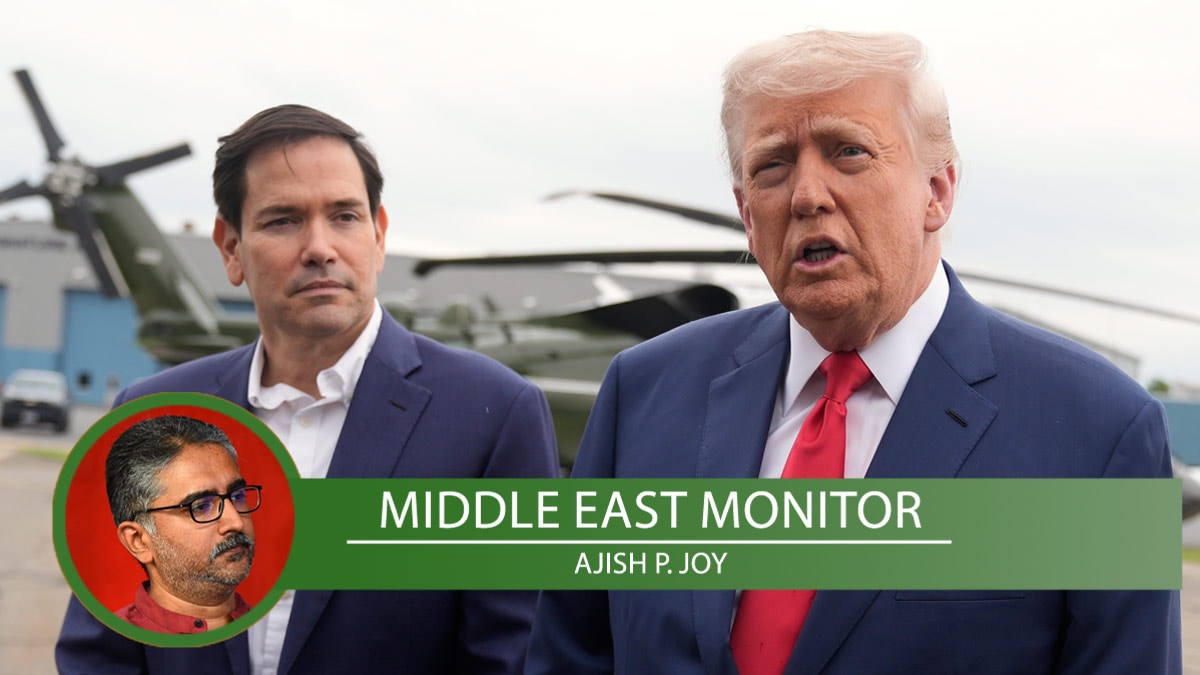
President Donald Trump gathered his top foreign policy and national security officials at Camp David on June 8 for a high-stakes retreat focused on two interconnected crises: Iran’s advancing nuclear programme and the ongoing war in Gaza. As diplomacy teeters and pressure mounts from both allies and rivals, Trump faces a delicate balancing act between avoiding another Middle East war and holding firm on his red lines with Tehran.
A senior US official said Trump views the two crises as part of a broader regional puzzle. "The president believes these issues are tied together," the official told Axios. "We’re trying to shape a new reality in the region."
Among those present at the Camp David talks were Vice President J.D. Vance, Secretary of State Marco Rubio, Secretary of Defense Pete Hegseth, Chief of Staff Susie Wiles, CIA Director John Ratcliffe, special envoy Steve Witkoff and other senior officials. The gathering, described by aides as a "retreat", allowed Trump’s national security team to spend uninterrupted hours debating the competing paths ahead. "It was the right time to gather everyone," one official said. "We’ll do it more often."
Iran might formally reject the latest US proposal for a nuclear deal soon, though American officials believe Tehran remains open to continued negotiations. "We sent a very tough proposal," a senior White House official said. "We expect a harsh reply, but also a signal that talks aren’t over."
Speaking on June 9, Trump said Iran’s negotiators were "good, sometimes too good," adding, "We’re trying to make a deal so that there’s no destruction and death. I hope that’s how it works out, but it might not. We’ll soon find out." His self-imposed deadline for a breakthrough expires on June 12, though both sides are inclined to keep talking.
Israeli Prime Minister Benjamin Netanyahu has privately pushed for a military solution, though he has promised Trump that no unilateral strike will occur while negotiations continue.
At the heart of the US policy debate is a fundamental question: should America secure a diplomatic deal with Iran to restrict its nuclear ambitions, or prepare for military intervention to ensure Tehran is denied nuclear weapons capability altogether?
Trump has repeatedly stated his desire to prevent Iran from obtaining a nuclear weapon. However, his national security team is deeply divided over how to achieve that aim, Politico has reported. One faction, led unofficially by Vice President Vance, believes diplomacy is both achievable and preferable. Vance, known for his opposition to foreign military entanglements, has taken an unusually active role in the Iran portfolio, backed by Defense Secretary Hegseth and special envoy Witkoff.
This group argues that a military strike could endanger US troops in the region and trigger a wider war. They are also concerned about the impact of soaring oil prices on the US economy if hostilities erupt. Outside the administration, pro-diplomacy voices such as conservative influencer Tucker Carlson and Turning Point USA founder Charlie Kirk are also urging restraint. Carlson recently criticised the hawkish rhetoric on Iran, tweeting, "There is zero credible intelligence suggesting Iran is near building a bomb. So why push for war?"
On the opposing side are Iran hawks including Secretary of State Rubio and Senators Lindsey Graham and Tom Cotton. They are convinced that Iran’s regime is at its weakest in years and that the US should demand full dismantlement of Iran’s nuclear programme. Should Iran refuse, they argue, America must be willing to back an Israeli strike or lead one itself.
Mark Dubowitz, CEO of the Foundation for Defense of Democracies, has lobbied intensively for this approach. "The president once called the 2015 Obama deal fatally flawed," Dubowitz said. "The question is whether he still believes that." Many hawks consider the current proposal from Witkoff to be a rebranded version of that accord.
Behind the scenes, a growing effort is underway among GOP conservatives and Israeli officials to sway Trump towards authorising military action. Last week, conservative talk show host Mark Levin told Trump during a private White House lunch that Iran was days away from building a nuclear weapon, a claim contradicted by US intelligence assessments. Trump has reportedly dismissed the idea of an imminent Iranian bomb, but the pressure campaign is unrelenting.
Levin and other conservative commentators have also taken aim at Witkoff, accusing him of being too soft on Iran and too cosy with Gulf states like Qatar. Rupert Murdoch’s New York Post has run articles criticising Witkoff’s diplomatic efforts, causing rifts within Trump’s camp. "They’re trying to push the president into a decision that’s not what he wants," said a senior official. "There’s a very active lobby for war inside and outside Washington."
In response, Trump’s allies are working to counter the hawks and keep the president focused on diplomacy. Vance publicly backed Witkoff’s approach in a podcast, calling it "a very creative proposal that allows both sides to claim a win."
That proposal, shared with Iranian Foreign Minister Abbas Araghchi, would allow Iran to continue low-level uranium enrichment under international supervision and eventually join a regional enrichment consortium. But Tehran has been firm in refusing to abandon domestic enrichment capabilities — a key sticking point for Trump, who has labelled enrichment a red line.
Despite their differences, both factions in the White House understand the stakes. Without a deal, military confrontation becomes far more likely. But even if a strike occurs, experts caution it would likely only delay, not destroy, Iran’s nuclear ambitions.
A recent International Atomic Energy Agency assessment concluded that Iran now possesses enough near-weapons-grade uranium to fuel around 10 bombs. US intelligence estimates Iran’s breakout time at just one to two weeks, though there is no evidence Tehran has decided to build a nuclear weapon.
Still, that potential has added urgency to internal debates and intensified Israeli lobbying. Netanyahu and his advisers have privately warned the Trump administration that Israel may soon act if it believes the window to degrade Iran’s programme is closing. When Israeli Strategic Affairs Minister Ron Dermer visited Washington recently, Trump reportedly urged him to delay any action until after his Middle East visit.
Trump’s pro-Israel record, including moving the US embassy to Jerusalem, recognising the Golan Heights and brokering the Abraham Accords, has shielded him from criticism by Israeli leaders in the past. But his reluctance to support military strikes on Iran is testing that relationship. The Trump-Netanyahu partnership, once rock-solid, now shows signs of strain.
"The president is not going to support war," a Trump confidant told Politico. "But these guys won’t take no for an answer. That’s where the breach is with Bibi. Israel isn’t reading the room. The MAGA movement doesn’t support foreign wars."
The unpredictability of Trump’s own decision-making adds further uncertainty. Some insiders worry that his stance could shift depending on who last briefed him. Trump has already sacked one national security adviser, Mike Waltz, partly over his coordination with Israel on military options.
For now, the president remains committed to diplomacy. "He has always been willing to listen to a wide range of voices," said White House Press Secretary Karoline Leavitt. “But ultimately, he is the final decision maker.”
The next round of talks between Witkoff and Araghchi may offer another chance to bridge the divide. But with both sides holding firm and external pressure rising, the path forward remains precarious. Whether Trump sticks to his instincts or bends under pressure may well determine whether the region moves toward peace or war.
