



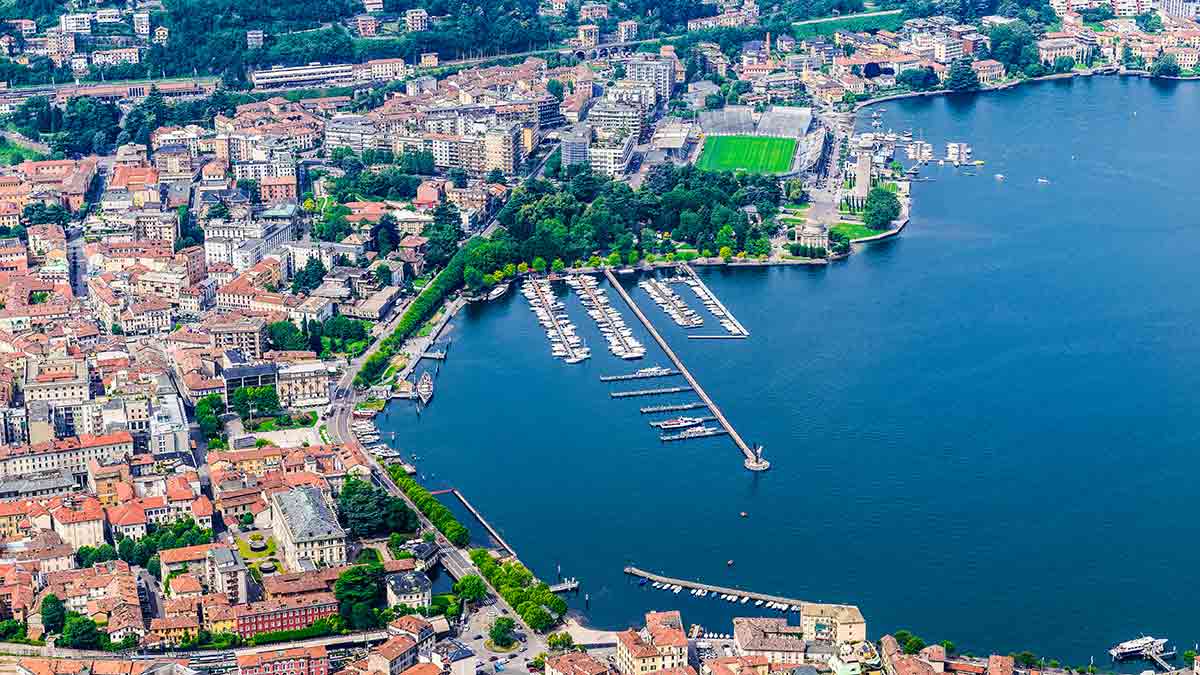
Picture this: To the north, the Alps rise in the distance beyond mediaeval structures; framed against this backdrop are seaplanes operating out of the Aero Club Como. To the east, blue waters of Lake Como glisten in the sunlight. To the south is a tranquil, tree-lined promenade. And to the west, the city presses in with classic Italian facades. These are the sights from the stands of Stadio Giuseppe Sinigaglia, the home ground of Italian football club Como 1907. Of course, the players are running around, but who cares?
Indeed, for most of Como’s history, the club that is, the men were just an eyesore, ruining the spectacle. In 2004, after failing to establish itself at the top level of Italian football in almost 100 years of its existence, the club went bankrupt, only to be resurrected soon. This new entity, too, faced bankruptcy in just over a decade and was reborn again. This is not a unique case; in a strong football ecosystem, the clubs rarely die―Simon Kuper and Stefan Szymanski argue in Soccernomics that they are too loved to fail.
This is what makes them a feasible investment option, despite little short-term returns, high cost of operations and high risk. In 2019, even as Como languished in the semi-professional fourth tier, it caught the eye of Indonesian tobacco billionaires Robert Budi Hartono and Michael Bambang Hartono of the Djarum Group (the brothers had a joint net worth of $43.9 billion as per Forbes’s 2025 list). SENT Entertainment, a UK-based Djarum subsidiary, wanted to make a reality series in which young Indonesian footballers would come to Europe via Como. They proceeded swiftly, purchasing the stressed asset and clearing debts and liabilities, including unpaid wages, for just over €1 million (around Rs8 crore then).

But, they had missed a vital detail―Italian football rules banned recruitment of non-EU players in the lower leagues. So, SENT pivoted. According to the club president, Mirwan Suwarso, they realised that the opportunity was far greater. “We would like to create a model similar to Disney, where the centre of the business is the lake,” he told Reuters. The new plan is to make Como a premium football destination. Within that model, the football team is, as Suwarso put it, “the theme park”, in which, over time, tourists would outnumber the fans.
These are words that would sent chills down the spine of any football fan. The plight of English behemoths Manchester United is a stark reminder of what happens when football is not the primary concern at a football club. But, Como is different, arguably even distinct. For a start, it has nothing to lose. So far, it has only gained. The club reached the top division in 2024, after a 21-year gap, and finished tenth out of 20 teams in its first season back.
Como faces significant demographic hurdles that restrict growth. The city has a population of only around 85,000 and even that base is split because of Como’s proximity to Milan (around 50km). Earlier, the Comaschi could support Como in the lower tiers and one of the Milan giants in the top division. But, now, Como is a direct competitor to them. This forced fans to declare their allegiance openly, further shrinking the local fan base. Therefore, Como’s survival at the elite level would depend on its ability to expand beyond the local community.
Luckily, it is based in Como―a world-renowned tourist destination and a luxury retreat for the rich and the famous. Lake Como was, for instance, the dreamy venue for Deepika Padukone and Ranveer Singh’s wedding in 2018. Como is also the richest club in Italy now, and one of the richest in the world, in terms of owner wealth. These two factors combined to resounding effect. An e-commerce operation and team shops were launched, advertisements were placed in hotels, buses and billboards and social media accounts grew with posts in English and Italian. These efforts led to fans from 122 countries buying tickets to second division matches in the 2023-24 season. That was a statement. Consequently, ahead of the club’s return to the first division in 2024-25, big brands came on board. Adidas designed the kit and non-football apparel, and Uber became sponsors (though, perhaps, it should have used Uber Black branding, as only luxury cabs are available in the city).
However, these partnerships did not dull the Como leadership’s enthusiasm for their Disneyland idea. This vision saw the June 9 launch of SENT Tourism, which will sell luxury packages offering accommodation, experiences and VIP/hospitality packages for Como matches. In 2024-25, the club’s hospitality and VIP packages cost €150 and €490 onwards, respectively (a Euro is around Rs100 now). The VIP package includes premium match tickets (facing the lake), stadium tour and on-site concierge support. This can be combined with other experiences, like a stay at the Renaissance patrician residence Villa d’Este, boat tours, seaplane rides and lakeside wine tastings, at a cost of more than €2,600. It is estimated that the costs will increase following the creation of SENT Tourism, which is looking to repackage offerings and curate new bundles.
Como has also invested in a speciality beverage called La Comasca, described as the “world’s only silk-filtered beer”. Silk filtration is said to make the beer smoother and lighten “perception of bitterness”, owing to the tight-woven structure of silk fibre. At present, it seems to be available only at Como home matches and events. Its price is not publicly listed, but can be estimated to be at least three times that of mass-market lagers based on the pricing of artisanal beer in Europe.
Perhaps the most telling insight into Como’s approach is the fact that the club’s chief brand officer is a fashion designer. Rhugi Villaseñor, the Philippines-born, California-raised founder of luxury street wear brand Rhude, oversees the fashion vertical and shapes the club’s global strategy of bridging football, fashion, hospitality and culture. At the end of the 2024-25 season, Como players wore a Rhude x Adidas designer kit that got sold out even though it was priced at €275. In comparison, European champions Paris Saint-Germain’s designer kit (in collaboration with Nike’s Jordan line) cost only €150.
Como has lost in excess of €80 million in the last four years. But, Suwarso believes the club can be profitable within the next three years. His target is to take Como to a €1 billion valuation, with the non-football verticals bringing a significant portion of that value. For reference, there are currently only 19 clubs globally valued at €1 billion or higher.
Despite a non-football focus, there is cause for fans to be optimistic. For this model to work, the style of play has to entertain, especially as the club is attempting to foster a tourist-heavy crowd. This requirement has been met so far, under Spanish coach Cesc Fabregas. This has to continue. Otherwise, a Benedict Cumberbatch―he was spotted in the Sinigaglia in November and is used to thrilling football as a Chelsea fan― might doze off during a Como game. That would be a PR nightmare.
So, while the Como experience is undoubtedly an offering crafted for the rich by the ultra rich, football fans get exciting “theme park” football. Although, considering the cost involved, many of them may have to watch it from the comfort of their homes.
