



------------ This is a spoiler-free review ---------------------
The most memorable images in "Dhurandhar: The Revenge" don't involve guns, explosions or bloodshed. It's the quieter ones. A man burning the photograph of his family during his younger, happier days. The shocking recognition of a face from the past. The surprising revelation of one significant character's true allegiance. Revealing more would only ruin the fun for those who are yet to see it.
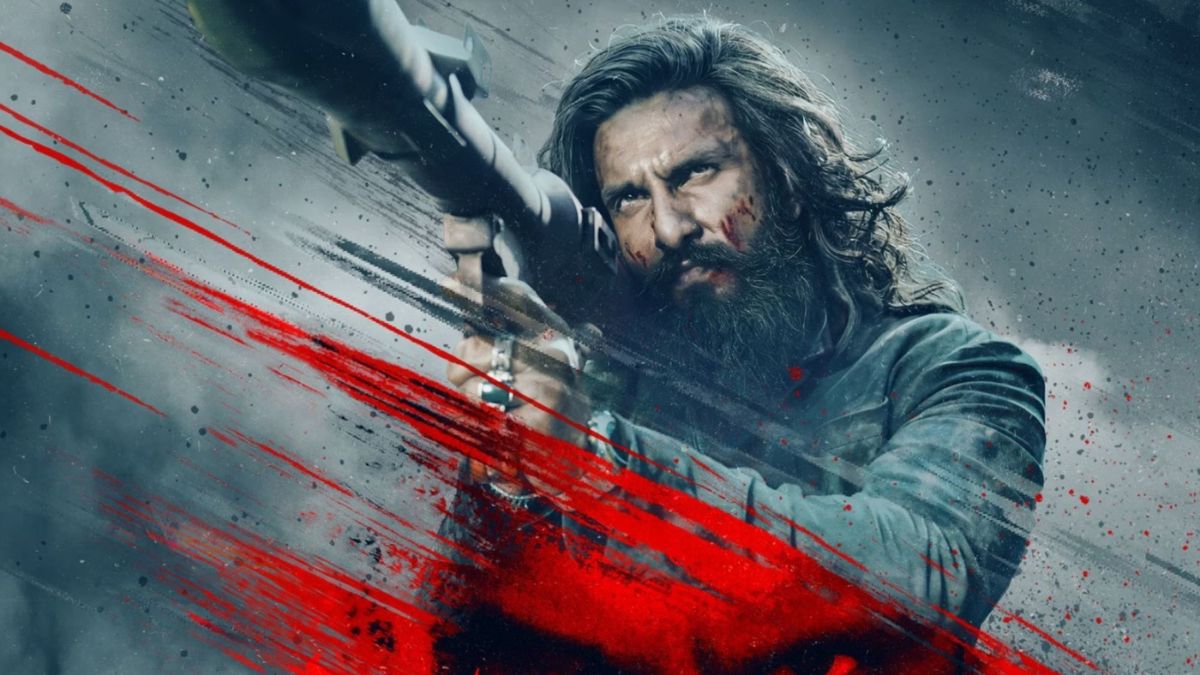
The sequel — maybe calling it that isn't fair, since both parts were conceived as a single film first — offers more in terms of character development than the first. It has the stronger Ranveer Singh performance — and, of course, easily one of his best performances — because we begin to understand that there was a devastating tragedy in the past and it was the ensuing grief that was channeled into a service of his country — the same country that he once felt ignored to come to the aid of his family when it was experiencing a severe crisis.
But this is, after all, the follow-up to "Dhurandhar". The country will, of course, be nice to the hero. It will redeem the hero, who, of course, will be convinced by the Intelligence Chief (R. Madhavan) to make the necessary sacrifices to be a "true warrior", citing the story of Arjuna from the Mahabharata, including a quote from the Bhagavad Gita to empower and effectively mobilise him. One word would suffice to describe Ranveer's performance — consistent. We get the aggression. We get the self-destructive tendencies. We get that final shot. Everything he does with his face and body makes perfect sense for his character.
This line about making painful sacrifices lies at the core of "Dhurandhar: The Revenge". Purpose takes the place of grief. But Aditya Dhar does something I found quite clever in his script. He explores the parallels of two father-son relationships of different varieties. In fact, there are three, when you count a certain surprise introduction to a notorious real-life figure. The first and second involve Jaskirat Singh (Ranveer) and Major Iqbal (Arjun Rampal) — sons taking paths different from those of their fathers in order not to end up like them. But heartbreak and pain follow them regardless. The difference between Jaskirat and Iqbal is that the latter ends up becoming a far worse figure than his father.
Dhar adds a backstory for Iqbal that might prompt the question, "Why a backstory for the bad guy?" Why not? Even the worst character in "Game of Thrones" has a revealing backstory that offers potential clues to the shaping of their personality. In “Revenge”, this kind of writing gives some colour and character to Rampal's performance, resulting in his most memorable role since "Daddy".
"Dhurandhar: The Revenge" is longer and paced differently compared to its predecessor. By "differently", the implication is "a bit strangely". And yet, for its nearly four-hour length, not a single moment felt dull. Of course, some areas feel a bit more stretched out than necessary — specifically in the third act, which seemed like the makers were confused about how to end it, and decided to include all the options. At first, you think it's going to end one way — because it felt like the proper way to do it; the realisation that a sense of closure was achieved — but then comes the next one... and the next.
Shashwat Sachdev's score is, once again, top-notch — 90s' kids are likely to take delight in the inclusion of a couple of iconic tracks from the time — but at the same time, one can't help but shake the feeling that when evaluating the overall soundtrack, "Dhurandhar: The Revenge" is just a notch below the former.
It takes a while to realise that "Dhurandhar" is the better-paced film. The first one had its few narrative flaws, but it was put together in a neat, more fluid manner. It was tighter. The staging of the violence in the first one felt more organic and cathartic. The same cannot be said of "Revenge" because there are places where it felt repetitive.
Remember the killing (and chilling) montage in the third act of "The Godfather" or the same thing that Ram Gopal Varma did in "Company" or "Sarkar"? It would look fresh for someone who has been introduced to crime dramas for the first time, but to someone who has seen so many of them — or even some iconic revenge-based Westerns like "Once Upon a Time in the West", which also opened with the massacre of a family — some of the killings might seem too... familiar.
That said, some of the killing methods are quite... inventive. Needless to say, not for the faint-hearted. And don't get me started on CBFC's censorship choices? Like, what kind of logic drives their choices? I'm curious to know. Why mute certain swear words but allow others?
Occasionally, "Revenge" also feels like it's trying hard to overstay its welcome. And, predictably, you’ll find the incorporation of several real, plucked-from-the-headlines events that suggest the possibility of those happening due to the discreet involvement of so-and-so person, just as it did in the first film. And the references are louder this time around. There is no attempt to be subtle. It doesn't try to hide the fact that it's in favour of the actions of a certain party and a certain leader, a writing choice that's going to generate a lot of heated debates on social media.
When many of us don't have a problem with similar creative liberties in international/Hollywood cinema, why see this as anything different? When it comes to blending real and fictional events, it's not so different from what novelists like Frederick Forsyth did. Two examples: In "The Day of the Jackal", he placed a fictional assassin in proximity to real events from 1960s France. In "The Fist of God", he conjured up thrilling espionage activities in Iraq during the Gulf War, when Saddam Hussein was still alive. So why not Aditya Dhar? Let's not forget the lengthy, audible disclaimer at the beginning that reminds us that this is a "fictional" film that was “inspired by" real events. Viewer discretion is advised, naturally.
Can a film be unashamedly toadyish and thoroughly entertaining at the same time? Yes, both things can be true. Just because it has certain scenes and dialogues disagreeable to certain viewers, doesn't mean we cannot acknowledge the fact that it takes a special skill to make audiences look forward to the extremely long second instalment of the extremely long first chapter. How many directors have the ability to make us almost forget that what we are watching has the length of a miniseries? There may be those who felt the urge to take out their phones several times, but I didn't.
Film: Dhurandhar: The Revenge
Director: Aditya Dhar
Cast: Ranveer Singh, Sanjay Dutt, Arjun Rampal, Sara Arjun, R. Madhavan
Rating: 3.5/5
