
The tablet makers have been telling us that it's the next iteration of personal computing for years now, and while many do use a tablet for working and entertainment on the go, it hasn't exactly replaced laptops by any means. The new Xiaomi Pad 8, which starts at ₹33,999, is also looking to cater to a similar audience. Let's try to understand what it really does or struggles with:
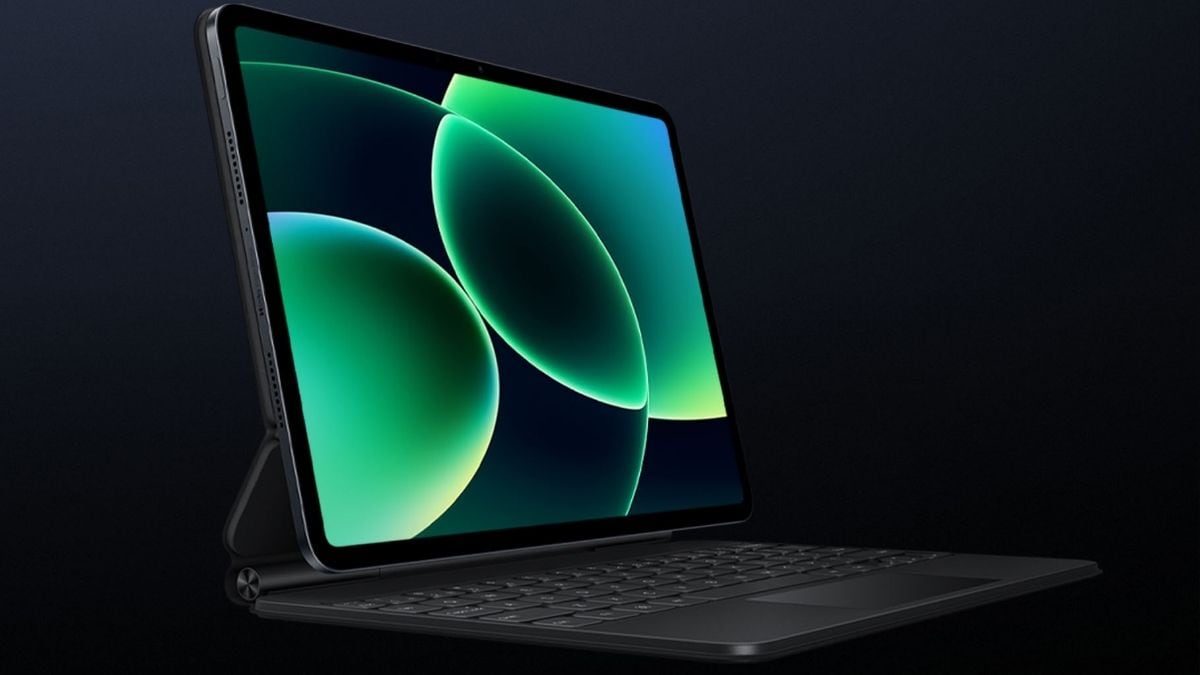
The Pad 8 is a slim tablet with relatively not-so-broad bezels around the display. The sides and the back are aluminium, while the 11.2-inch display (3:2 aspect ratio) on the front has glass all over it. Weighing 485 grams, the tablet has rounded corners and seems comfortable enough to hold for hours with both hands while watching something. It isn't slippery and never once felt cheap in any way. The protruding camera and LED setup in a square in contrasting colours also adds a bit of personality to the tablet. There are pogo pins on the top and back of the tablet to attach the smart pen and keyboard.
Coming to the 11.2-inch 3.2K (3200x2136) LCD (IPS) display, this is a plenty bright and sharp display that doesn't sacrifice picture details. Though I would have liked to try the higher-end nano texture display (starts at ₹38,999), this is itself a pretty good quality display—you get good viewing angles, high contrast-y photos. It also handled Dolby Vision videos surprisingly well, something a lot of tablets can struggle with in terms of low-light scenes and shadows.
Speaking about the OS, this is running on Android 16-based HyperOS 3 with the October security patch in place. It's powered by Qualcomm's Snapdragon 8s Gen 4 chipset (up to 3.21GHz octa-core processor, Adreno 825 GPU) alongside 12GB LPDDR5T RAM (or 8GB LPDDR5X) and 256GB UFS4.1 (or 128GB UFS3.1) internal storage.
This is a well-optimised tablet with some useful features needed in a tablet, such as floating app windows and the ability to drag content from one app window to another. There's also a workstation mode where you get a bar of apps at the bottom, and all apps that you click on open separately, all shown at the same time. Works well for as many as three apps at once, provided you need to check in all three continuously. The OS is smooth, handles daily tasks smoothly and doesn't skip a beat when switching between apps. It handled games like Call of Duty or Monument Valley without any troubles and didn't show any heating issues, either.
Add the Pro Keyboard (priced at ₹8,999) and Pen (₹5,999), and you can begin to take down notes, type long emails, or write your documents or typing for your work—the keyboard is sturdy and spacious to type on. Of course, there's an added cost, but there's certainly some convenience offered if your use cases fit.
The four speakers on the device are sufficiently loud and generally clear to be used for your personal multimedia and gaming playback indoors. WiFi performance on this thing is top-notch. The USB-C port is a USB 3.2 Gen 1, so it does faster data transfers for both read and write—handy for heavy video files.
The battery on the Pad 8 is reliable, with the 9,200mAh battery unit lasting over a day. It can be charged at 45watts using the bundled 67watts charger, taking a little under 1.5 hours to charge fully.
I think there's a good case to be made that the Xiaomi Pad 8 is perhaps the best tablet today for around ₹35,000. I would have liked the nano-texture version to be closer to this price tag and maybe price the keyboard a little lower, but then that's a bit of nitpicking. There are a lot of things going in favour of the Pad 8, be it for some work on the go or for long entertainment hours spent indoors.