



When it comes to the integration of princely states, Travancore is the first to find a mention, however, briefly. Part of present-day Kerala, it was among the first to declare its intent to remain independent as British India prepared to split into India and Pakistan in 1947. The declaration came in June that year; by July, it had signed the Instrument of Accession, and the matter was swiftly eclipsed as attention shifted to more contentious regions like Hyderabad and Kashmir.
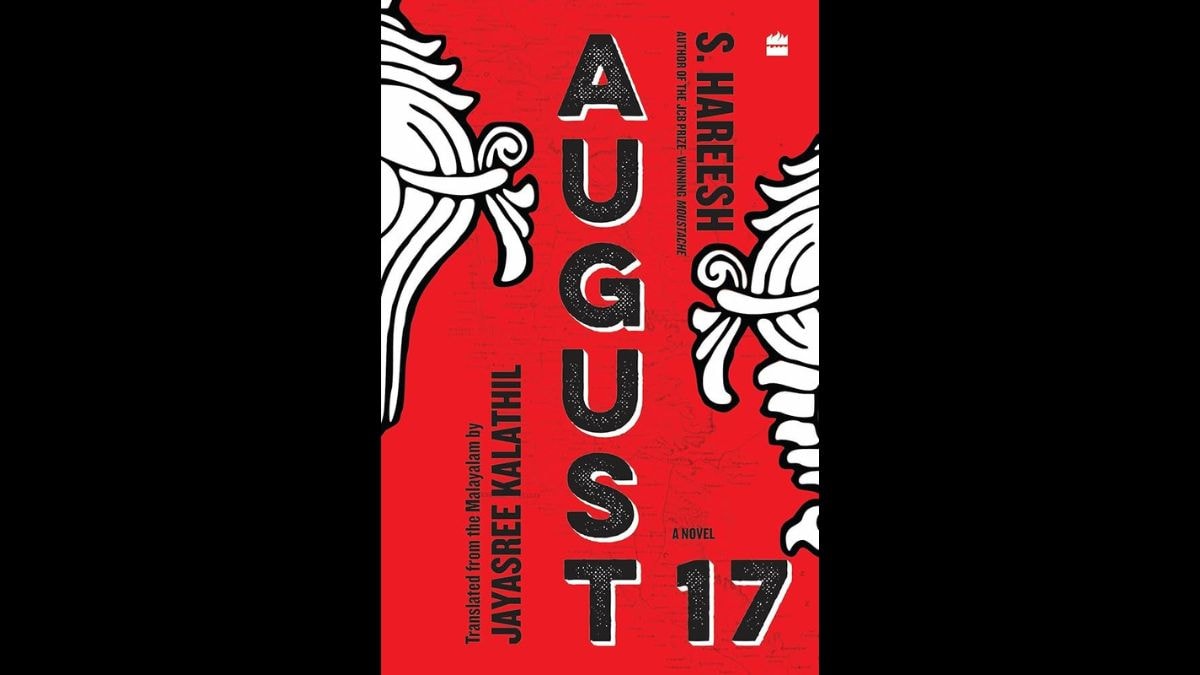
But what if Travancore had remained an independent country? That is the intriguing premise author S. Hareesh explores in his genre-defying latest, August 17. The novel is translated from Malayalam to English by Jayashree Kalathil, who also translated his JCB Prize-winning Moustache (Meesha).
This alternate history of erstwhile Travancore unfolds through a spy who goes by Bhasi or Avarachan. Soon, a host of characters enters the narrative, blurring the line between fiction and reality. Among them are real historical figures – the former diwan CP Ramaswamy Iyer, and political activists such as Akkamma Cherian, KCS Mani, Pattom Thanu Pillai and Mannath Padmanabhan. Towering above them all is Basheer, a character modelled on the celebrated writer Vaikom Muhammad Basheer. Here, he is a writer but also a revolutionary, who pens radical essays and pamphlets, and is wanted for allegedly conspiring to assassinate the king.
At first glance, August 17 reads like historical fiction – reshaping events, borrowing figures, and reimagining the past. And it is that, for the most part. But at its core lies a more potent inquiry: the power of story itself.
Is history a record of facts, or a narrative shaped by those in power? Do we use stories to make sense of the world and our actions?
“The most dangerous weapon invented by human beings is the story,” Hareesh writes. “All stories must be feared. A story has the capacity to make people love, hate, go mad… kill.” It is in these moments that the novel finds its deepest resonance.
Even a seemingly simple line – “Why do you drink this bitter water of boiled dry leaves? Because you add your imagination to it” – reveals its power.
In doing so, the novel also foregrounds the role of freedom fighters, political activists, and the region’s layered history; one that is often overshadowed by narratives centred north of the Vindhyas.
While certain sections, particularly those leading up to Travancore’s declaration of independence, carry greater narrative urgency than those depicting its aftermath, August 17 remains a compelling and thought-provoking read. It is the kind of book that stays with you, not just for its reimagining of history, but for the questions it leaves behind.
Title: August 17
Author: S. Hareesh, translated by Jayashree Kalathil
Publisher: HarperCollins
Price: Rs 599,
Pages: 415
