



In popular imagination—across fiction and philosophy alike—the story of ‘unbecoming’ continues to hold a strong appeal: the shedding of the self, the unlearning and relearning, the search for purpose, and self-discovery, if not enlightenment itself.
There have been many Siddharthas who have walked this path: from the prince-turned-monk Siddhartha Gautama to the restless seeker in Siddhartha by Hermann Hesse.
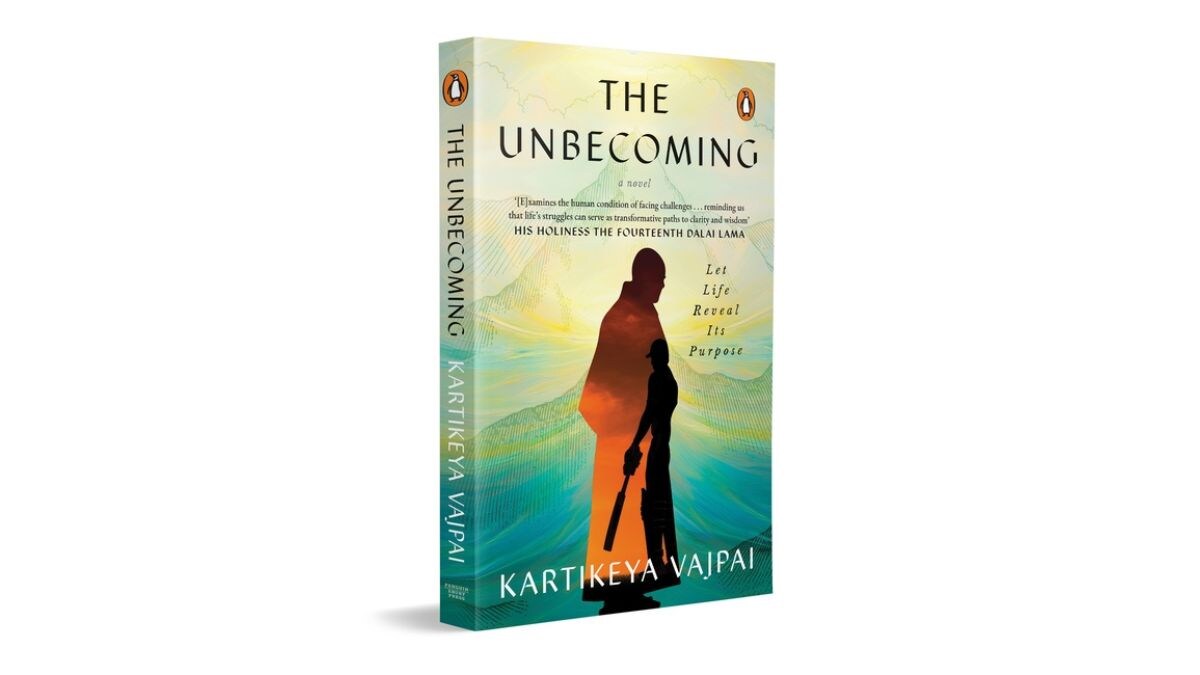
In The Unbecoming, written by advocate and author Kartikeya Vajpai, Siddharth is a charismatic yet self-absorbed and egoistic cricketer, troubled not by the sufferings around him but the one within: his failing form, which costs the Indian cricket team dearly and dents his own standing.
After a crucial loss, he turns his anger on his long-time coach, Ajay Goswami, who has been with him since his early days, guiding him through every high and low. Their very public fallout not only severs a deeply rooted relationship but leaves both men adrift—perhaps Ajay more so than Siddharth.
While Siddharth remains largely oblivious to the depth of his coach’s influence, Ajay is left grappling with a more existential loss: if he is no longer a coach, then who is he?
“What am I?” is the question the novel persistently asks, through both Ajay and Siddharth.
While Siddharth carries the name of Siddhartha Gautama, the journey of unbecoming unfolds more fully through Ajay. He comes to embody the parts of ourselves we suppress while playing around the identities we construct.
“Life is limitless, as are your possibilities. Stop drawing boundaries around yourself that confine you to a fixed identity,” the novel suggests.
It is this search that takes Ajay to McLeodganj, home to the Dalai Lama. Siddharth follows years later, embarking on a different—if less ego-driven—path towards understanding himself and finding his purpose.
It is a story that has been told many times, and yet manages to feel fresh: a testimony both to its enduring appeal and to the depth of India’s spiritual traditions, which continue to draw seekers from across the world.
The Unbecoming doesn’t delve too deeply into the mechanics of spiritual transformation. Instead, it roots itself in the more immediate struggles of contemporary life, such as ego, ambition, and greed, and offers some compelling reflections—particularly on identity and the ways in which it confines rather than expands us.
As Ajay’s guru tells him: “You’ve exhausted all the potential from that character and role. It’s no longer contributing to your growth as an individual.”
However, the writing occasionally tips into the preachy. There are stretches where ideas pile on top of each other, becoming dense.
While the story centres around Siddharth, it’s Ajay who emerges out more well-rounded and fully-realised as a character. Siddharth’s arc, on the other hand, feels comparatively underdeveloped.
For instance, it is difficult to fully grasp the roots of his ego. As a result, his ultimate journey of shedding the self lacks emotional weight. Ajay’s trajectory, in contrast, carries far greater depth. His inner turmoil is dealt with more nuance, making his turn towards monkhood both believable and affecting.
The novel is an easy read. However, some parts, simple and fluid otherwise, are punctuated by heavy, formal vocabulary that feels out of place.
In all, The Unbecoming is a light, accessible read. It may not be the most compelling Siddharth story out there, but it is a thoughtful enough addition to the genre, particularly for readers seeking something reflective and simple.
Title: The Unbecoming
Publisher: Ebury Press
Pages: 189
Price: Rs 499
