



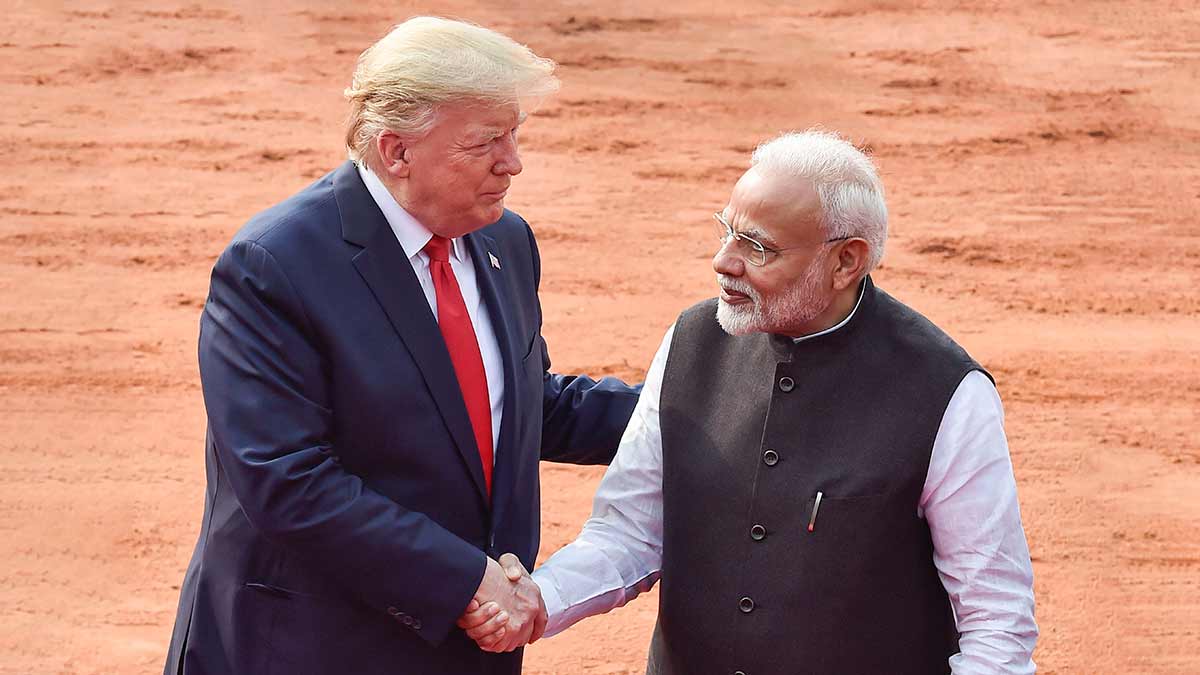
On Monday, the US President Donald Trump said that he reached a trade agreement with India and rolled back the tariffs imposed on it from 25 per cent to 18 per cent.
There was, however, a noticeable gap in the statements by the Indian leader and the US leadership after the trade deal, according to Chinese media reports.
The US had specified that in return for reducing the tariffs, India would drop tariffs on American products, buy more of them and finally stop purchasing oil from Russia.
Prime Minister Narendra Modi, however, made no mention of ending the purchase of oil from Russia in his statement on X or on whether India would begin purchasing American goods at a higher level. Trump had said that India was “committed to ‘BUY AMERICAN,’ at a much higher level, in addition to over $500 BILLION DOLLARS of US Energy, Technology, Agricultural, Coal, and many other products.”
According to Qian Feng, director of the research department at Tsinghua University’s National Strategy Institute, who spoke to Global Times, it was not the first time the US president had claimed that India would stop purchasing Russian oil, and that such details could only be confirmed once official documents are released.
Last October, Trump said that PM Modi assured him that he would not buy Russian oil and called it a big step. India’s foreign ministry, however, said later that they were not aware of any such conversations between the country's leadership.
The Global Times report also pointed out that international media expressed criticism of what they saw as an unfair deal and of the likelihood that India would stop buying Russian oil.
Robert Yawger at Mizuho Securities, who spoke to CNN, said that Russian oil was sold at a significant discount, costing only about $16 a barrel, to OPEC or US crude, making it hard for India to quit.
Trump’s remarks, therefore was not confirmation that India would stop purchasing Russian oil.
Russia and India’s long-standing and relatively stable relationship makes it unrealistic for India to abruptly halt such imports in the short term, Qian also noted. He said that a partial reduction in the purchase rather than a complete cut is more consistent with practical considerations.
