



Driving to Kozhikode is an endurance test, with unpredictable traffic, lumbering trucks, and endless road work in broken stretches. You never quite know whether you will be cruising at 70 kmph or crawling at 7. Which is why we hopped on the Vande Bharat Express—sliding out of Ernakulam in style, reclining into wide seats, and reaching Kozhikode in under three hours.

With the event, for which we had travelled to the city, cancelled, we decided to make use of the opportunity to indulge ourselves at the iconic SM Street. Short for Sweetmeat Street, or Mittayi Theruvu to locals, SM Street wears its history in its name. It dates back to the late 18th century, when Kozhikode was a bustling port under the Zamorin’s rule. Arab traders who had made this their home brought with them halwas and sweets: rich, dense confections of wheat, coconut, and jaggery, their recipes travelling across oceans. The early tin-roofed sweet shops soon found themselves sharing space with cloth merchants, spice dealers, utensil sellers, and goldsmiths. What began as a simple, sweetmeat lane became a chaotic but charming commercial artery.
SM Street remains a sensory overload. Hawkers call out over the clink of tea glasses. Narrow lanes are perfumed with cardamom, roasting peanuts, and frying banana chips. Fabric shops flaunt everything from soft handloom cottons to sequinned Indo-western kurtas, while the street-corner watch sellers flash “first copies” of luxury brands with all the seriousness of jewellers. My wife vanished into a labyrinth of kurta stalls; I sought refuge in a halwa shop dating back to the 1960s.
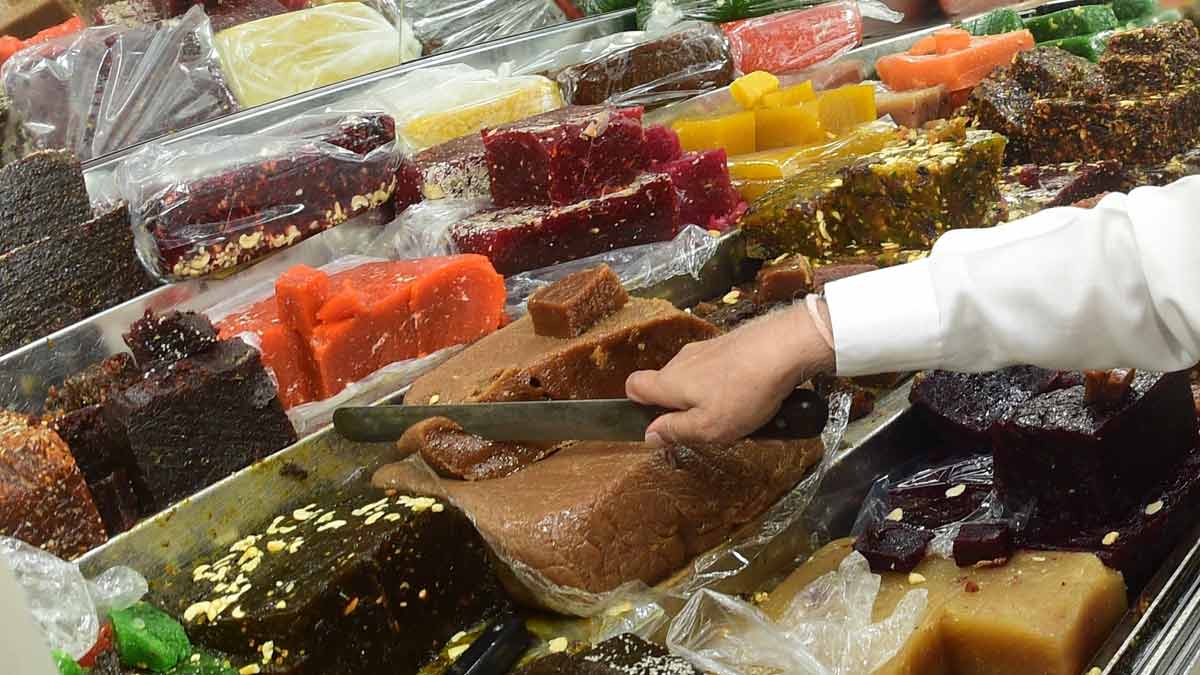
Inside, trays gleamed with more than 20 varieties: the jewel-like translucence of classic wheat halwa, turmeric-gold slabs, creamy tender-coconut halwa, and even the local curiosity—green chilli halwa, which delivers both heat and sweetness in one bite. The shopkeeper, a man with a moustache that seemed older than me, weighed my order with precision and pride, then—as if on cue—stepped outside to spit. Kozhikode hospitality, I learned, often comes with regular spits, dispatched neatly into the gutter.
If SM Street was the city's commercial heart of Kozhikode, the beach was its soul. The sun dipped low behind drifting clouds, painting the sky in amber. Families poured in not in twos or threes, but in entire caravans. Grandparents with toddlers, uncles with teens, lovers with longing. The laughter was unfiltered, the chaos strangely meditative. Vendors sold everything from spicy bhel to balloons shaped like minions. Children screamed at the waves, while parents stood guard with plastic slippers in hand.
We returned the next day on the Jan Shatabdi, trading speed and air-conditioned gloss for nostalgia, a leaky tap in the washroom, and a coach filled with vendors weaving through with tea kettles and fried vadas. Outside, the paddy fields rolled by in green waves, and fishermen mended nets by roadside canals. It was slower, messier, and somehow more rooted in the Kerala we grew up knowing.
By the time we pulled into Ernakulam, Kozhikode had left its mark—on our taste buds, our shopping bags, and somewhere quietly in the heart.
