



Something remarkable is happening in Maharashtra. The state government is in advanced discussions with India's atomic energy department to build what could be the country's first nuclear power plants that run on thorium instead of the usual uranium.
The plan involves two plants, one generating 1,540 megawatts of electricity and another producing 440 megawatts, to be built on land owned by the state's power company. If everything goes according to plan, these plants will provide steady, clean power while reducing dependence on coal and gas, potentially bringing down electricity costs to around ₹3.5 per unit in the long run.
This is not just another power project. It represents a fundamental shift in how India could power its future.
To understand why this matters, we need to first understand what thorium is. Thorium is a natural metal found in the soil and rocks of the Earth. It is slightly radioactive, which means it gives out tiny amounts of radiation naturally, much like many other elements around us. India is blessed with one of the largest deposits of thorium in the world, mostly found in the coastal sands of Kerala and Odisha.
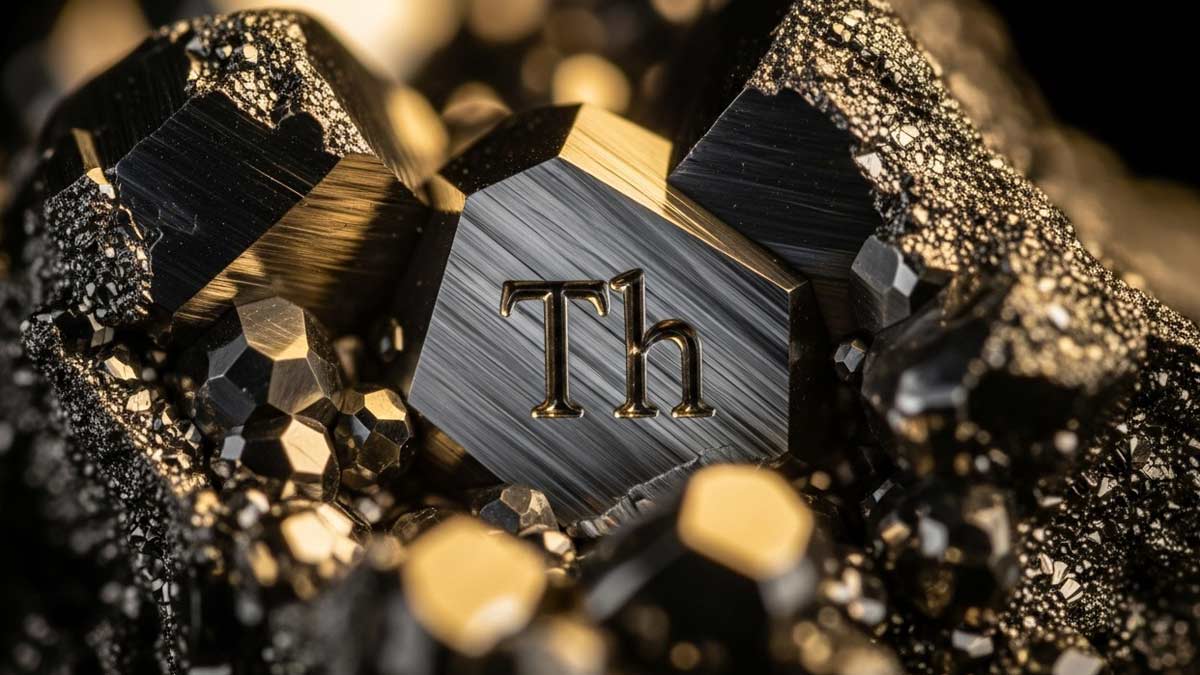
Basically, thorium is a naturally occurring radioactive element listed in the periodic table with the chemical symbol Th and atomic number 90. It belongs to the actinide series and is characterised by its silvery-white appearance and weak radioactivity. In nature, thorium is found primarily as thorium-232, a stable isotope with an extremely long half-life, making it suitable for long-term applications in nuclear science and industry.
“In nuclear power plants, we use special materials that can split apart and release enormous amounts of energy through a process called nuclear fission. This energy heats water to create steam, which then turns turbines to produce electricity. The usual fuel for this process is uranium. However, thorium can also be used, though it works a bit differently. Thorium itself does not split easily. When it absorbs neutrons, which are tiny particles inside the reactor, it slowly transforms into another material called uranium-233, which then splits and releases energy,” explained space and defence analyst Girish Linganna.
Most nuclear plants operating in India and around the world today use uranium as their primary fuel. Uranium contains a small portion called uranium-235 that splits easily to start and maintain the chain reaction needed for power generation.
So what makes thorium different and potentially better? The differences are significant and worth understanding. Many thorium reactor designs operate at normal atmospheric pressure, unlike uranium reactors that run at high pressure. If something goes wrong in a thorium reactor, it can cool down naturally without human intervention, and the risk of major accidents or meltdowns is dramatically reduced. Uranium reactors, on the other hand, require elaborate safety systems precisely because they operate under high pressure.
Then there's the question of nuclear waste. “Thorium produces far less dangerous waste that remains harmful for thousands of years. The waste from uranium reactors stays hazardous for much longer periods, creating storage and disposal challenges that burden future generations. When it comes to fuel availability, thorium is three to four times more abundant than uranium on Earth. For India specifically, this is crucial because we have plenty of thorium deposits but very little uranium. Using thorium means we can rely on our own resources rather than importing fuel from other countries,” added Linganna.
Experts also point out that there is also a security advantage. The thorium fuel cycle makes it much harder to produce materials that could be used for nuclear weapons, which is why many countries view it favourably from a non-proliferation perspective.
However, thorium reactors do need some uranium or plutonium at the beginning to kick-start the process, whereas uranium reactors can begin operations more easily with natural uranium. Despite these initial requirements, thorium can ultimately generate more energy from the same amount of fuel and is considered cleaner and safer overall.
But given these advantages, why hasn't India used thorium extensively until now? The answer lies in our nuclear journey and the complexity of the technology. India has actually known about thorium's potential since the 1950s. India’s visionary scientist Homi Bhabha designed a three-stage plan for nuclear power development. The first stage involved using natural uranium in heavy water reactors, which are the types of plants we currently operate. The second stage called for using the waste plutonium from stage one to build fast breeder reactors. Now, here's where it gets interesting. Imagine a magical lamp that not only gives you light but also produces more oil than it burns. That's essentially what a fast breeder reactor does. When these reactors produce energy, they simultaneously create more nuclear fuel than they started with. They take the plutonium waste from the first-stage reactors, use it to generate electricity, and in the process, convert some non-fuel material around them into new fuel. It's like having a car that somehow makes more petrol while you are driving it. This clever process helps us stretch our limited uranium supplies much further. The third and final stage envisioned using thorium with the extra fuel generated from stage two to produce large amounts of energy. We are still completing stage two of this ambitious program.
“In order to run a nuclear energy plant on thorium, one needs to first convert thorium to fissile material, which can produce fission energy. That means they must first irradiate thorium in a nuclear reactor. India's three-stage programme visualises that it should be done in fast reactors. Then you can irradiate thorium and produce fissile uranium at some rate. The plan was to multiply that capacity by bringing in fast reactors. Thorium reactors will come later, but provided one is able to produce enough fissile material out of thorium,” Anil Kakodkar, former chairman of the Atomic Energy Commission of India, told THE WEEK.
Looking at the global picture, no large commercial thorium power plants are currently producing electricity for public consumption anywhere in the world. Most of the over 400 nuclear plants operating worldwide use uranium. However, research is progressing. China has built a small two-megawatt experimental thorium molten salt reactor in its desert regions. It started working recently and has successfully demonstrated the conversion of thorium into usable fuel. They are planning larger reactors soon. In the past, countries like the United States and Germany tested thorium in small research reactors but eventually stopped their programmes. Today, India and China are leading global research efforts in this field.
Maharashtra's thorium power plant plan could position India among the first nations to operate real commercial thorium reactors. This represents more than just technological achievement. It means fighting climate change with cleaner energy, potentially providing more affordable electricity to millions, and utilizing our own abundant natural resources instead of depending on imports. For a country with India's energy needs and environmental challenges, this is a bold and necessary step towards a sustainable future.
From an industrial perspective, thorium has traditionally been used in limited but specialised applications. Thorium oxide has been valued for its high melting point and thermal stability, leading to its use in high-temperature ceramics, welding electrodes, optical lenses, and laboratory equipment. Historically, thorium was also used in gas mantles for lighting, though this application has been largely phased out due to radiation concerns. In advanced manufacturing, thorium alloys have been explored for aerospace and metallurgical applications because they improve strength and heat resistance in metals such as magnesium.
The most significant and strategic interest in thorium, however, lies in the nuclear energy sector. Thorium-232 is not directly fissile, but it is fertile, meaning it can absorb a neutron and transform into uranium-233, a fissile material capable of sustaining a nuclear chain reaction. This property positions thorium as a potential alternative nuclear fuel, particularly for countries seeking long-term energy security and low-carbon power generation.
“India stands at the forefront of thorium-related research and strategic planning due to its vast domestic reserves. With limited uranium resources but abundant thorium deposits concentrated along its coastal monazite sands, India has structured its nuclear programme around the eventual large-scale use of thorium. The country’s long-term nuclear roadmap aims to utilise thorium-based fuels once sufficient fissile material is generated through earlier reactor stages,” remarked Srimathy Kesan, founder and CEO of SpaceKidz India, who has also done research on rare earth minerals.
Besides India, China has emerged as another major leader in thorium research, particularly through its investment in next-generation reactor technologies such as molten salt reactors. The Chinese programme focuses on experimental and pilot-scale reactors to evaluate thorium’s commercial and operational feasibility. The United States and several European nations have also conducted extensive research on thorium fuel cycles, mainly through national laboratories and academic institutions, though their efforts remain largely at the experimental or policy-assessment level.
Australia and Brazil, while holding substantial thorium reserves, currently focus more on resource assessment and regulatory frameworks rather than active nuclear utilisation. Norway has previously conducted thorium fuel tests in conventional reactors, contributing valuable operational data to global research efforts. Overall, while many countries recognise thorium’s potential, none have yet deployed it as a mainstream commercial nuclear fuel.
“In the broader energy and sustainability context, thorium offers notable advantages, including resource abundance, reduced dependency on imported fuels, and the potential for lower long-term radioactive waste toxicity compared to conventional uranium fuel cycles. At the same time, challenges related to fuel fabrication, reprocessing, regulatory approval, and economic viability continue to slow widespread adoption,” added Kesan.
