



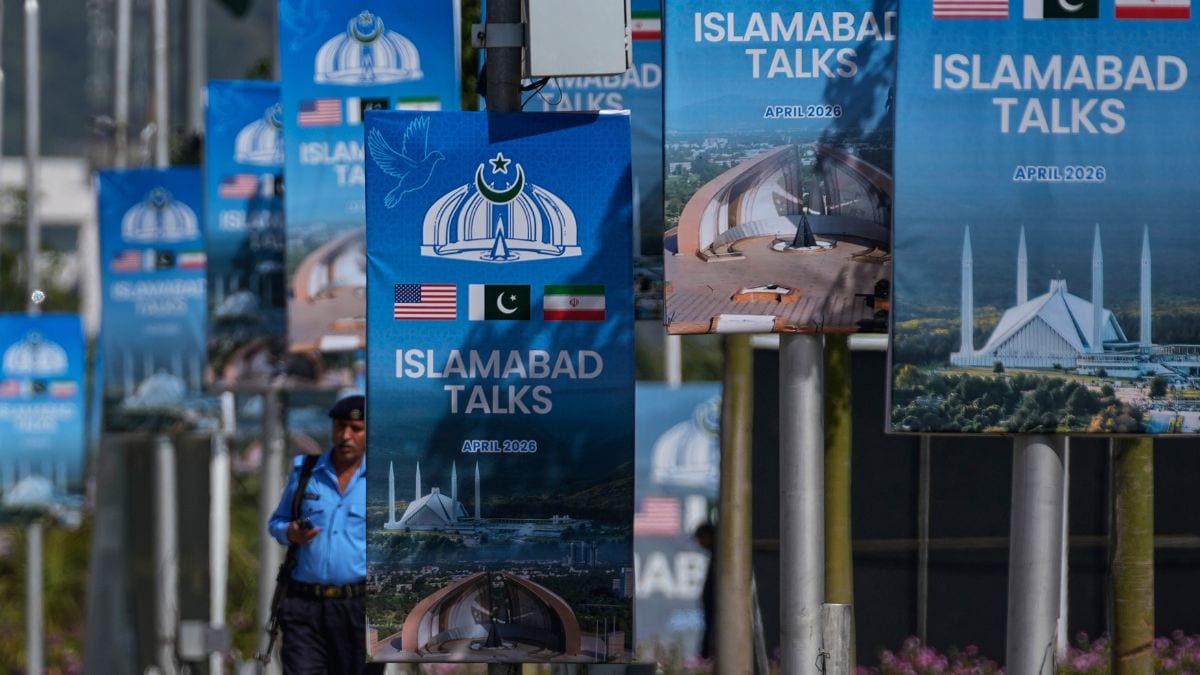
Further complicating the uncertainty over the prospects of the second phase of talks between the US and Iran in Pakistan taking place, there has been a hardening of positions between the warring parties.
In a social media post on Tuesday, Iranian parliament speaker Mohammad Baqer Qalibaf struck a defiant note that Tehran will not accept negotiations with Washington under the shadow of threats.
Denouncing US President Donald Trump for acting on a delusion, Qalibaf wrote: “Trump, by imposing a blockade and violating the ceasefire, wants – in his own delusion – to turn the negotiating table into a table of surrender or to justify renewed warmongering.”
“We do not accept negotiations under the shadow of threats... Over the past two weeks, we have prepared ourselves to reveal new cards on the battlefield,” the lead negotiator’s post read.
The US is all dressed up for Pakistan, but no one to talk to. If it weren’t for the intensity and scale of devastation in Iran, the developments over Pakistan-brokered peace negotiations between the US and Iran would have much resembled a Shakespearean comedy, albeit tragic.
With the April 22 US-Iran ceasefire deadline looming heavily, US President Donald Trump issued another characteristically blunt threat on Monday when asked what would happen if the ceasefire is not extended: “Then lots of bombs start going off.”
Meanwhile, there is confusion about whether the US delegation comprising Vice President JD Vance, special envoy for the Middle East Steve Witkoff, and Trump’s son-in-law Jared Kushner are in Washington, DC or in Islamabad, even as they wait for Iran’s next step on the talks.
Even if the talks do take place, prospects of a sound resolution are very bleak as the US demands include Iran opening up the Strait of Hormuz or effectively giving up its control of the narrow waterway and giving up Tehran’s stockpile of Highly Enriched Uranium (HEU) that can be used for making nuclear bombs.
But these are objectives that the US tried to achieve through the military offensive. But having failed to achieve these aims militarily, the US has opted for negotiations that have been brokered by Pakistan. Having faced off the US, it seems very unlikely that Tehran would accept any such terms, as it would be seen as an abject surrender.
The current conflict began on February 28 when the US and Israel forces struck a gathering of Iranian military leaders, killing Ayatollah Seyyed Ali Khamenei, the supreme leader of the Islamic Revolution, and top military commanders.
