



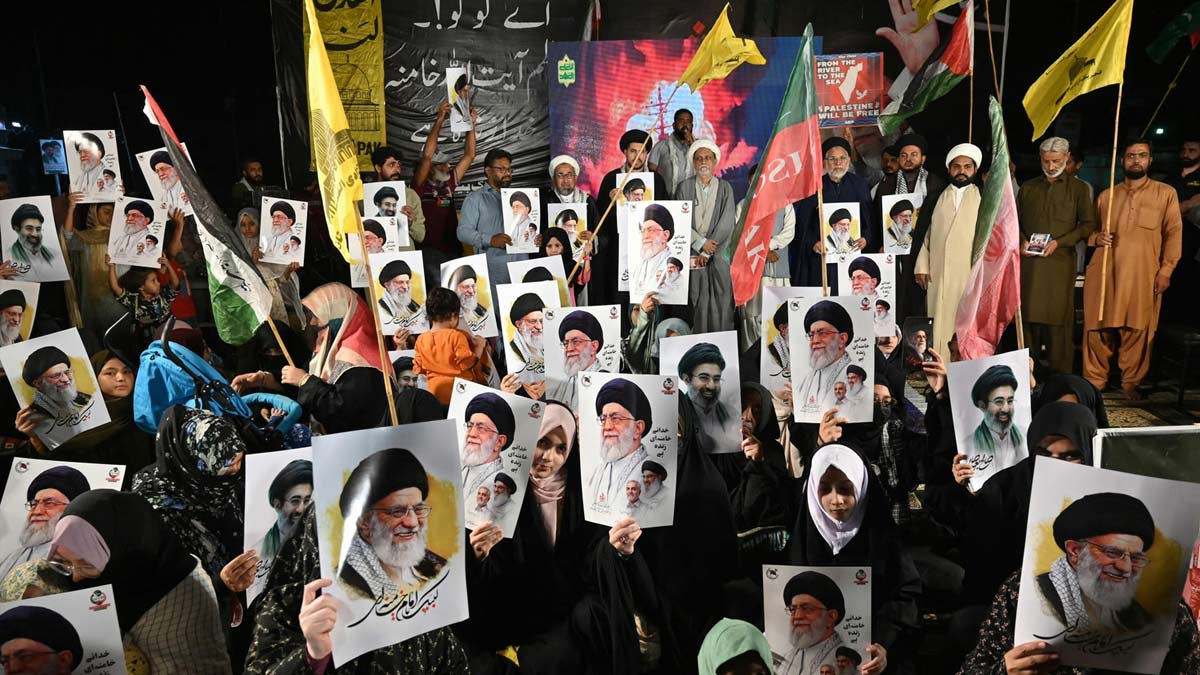
On Day 39 of the war, as the Middle East reeled from weeks of escalating violence, Pakistani Prime Minister Shehbaz Sharif and Field Marshal Asim Munir stepped into a crisis that appeared moments away from exploding into a regional catastrophe. Since February 28, the United States and Israel have carried out coordinated strikes across Iran, including the assassination of senior Iranian leadership, triggering fierce retaliation, the closure of the Strait of Hormuz, and global economic turmoil. By April 7, President Donald Trump had issued an ultimatum giving Tehran only hours to capitulate or face what he warned could be the death of “a whole civilisation.”
In what is perceived as a last-minute diplomatic intervention, Sharif made a public appeal on X, asking the United States to extend its ultimatum by two weeks and urging Iran to reopen the Strait of Hormuz as a goodwill gesture. Iran responded by agreeing to halt its military operations if attacks against it ceased and to reopen the Strait of Hormuz for the same period, an unexpected breakthrough that reshaped the trajectory of the conflict. The ceasefire is fragile, tentative, and built on deep mistrust, yet real. And it was Pakistan that had made it possible.
Pakistan’s role was not accidental. For weeks, Islamabad had been quietly urging both Washington and Tehran to consider a diplomatic off‑ramp. As the deadline approached, The appeal was direct, urgent, and framed as a plea to “allow diplomacy to achieve conclusive termination of this war.”
This message, amplified globally, provided Trump with a much‑needed off‑ramp. Having escalated his rhetoric to the brink, the US president now had a face‑saving way to pause military action without appearing to retreat. Iran, which had long insisted on a more comprehensive settlement, accepted the temporary ceasefire as a pragmatic step.
Pakistan has invited delegations from both countries to Islamabad for negotiations beginning April 10. In doing so, it has positioned itself not merely as a messenger but as a mediator, an active architect of the diplomatic process.
The international reaction was swift and largely positive. Leaders from Germany, Oman, Turkey, Egypt, and the UN Secretary‑General publicly thanked Pakistan for its efforts. For a country often portrayed as diplomatically isolated, this was a rare moment of global validation. As the document notes, Pakistan had “forced itself into the centre of the biggest geopolitical story on earth.”
The Indian reaction: Silence, discomfort, and a missed opportunity
India’s position during the Iran war was defined by a conspicuous and prolonged silence that shaped global perceptions of its alignment. The United States and Israel launched their surprise strikes on February 28, just two days after Prime Minister Narendra Modi’s high‑profile visit to Israel, beginning with a missile attack that destroyed a girls’ elementary school in Minab, killing more than 165–175 schoolgirls and staff. This was followed by strikes that killed Iran’s Supreme Leader Ali Khamenei and several senior officials. Yet New Delhi offered no public condemnation of either the civilian casualties or the targeted assassinations. The silence deepened when the Iranian Navy frigate IRIS Dena, which had just participated in the International Fleet Review 2026 hosted by India, was torpedoed and sunk by the USS Charlotte in the Indian Ocean while returning home through international waters. Even then, India refrained from issuing a strong statement. Taken together, this sequence of events created a clear perception that India had drifted toward the Israeli‑US position, placing it unmistakably on one side of the conflict.
This silence was all the more puzzling given India’s deep material stakes in the region. The country imports 85 per cent of its crude oil and has nine million citizens living in the Gulf—making stability in West Asia a direct national interest. As the war escalated and Iran closed the Strait of Hormuz, India’s economy absorbed immediate shocks: the rupee fell to a record low of 94.7875 per dollar, remittances were disrupted, and foreign investors withdrew over $3 billion from Indian markets. Yet even as the conflict directly harmed India’s economic stability and exposed its vulnerabilities, New Delhi avoided articulating a clear moral or diplomatic position.
If the global response was one of relief and praise when Pakistan announced that it had brokered a two‑week ceasefire between the United States and Iran, the reaction in India was markedly different. Instead of welcoming the de‑escalation, large sections of online discourse turned toward frustration, sarcasm, and mockery aimed at Pakistan’s diplomatic success. The disbelief was palpable: for many Indian users, the idea that Islamabad had facilitated a breakthrough between Washington and Tehran clashed with long‑standing narratives portraying Pakistan as diplomatically irrelevant or incapable of constructive mediation. Timelines on X, Reddit, and Facebook filled with derision, often dismissing Pakistan’s role as that of a “postman” or a “proxy,” even as global leaders from Germany to Oman to the UN Secretary‑General publicly praised Islamabad’s efforts.
This online backlash reveals a deeper discomfort; Pakistan’s sudden visibility on the world stage contrasted sharply with India’s own absence from the diplomatic arena. While Islamabad was credited by President Donald Trump himself for helping avert a wider regional war, New Delhi appeared to be watching events unfold from the sidelines. The contrast was particularly stark given India’s presidency of BRICS and its self‑assigned status as Vishwaguru, a nation claiming moral and strategic leadership in global affairs. India’s global standing could have enabled it to play a constructive role by advocating de‑escalation, leveraging its ties with Tehran, or using its diplomatic weight to push for a ceasefire. Instead, the government appears preoccupied with domestic political considerations, the upcoming West Bengal assembly elections.
India issued a statement welcoming the ceasefire, more than six hours after it was announced. The statement acknowledged the end of 39 days of fighting but conspicuously omitted any mention of Pakistan’s role in brokering the agreement.
The contrast between Pakistan’s assertive diplomacy and India’s cautious silence is striking. Pakistan seized a narrow diplomatic opening and transformed it into a global headline, stabilising markets and averting a wider war. India, despite its far greater economic weight and international visibility, chose not to leverage its influence to prevent the conflict or shape its trajectory. In the end, the ceasefire may or may not lead to lasting peace, but it has highlighted not only Pakistan’s unexpected diplomatic assertiveness but also India’s missed opportunity. At a time when global leadership was urgently needed, India’s muted stance, strategic ambiguity, and domestic preoccupations left it on the margins of a crisis that directly affected its economic and geopolitical interests.
(Vaishali Basu Sharma is a security and economic affairs analyst.)
(The opinions expressed in this article are those of the author and do not purport to reflect the opinions or views of THE WEEK.)
