



Move aside Russian S-300, Chinese HQ-9B or the ‘made-in-Iran’ ‘Bavar-373’ air defence missile systems—the capabilities of which have been considerably degraded since February 28, when the joint US-Israel offensive into Iran began or when Israel launched strikes against the Iranian nuclear facilities in June 2025.
Reports say US aircraft are now flying deep into Iran to hit targets directly because of a reported shortage of Beyond Visual Range missiles like ‘Tomahawk’ land-attack missiles and ‘RIM-161 Standard Missile 3’ interceptors. ‘Patriot’ missile systems are also in short supply because of their massive use by Ukraine in the past four years in its ongoing war against Russia.
The biggest dangers for US aircraft operations in Iran now are the thousands of MANPADS or Man-portable air defence systems. Iran’s Ministry of Defence and Armed Forces Logistics (MODAFL) has domestically produced the Misagh series of MANPADS, whose stockpile quantity has not been publicly disclosed.
What makes it all the more ominous is that in December 2025, Iran inked a $700 million deal with Russia in Moscow to buy 500 ‘Verba’ MANPADS launchers and 2,500 missiles. The ‘Verba’ missile is infrared-guided and has a range of about 6.5 km.
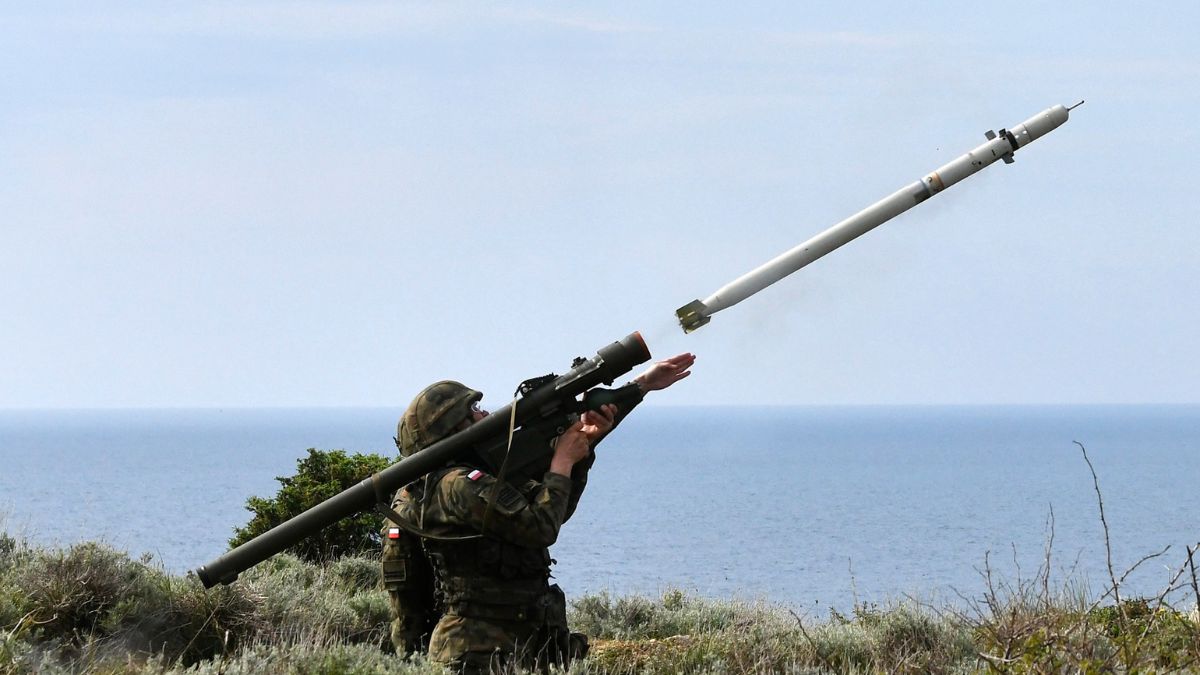
Described as a surface-to-air missile that can be fired by positioning the launcher on an individual’s shoulder, MANPADS are highly effective against low-flying aircraft, particularly slow-moving ones like helicopters and drones.
A fully-assembled MANPADS weighs 15–20 kg and is at most two metres long. It consists of three components: the explosive projectile, the launch tube, and a grip and a battery unit to produce the needed electricity.
Though about 12 countries in the world produce MANPADS, about 105 countries have it in their weapons inventories. The US-made ‘Stinger’ and the Soviet 9K32 Strela-2 or simply ‘SA-7’ are among the most prolific that have proliferated the most. The China-made ‘FN-16’ is the latest entrant to this deadly club.
What also makes the use of MANPADS more pertinent is the adoption of the ‘mosaic defence’ strategy by the Iranian military now to counter the US offensive.
The ‘mosaic defence’ is a strategy devised for the eventuality when Iran’s top military leadership is eliminated, and the military and communications network is destroyed. At its core, it implies organising the military architecture into 31 independent units comprising surviving elements of the Islamic Revolutionary Guard Corps (IRGC), the ‘Basij’ force, regular army and its various arms, all organised under a single sub unit with its own arsenal and weaponry. This is where MANPADS can become a vital tool of war.
