



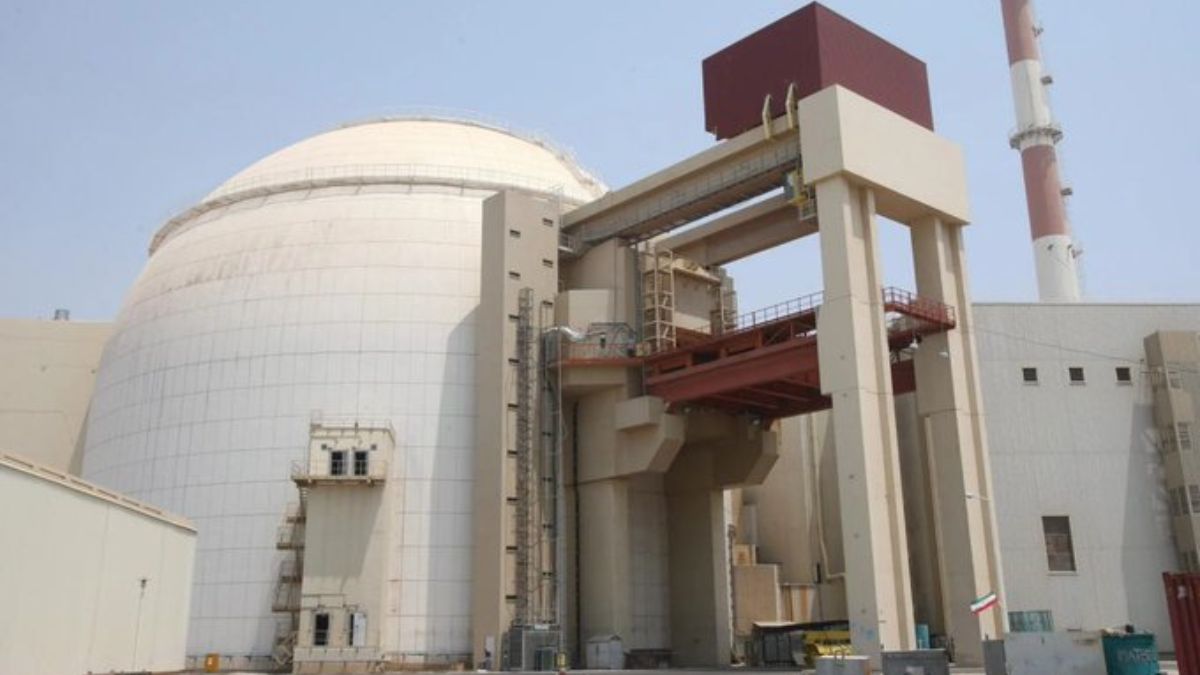
Iran’s Foreign Minister Abbas Araghchi has warned that there would be a potential radioactive fallout in the Gulf region after the recent US-Israeli attack on the country's Bushehr nuclear plant.
The minister took to X to call out “western hypocrisy" and highlighted the outrage against Russia’s attack near the Zaporizhzhia nuclear power plant in Ukraine.
He said that the facility has been bombed four times since the war began on February 28.
“Remember the Western outrage about hostilities near the Zaporizhzhia Nuclear Power Plant in Ukraine? Israel-U.S. have bombed our Bushehr plant four times now. Radioactive fallout will end life in GCC capitals, not Tehran. Attacks on our petrochemicals also convey real objectives,” he said.
Bushehr is a port city on the Persian Gulf, and its location makes neighbouring Arab states more vulnerable to a radioactive incident than Tehran. It lies closer to Kuwait, Bahrain and Qatar than to the Iranian capital.
The FM had also written a similar letter to the United Nations, warning of a severe radioactive contamination risk due to attacks on the power plant.
"The repeated attacks by the aggressors in the vicinity of the active Bushehr nuclear power plant are of great concern. They expose the entire region to a serious risk of radioactive contamination with grave human and environmental consequences," he wrote in his letter to the UN, which was shared on Telegram.
On Saturday, one person was killed by projectile fragments after a US-Israeli strike targeted a location close to the Bushehr nuclear plant, the International Atomic Energy Agency said.
Citing information from Iranian authorities, the agency said that there was no increase in radiation levels after the attack .
The strike comes as the US and Israel are escalating their attacks against Iranian industrial sites despite the high risks involved in striking nuclear and petrochemical facilities.
IAEA Director General Rafael Grossi expressed deep concern, saying that the “nuclear sites or nearby areas must never be attacked, noting that auxiliary site buildings may contain vital safety equipment”,
the IAEA call said it called for “maximum military restraint to avoid risk of a nuclear accident,” the IAEA added.
After the attack, Russia had reportedly evacuated its 198 workers from the plant.
The Bushehr was built with the help of Moscow.
Russia’s nuclear agency Rosatom head Alexey Likhachev told TASS news agency. “As planned, we began the main phase of the evacuation today,” “About 20 minutes after that ill-fated strike, buses set off from Bushehr station towards the Iranian-Armenian border (with) 198 people, to be precise — this is the largest evacuation,” he added
“The likelihood of a risk of damage or a potential nuclear incident is, unfortunately, only increasing, as has been confirmed by this morning’s events,” the Rosatom CEO said.
The Russian foreign ministry also slammed the evil attacks by the US and Israel and urged a cessation of hostilities on Iranian nuclear facilities immediately.
