



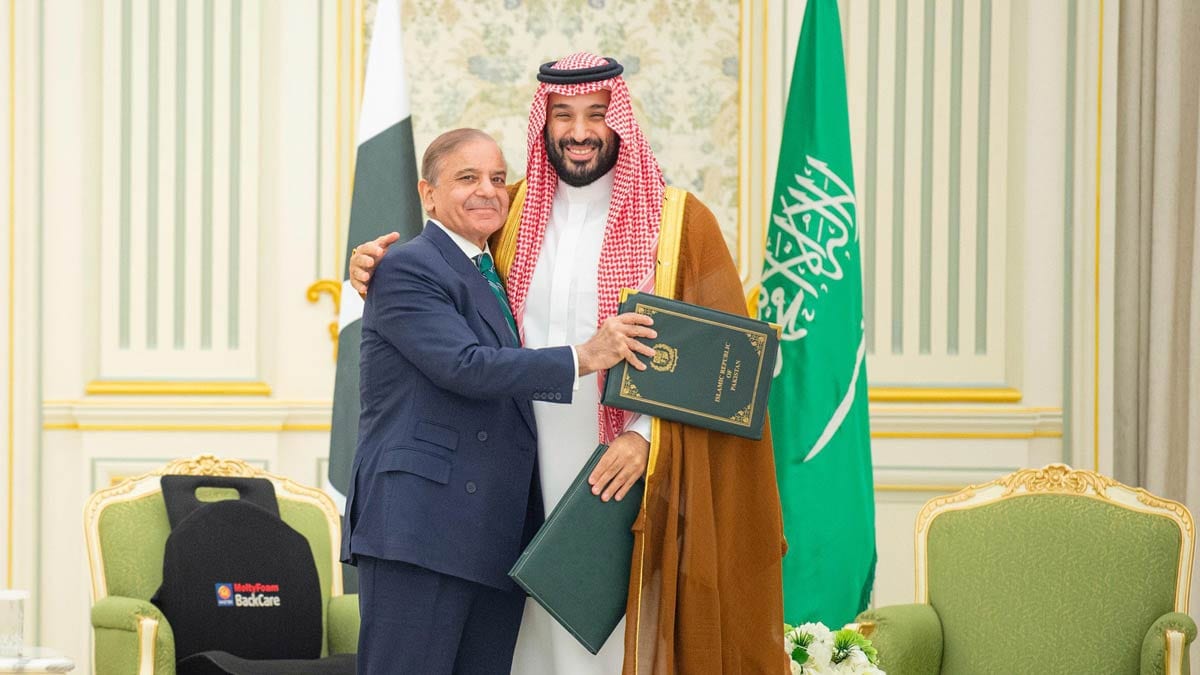
When Saudi Arabia and Pakistan inked the Saudi-Pakistan Strategic Mutual Defence Agreement (SMDA) in September 2025, it was seen as as pivotal moment in regional security not just in the Persian Gulf but also the Indian subcontinent. The pact established a binding framework stipulating that "any aggression against either country shall be consideration an aggression against both."
However, even several days after the Iranian attacks on the Gulf kingdom, the Islamabad, a nuclear power, has failed to provide military support to Riyadh. As of today, two people were killed when a projectile fell on a residential location in Al-Kharj city, southeast of the capital Riyadh. Pakistan's failure to support Saudi militarily has prompted debate among observers about whether the agreement has practical limits.
According to F. Gregory Gause III, a professor emeritus of international affairs at the Bush School of Government and Public Service at Texas A&M University, Pakistan has strong strategic reasons to avoid antagonising Iran. In an analysis published by the Middle East Institute in October, Gause argued that Pakistan’s military is primarily focused on deterring and potentially confronting India. Redirecting significant forces to defend Saudi Arabia would weaken Islamabad’s ability to maintain that deterrence.
Regional tensions have also complicated Pakistan’s security environment. In February, Pakistan was reportedly engaged in intense clashes with forces linked to the Taliban in Afghanistan. With strained relations along multiple borders and growing cooperation between India and Afghanistan, Pakistan faces a challenging strategic landscape.
Iran remains Pakistan’s third land neighbour. Taking a military role in defending Saudi Arabia against Iran could risk opening another hostile front along Pakistan’s borders, something Islamabad appears keen to avoid.
