



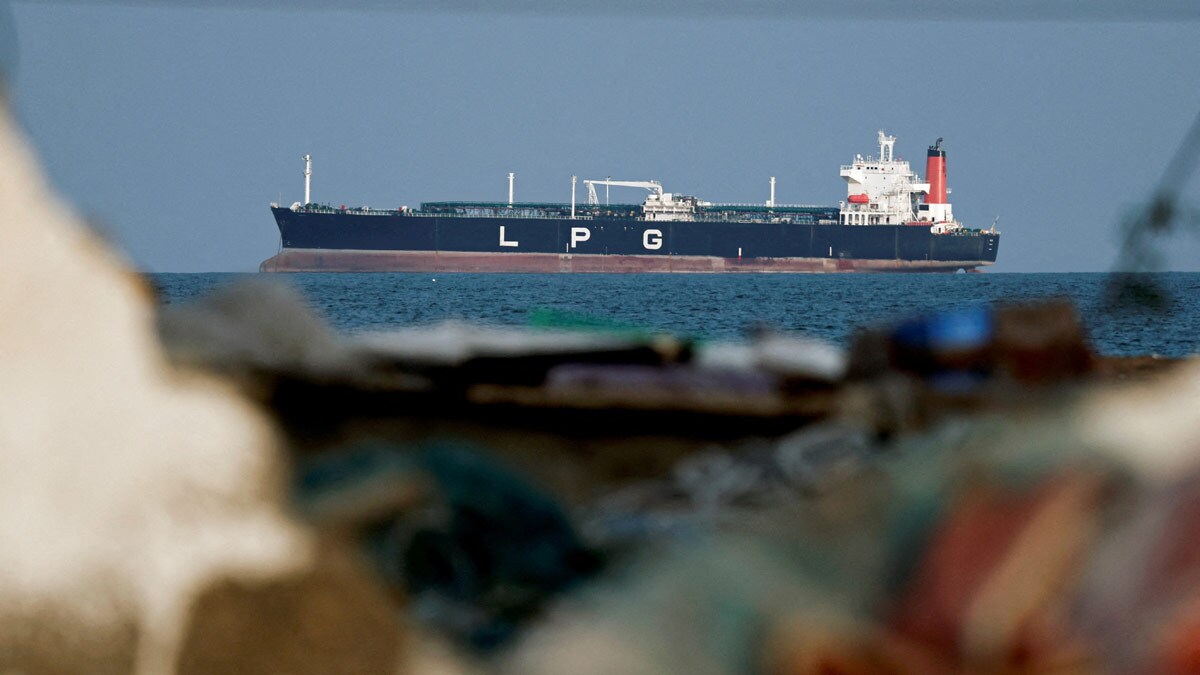
As the escalating tensions in the Middle East continues to disrupt ship movements through the Strait of Hormuz, triggering a global oil crisis, a report claimed on Saturday that at least 17 ships have been attacked in West Asian waters since the war began on February 28.
Citing data from the United Kingdom Maritime Trade Operations (UKMTO), CNN reported that the attacks occurred in and around the Persian Gulf, the Strait of Hormuz and the Gulf of Oman.
On March 1 alone, five ships were targeted in the region, resulting in the death of one person—an Indian national. Two tankers were struck by projectiles in the Strait of Hormuz, while another tanker was hit while docked in Bahrain.
The Indian national was killed when a fourth tanker, MKD VYOM, was attacked in the Gulf of Oman. The fifth incident that day occurred in the Persian Gulf, where a projectile detonated near a vessel.
According to the UKMTO, two vessels anchored in the Gulf of Oman were targeted on March 3. The following day, explosions were reported aboard two vessels in the Strait of Hormuz and the Persian Gulf.
On March 6, a tug vessel in the Strait of Hormuz was struck by projectiles. A day later, an offshore drilling rig in the Persian Gulf was hit by a drone.
On March 10, a vessel in the Persian Gulf suffered structural damage after being struck by a projectile. The following day, a container ship—Mayuree Naree—was hit by a projectile in the Strait of Hormuz. Three other vessels were also reportedly struck in the same waterway on March 11.
In an advisory, the Joint Maritime Information Centre (JMIC) warned that the regional maritime threat level remains “critical” across the Arabian Gulf, the Strait of Hormuz and the Gulf of Oman.
The advisory stated that the security environment continues to be marked by persistent disruption, navigation interference and a pattern of kinetic strikes.
Rising tensions in the Middle East have disrupted ship movements through the Strait of Hormuz—one of the world’s most important oil transit chokepoints—sending shockwaves across the global oil markets.
Meanwhile, US President Donald Trump warned that American forces could target Iran’s energy infrastructure on Kharg Island if Tehran continues to disrupt maritime traffic in the region.
