


Mojtaba named Iran’s new Supreme Leader: Why IRGC backed Khamenei’s son for the top post

Ayatollah Khamenei was killed on February 28 in a coordinated airstrike carried out by US and Israeli forces at his residence

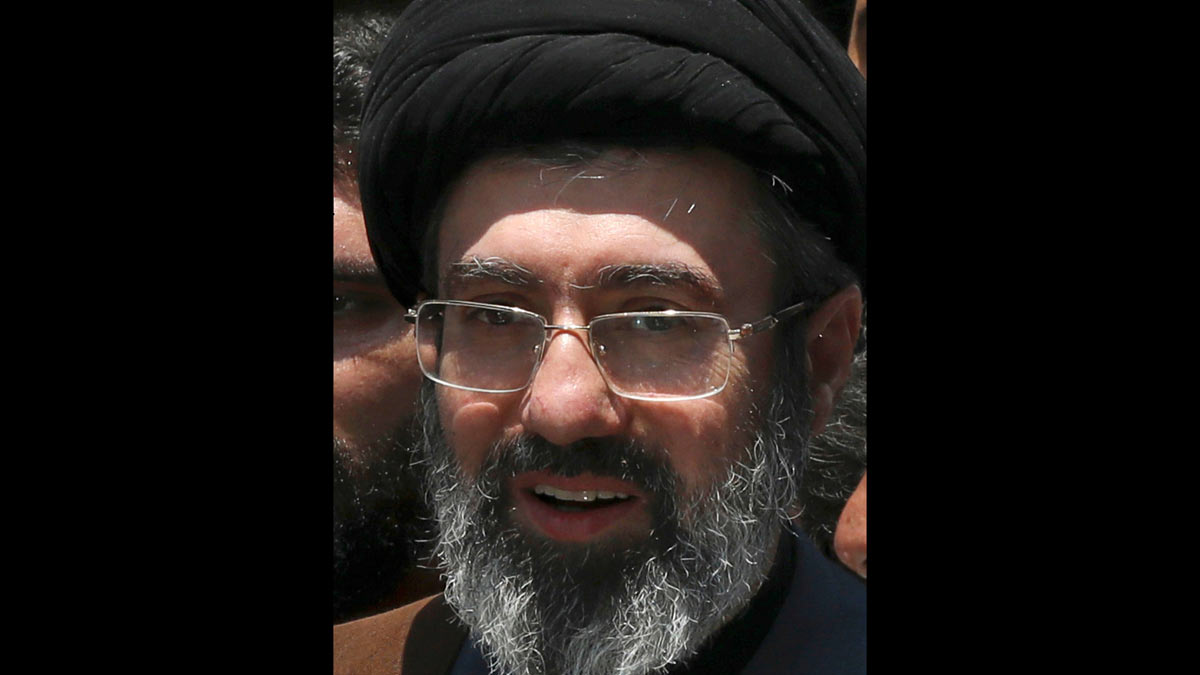
Mojtaba Hosseini Khamenei | AP Mojtaba Hosseini Khamenei | AP

For latest news and analyses on Middle East, visit: Yello! Middle East

Mojtaba Hosseini Khamenei, the son of Ayatollah Ali Khamenei, has reportedly been appointed as Iran’s new Supreme Leader amid escalating regional tensions. The announcement comes as Iran continues its counterattacks, targeting US bases and infrastructure in neighboring Gulf countries.

Ayatollah Khamenei, who led the country for 37 years, was killed on February 28 in a coordinated airstrike carried out by US and Israeli forces at his residence. The strike also claimed the lives of his daughter, son-in-law, and granddaughter. His wife, Khojasteh Khamenei, who was critically injured in the attack, later died in hospital on Monday.

Under Iran’s constitutional framework, the Supreme Leader is appointed by the 88-member Assembly of Experts, a body of Shiite clerics. These clerics are elected after their candidacies are vetted by the Guardian Council, the country’s constitutional oversight authority.

According to reports, Mojtaba’s elevation came amid strong pressure from the Islamic Revolutionary Guard Corps (IRGC).

Born on September 8, 1969, Mojtaba is the second son of Ali Khamenei. A mid-ranking Shiite cleric, he has maintained close ties with the IRGC and is believed to have played a major role in orchestrating crackdowns on anti-government protests in recent years. Media reports suggest that Mojtaba maintains a more hardline position than his father.

According to an analysis by Iran International, the IRGC backed Mojtaba in order to preserve control and maintain internal legitimacy. The report suggests the force sought to keep the chain of command intact, prevent divisions at the top leadership level, ensure coordination among security institutions, and avert a potential power struggle.

“Legitimacy matters too, but not in a broad national sense,” the report stated. “It means legitimacy within the regime’s core base: hard-line politicians, the security establishment, and the loyal networks that continue to view the Islamic Republic as ‘their’ state.”

The report noted that for years, Mojtaba has served as a key channel between his father and Iran’s military leadership. His close links to the civilian and clerical leadership while being associated with the Guard have placed him in a uniquely influential position.

The report also highlighted his extensive experience overseeing the Beit — the Supreme Leader’s office — over the past two decades, describing this role as another factor that may have prompted the Guard to rally behind him at this critical juncture.

Some analysts, however, suggest that his selection could prove controversial, as the Islamic Republic has long denounced hereditary rule and cast itself as a more just alternative.

It's only the second time since the 1979 Islamic Revolution that a new supreme leader has been chosen. The supreme leader has the final say on all major decisions, including war, peace and the country's disputed nuclear programme.
