



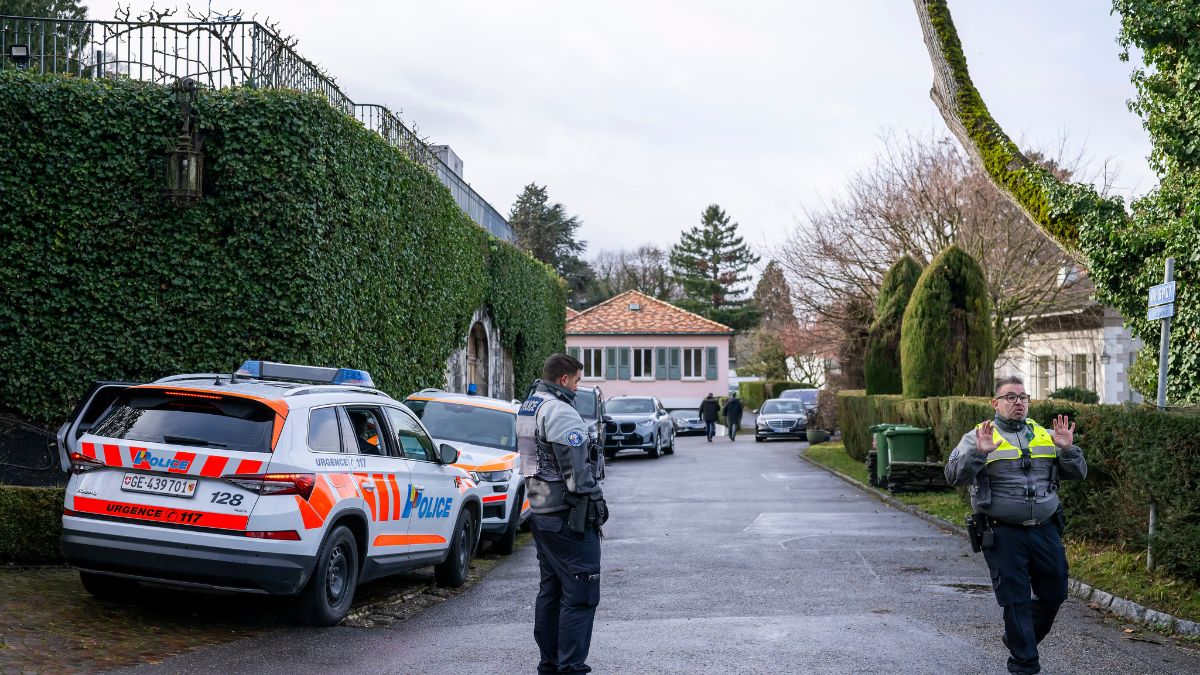
Both the United States and Iran said they were making progress after the second round of nuclear negotiations in Geneva on Tuesday. The indirect talks, mediated by Omani officials, are taking place amidst an American buildup of significant military assets to the Persian Gulf. Despite reported incremental advances, fundamentally opposing red lines and the history of recent military confrontation continue to cast a long shadow over the prospects for a durable agreement.
The Geneva negotiations brought together senior figures, including Iranian Foreign Minister Abbas Araghchi and President Donald Trump’s envoys, Jared Kushner and Steve Witkoff. Following the discussions, Iranian officials said the sides had agreed on “guiding principles” to resolve the dispute and described the atmosphere as constructive. American officials also acknowledged progress but stressed that substantial gaps remain. Iran is expected to return in two weeks with detailed proposals aimed at bridging those differences.
Even so, caution was evident in Washington. Vice President J.D. Vance tempered optimism, saying that while elements of the meetings had gone well, President Trump had set clear red lines on Iran’s path to nuclear acquisition that Tehran had yet to accept. Those red lines, US officials suggest, go beyond enrichment levels and touch on verification, transparency and long-term restrictions.
These diplomatic efforts are unfolding within a fragile security environment shaped by the collapse of earlier agreements and the June 2025 joint US-Israeli strikes on Iranian nuclear facilities. Washington described those operations as having “obliterated” key sites. Yet subsequent satellite imagery indicates that Iran has been rebuilding elements of its nuclear infrastructure. At the same time, Tehran has reduced cooperation with the International Atomic Energy Agency, removing surveillance equipment and limiting inspections.
Iran has also enriched uranium to near weapons-grade levels, drastically shortening what experts call its “breakout time” – the period required to produce sufficient fissile material for a nuclear weapon. Analysts now estimate that timeline in weeks to months rather than the year-long cushion envisaged under the 2015 accord.
The core obstacle remains a sharp divergence in negotiating objectives. The US insists that any fresh agreement must address not only Iran’s nuclear programme but also its ballistic missile capabilities, support for regional armed groups and human rights record. Tehran, however, maintains that discussions must be confined strictly to the nuclear file and the lifting of economic sanctions. It has repeatedly rejected linking its missile programme or regional alliances to the talks.
This impasse mirrors the difficulties that prevented the revival of the Joint Comprehensive Plan of Action under the previous US administration. Mutual mistrust has only deepened since then, making compromise politically fraught on both sides.
The Trump administration has also engaged in a conspicuous show of force. After deploying the USS Abraham Lincoln carrier strike group near Iranian waters, Trump has ordered a second carrier group to the region led by USS Gerard Ford, accompanied by fighter aircraft, including F-35s, F-22s and F-16s. The military build-up is intended to underscore American resolve. Trump has warned that the consequences of failing to reach an agreement would be “steep”, even hinting at the possibility of regime change.
Iran has responded with its own demonstrations of strength. It has temporarily closed sections of the Strait of Hormuz for live-fire naval drills and issued warnings that American warships could be targeted. Supreme Leader Ali Khamenei declared that a weapon capable of sending a warship “to the bottom of the sea” could prove more decisive than the vessel itself.
Regional dynamics further complicate the picture. Israeli operations have significantly degraded Hamas in Gaza and Hezbollah in Lebanon, two pillars of Iran’s so-called axis of resistance. Yet other Iran-aligned groups remain active. Militias in Iraq, including Kataib Hezbollah, have signalled readiness to confront US forces if conflict escalates, while Yemen’s Houthi movement has threatened to step back from fragile ceasefire arrangements.
Israeli officials are deeply sceptical about the Geneva process, fearing it may provide Iran with diplomatic cover to advance its programme. Reports suggest that Israel is preparing contingency plans should negotiations collapse, including scenarios involving US military action or a pre-emptive Iranian strike.
Inside Iran, the regime faces mounting domestic pressure caused by massive anti-government protests, which led to thousands of deaths and widespread arrests. Tehran, however, continues to project defiance. President Pezeshkian has reiterated Tehran’s right to a peaceful nuclear programme and denied any intention to pursue nuclear weapons. Whether that position can be reconciled with Washington’s demands remains the central question. For now, cautious diplomacy advances in parallel with military brinkmanship, leaving the region poised between fragile progress and renewed confrontation.
